

Board Performance · 2025
In this section14 topics
- Compliance Monitoring — Overview1 item
- Prevention of Conflicts of Interest4 items
- Prevention of the Use of Inside Information3 items
- Anti-Corruption4 items
- Whistleblowing4 items
- Selection of Directors & Chief Executives6 items
- Selection of Independent Directors3 items
- Director Development1 item
- Evaluation of Board & Subcommittee Performance2 items
- Subcommittees1 item
- Meeting Attendance & Remuneration6 items
- Supervision of Subsidiaries & Associated Companies5 items
- Board Duty Performance — Overview3 items
- Audit Committee Duty Performance1 item
Compliance Monitoring — Overview
Monitoring of Compliance with Other CG Policies & Guidelines
Monitoring of Compliance with Corporate Governance Policies
The Company places great importance on overseeing and monitoring compliance with its corporate governance policies, code of business conduct, and applicable laws and regulations. The Board of Directors and management continuously supervise operations in accordance with good corporate governance principles, with ongoing monitoring, review, and evaluation processes in place to ensure that business operations are conducted in a transparent, fair, and accountable manner. The key monitoring outcomes are summarized as follows:
Compliance with Laws and Regulatory Requirements : During the year, the Company did not identify any instances of non-compliance with applicable laws or regulations issued by relevant regulatory authorities, such as the Securities and Exchange Commission (SEC) and the Stock Exchange of Thailand (SET). There were no cases of fines, penalties, or civil sanctions imposed. The Company also maintains regular monitoring and review processes to ensure ongoing compliance with all applicable requirements.
Financial Reporting and Disclosure : The Company was not subject to any orders from regulatory authorities to restate or amend its financial statements, whether on a quarterly or annual basis. Financial disclosures were made accurately, completely, and in a timely manner, supported by internal review processes and controls to ensure data reliability.
Related Party Transactions and Asset Acquisitions/Disposals : No instances of non-compliance with regulations governing related party transactions or asset acquisitions and disposals were identified. All such transactions, where applicable, were conducted in accordance with relevant regulations, with transparency and due consideration of the best interests of the Company and its shareholders.
Shareholder Rights and Equitable Treatment : The Company treats all shareholders equitably. No cases were identified involving restrictions on shareholder communication, failure to disclose significant shareholders’ agreements, or unfair practices in share buyback transactions (if any). All actions were undertaken in compliance with applicable rules and with due regard to fairness among shareholders.
Financial Assistance : The Company did not provide financial assistance, such as loans or guarantees, to entities that are neither subsidiaries nor associates. Exceptions are made only for joint ventures, where such support is provided proportionately in accordance with shareholding ratios and joint venture agreements. Such arrangements are conducted transparently, appropriately, and without causing adverse impact on shareholders.
Bondholders Treatment : The Company did not provide any benefits or incentives selectively to bondholders to influence voting decisions. This excludes fair and equal compensation measures, such as adjustments to interest rates, applied consistently to all bondholders in accordance with agreed terms.
Stability of Governance Structure : There were no cases of resignation of independent directors or non-executive directors due to corporate governance issues, nor any instances of the entire Audit Committee or independent directors resigning as a group, reflecting the strength and stability of the Company’s governance structure.
Ethics and Responsible Business Conduct : The Company and its management did not identify any cases of serious ethical misconduct or violations of applicable laws and regulations. The Company remains committed to upholding high standards of integrity, transparency, and ethical conduct.
These monitoring results reflect the effectiveness of the Company’s corporate governance framework and its continued commitment to conducting business with integrity, transparency, and accountability, while balancing the interests of all stakeholders.
Prevention of Conflicts of Interest
Has the Company Acted to Prevent Conflicts of Interest?
Yes
Operations in the Past Year
In 2025, the Company continued to enhance employees’ and executives’ knowledge and understanding of conflicts of interest management to promote good corporate governance and transparent business conduct. Relevant employees and Executives completed an e-learning program on the disclosure of conflicts of interest through the Company’s intranet system, achieving a 100 percent training completion rate.
In addition, during the past year, the Company communicated its conflicts of interest management practices and raised awareness regarding the reporting of changes in personal interest and securities holdings through the Annual CG Awareness Training for all directors. All directors received the training and information, achieving a 100 percent participation rate. The Company also monitored and reviewed the Directors’ and Executives’ disclosure of interests on a quarterly basis and reported the results to the Audit Committee and the Board of Directors. Such information is also provided to the relevant internal functions for use in preventing and managing potential conflicts of interest.
These measures reflect the Company’s strong commitment to ensuring that Directors, Executives, and employees perform their duties responsibly, prudently, and with integrity, while avoiding situations that may give rise to conflicts of interest. This approach serves as a fundamental basis for strengthening stakeholder confidence and trust.
Number of Conflict-of-Interest Cases
| Metric | Current Year | Previous Year | Two Years Ago |
|---|---|---|---|
| Total number of cases or issues related to conflicts of interest (cases) | 1 | 2 | 0 |
Details of Conflict-of-Interest Cases
| Status | Period Type | Start of Period | End of Period | Details of the Case or Issue | Investigation Results | Corrective Actions |
|---|---|---|---|---|---|---|
| Incident no longer subject to action | Within (month/year) | 2025-08 | 2025-08 | A case was reported involving misuse of authority, where an employee borrowed money from colleagues and contractors and falsified attendance records by not working during scheduled hours. | The investigation confirmed that the claim was reasonable. | The Company imposed disciplinary action by terminating the employee’s employment to uphold ethical standards and good corporate governance. |
Prevention of the Use of Inside Information
Has the Company Acted to Prevent the Use of Inside Information?
Yes
Operations in the Past Year
In 2025, the Company has shared knowledge with the Directors, Executives, and all employees regarding the Insider Trading Policy which govern the use of insider information in trading the Company’s securities, with learning material available in the e-learning system. The learning material also comes with an assessment quiz and a notification form to confirm acknowledgement. To this end, 100 percent of Directors, Executives, and employees of the Company have participated in the learning activity and confirmed their acknowledgement of the policy. In addition, the Company also makes the policy available for viewing through the Company’s Intranet platform.
The Company also monitors for any change of securities holding of our Directors and Executives, with quarterly review consistently conducted. The list of Insider Persons of the Company is also consistently reviewed, and individuals on the list are notified of an oncoming Blackout Period to ensure inside information is not used for personal gain.
Summary of shares held by Directors and Executives in 2025 is as follows:
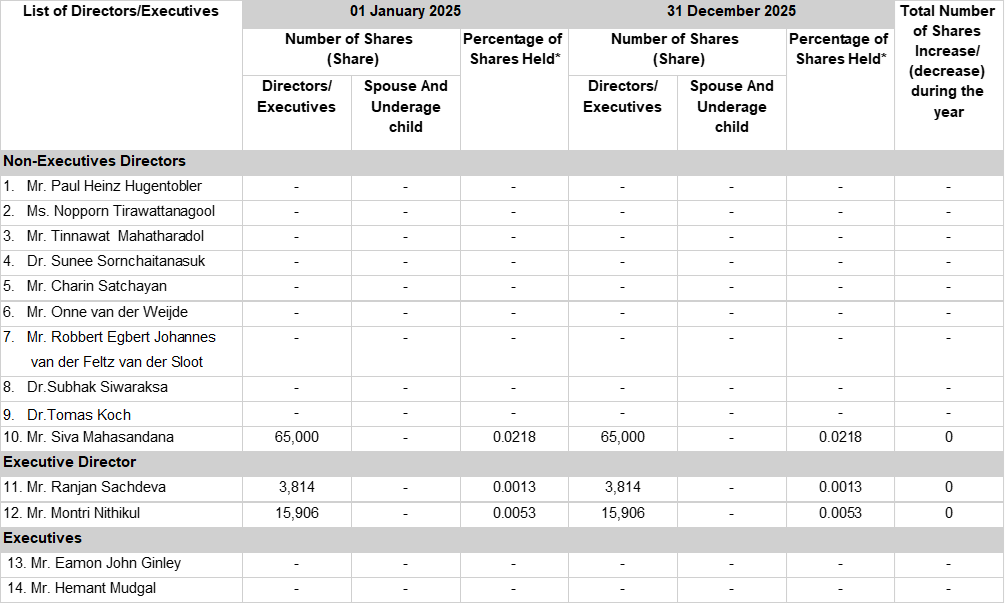
Remarks: *Shareholding proportion calculated based on the registered capital of 2,980 million baht, which has been fully paid-up at 2,980 million baht.
The Company’s Code of Business Conduct clearly states regarding insider information that “Any use of insider information that is on any document not publicly disclosed to influence investors’ decision to buy, sell, or hold securities, is unethical and illegal, and such action is susceptible to disciplinary and legal actions.” If you have any questions about insider information, you may consult with the Company’s Legal Department and the Company Secretary, to ensure full compliance with the policy as described.
In the past year, there were no incidents involving employees, management, or directors in relation to the misuse of inside information for securities trading. In addition, there were no cases of unfair practices or taking advantage of investors through the use of inside information by the Company’s directors or management.
Number of Inside-Information Cases
| Metric | Current Year | Previous Year | Two Years Ago |
|---|---|---|---|
| Total number of cases or issues related to the use of inside information to seek benefits (cases) | 0 | 0 | 0 |
Anti-Corruption
Has the Company Acted on Anti-Corruption?
Yes
Operations in the Past Year
The Company remains committed to implementing its Anti-Corruption Policy and has continuously upheld this commitment by joining the Thai Private Sector Collective Action Against Corruption (CAC) in 2015 and obtaining certification as a member on 18 August 2017. The Company has successfully maintained its certification through regular renewal assessments.
To ensure the policy remains relevant and comprehensive, the Company reviews its Anti-Bribery and Corruption Policy every two years under the supervision of the Audit Committee and the Board of Directors. Additionally, the Company conducts risk assessments for high-risk units, identifying potential corruption indicators and implementing risk mitigation and control measures.
In terms of awareness building, the Company prioritizes ongoing communication and training for Directors, Executives, and Employees. In the past year, e-learning training with comprehension assessments was conducted, covering guidelines for preventing fraud and corruption, with 100 percent completion by Employees and Executives. Additionally, all Directors received full communication on the Anti-Bribery and Corruption Policy and the No Gift Policy through CG Awareness Training, reinforcing a culture of transparency and ethical conduct.
Beyond communication and training, the Company enforces strict monitoring and compliance measures. Directors, Executives, and Employees at all levels are required to adhere to the policy rigorously. Clear procedures are in place for documenting business reasons for payments to external parties, supported by regularly reviews of related documents and evidence. The Internal Audit Department evaluates the adequacy of anti-corruption measures and internal controls and reports findings to the Audit Committee, which are recorded in the committee’s report to ensure governance standards are upheld.
The Company also provides formal whistleblowing and complaint channels for reporting corruption, with measures to protect whistleblowers. In the past year, there were no incidents of corruption of corruption or bribery, and no violations of the policy. Furthermore, no directors were involved in fraudulent acts or subjected to fines, accusations, or civil actions by regulatory authorities such as the Securities and Exchange Commission (SEC), the Stock Exchange of Thailand (SET), or the National Anti-Corruption Commission (NACC) in matters related to corruption.
Form of Anti-Corruption Operations
| Operation |
|---|
| Review of appropriateness in anti-corruption |
| The participation in anti-corruption projects |
| Assessment and identification of corruption risk |
| Communication and training for employees on anti-corruption policy and guidelines |
| The monitoring of the evaluation of compliance with the anti- corruption policy |
| Review of the completeness and adequacy of the process by the Audit Committee or auditor |
Number of Corruption Cases
| Metric | Current Year | Previous Year | Two Years Ago |
|---|---|---|---|
| Total number of cases or issues related to corruption (cases) | 0 | 0 | 0 |
Whistleblowing
Has the Company Implemented Whistleblowing Procedures?
Yes
Operations in the Past Year
In the past year, the Company continuously monitored and reported the performance of its whistleblowing channels. Formal, transparent, and easily accessible channels have been established for both internal and external stakeholders, covering key issues such as ethics, corporate governance, human rights, and anti-corruption.
The Company has implemented processes to maintain the confidentiality of whistleblowers and adopted protective measures to ensure that individuals can report concerns without fear of repercussions. These efforts reflect the Company’s strong commitment to promoting transparency and good corporate governance.
As of December 31, 2025, the Company has closed a total of 20 whistleblowing cases submitted through the INSEE Speak Up channel. The details are as follows:
List | 2025 |
Total complaints | 20 |
Resolved complaints | 20 |
| |
1.1 Corruption 1.2 Human rights 1.3 Use of insider information 1.4 Conflict of interest 1.5 Others | None None None 1 1 |
| 3 |
| 15 |
Nevertheless, the Company continues to implement stringent preventive measures, focusing on fostering a culture of transparency and integrity through ongoing communication of the Code of Business Conduct and related corporate governance policies. Regular training sessions and internal communications are conducted to reinforce these principles, alongside continuous oversight of internal control systems and periodic audits by relevant functions.
In addition, the Company regularly reports complaints and the progress of any related actions (if applicable) to the Audit Committee, which compromises independent Directors, ensuring close, transparent, and fair oversight for all stakeholders.
In cases where complaints are raised or issues involving the Company are identified, a fair and transparent investigation process is promptly initiated. Corrective actions are taken without delay, including root-cause analysis, process reviews, and improvements in collaboration with relevant departments. Remedial measures are implemented, progress is monitored, and appropriate remedies are provided to affected parties to prevent recurrence in the future.
Number of Whistleblowing Cases
| Metric | Current Year | Previous Year | Two Years Ago |
|---|---|---|---|
| Total number of cases or issues received through whistleblowing channels (cases) | 20 | 17 | 41 |
Details of Whistleblowing Cases
| Status | Period Type | Start of Period | End of Period | Details of the Case or Issue | Investigation Results | Corrective Actions | Case or Issue |
|---|---|---|---|---|---|---|---|
| Incident no longer subject to action | Within (month/year) | 2025-08 | 2025-08 | A case was reported involving misuse of authority, where an employee borrowed money from colleagues and contractors and falsified attendance records by not working during scheduled hours. | The investigation confirmed that the claim was reasonable. | The Company imposed disciplinary action by terminating the employee’s employment to uphold ethical standards and good corporate governance. | 3191 · Description: Prevention of conflicts of interest |
| Incident no longer subject to action | Within (month/year) | 2025-09 | 2025-09 | A supervisor made inappropriate and unfounded comments about an employee, causing emotional distress and reduced morale. | The issue resulted from a misunderstanding between employees. The alleged remarks were not made by the supervisor. | A verbal warning was issued due to the inappropriate nature of the behavior. | 3201 · Description: Other |
| Incident no longer subject to action | Within (month/year) | 2025-01 | 2025-01 | Concerns over fairness in a bidding process for a renovation project; unclear resubmission request and shared item list raised transparency issues. | No fraud found, but actions did not comply with procurement policy. | Written warning issued for non-compliance. | 3190 · Description: Compliance with laws, regulations, and rules |
| Incident no longer subject to action | Within (month/year) | 2025-03 | 2025-03 | Unauthorized access to company premises (plant area) by an employee’s family member. | Access occurred due to health-related support needs. No malicious intent identified. | A verbal warning was issued for a policy violation, with recommendations provided on appropriate conduct. | 3190 · Description: Compliance with laws, regulations, and rules |
| Incident no longer subject to action | Within (month/year) | 2025-08 | 2025-08 | Misuse of business trip advance for personal purposes. | Investigation confirmed improper use of company funds during a business trip, violating financial policy. | Employment terminated in accordance with company disciplinary procedures. | 3190 · Description: Compliance with laws, regulations, and rules |
Selection of Directors & Chief Executives
Selection — Introduction
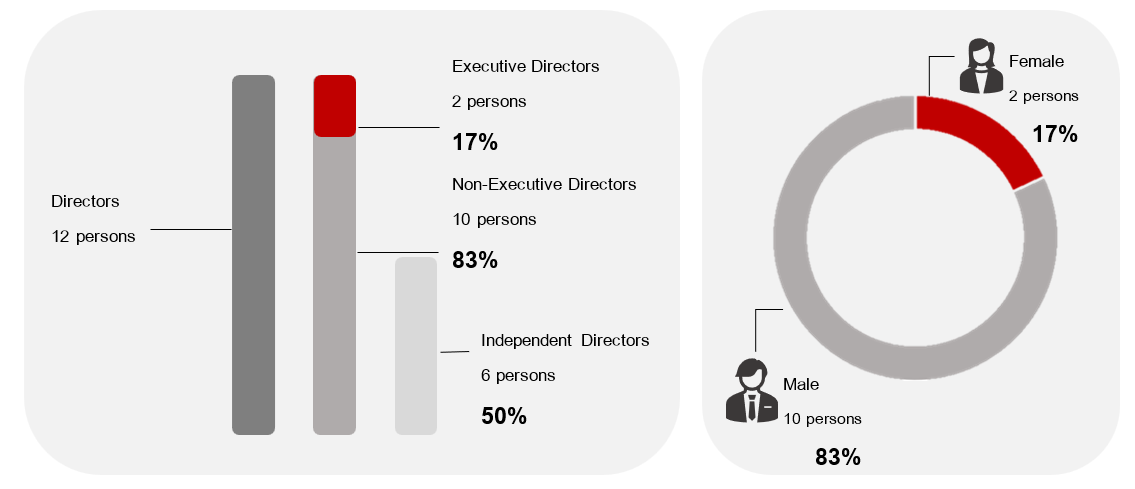
As of 31 December 2025, the Board of Director has 12 members, , including 10 Non-executive Directors, of whom 3 had experience relevant to the cement business. In 2025, the Nomination and Compensation Committee also nominated one additional Independent Director, resulting in a total of 6 Independent Directors on the Board, with all 6 possessing great expertise and experience, and experience aligned with the Company’s business strategy, and meet the qualifications required by the relevant authorities and the Company’s regulations. These Independent Directors help strengthen transparency and balance in the Company’s direction and governance.
The Directors have disclosed their skills and experience as part of the annual self-assessment, with each Director completing the skills matrix. Based on the 2025 Board Skill matrix, which considers the composition, skills, and experience of the Board members, it has been concluded that the current Board composition is well-suited for the Company’s business strategies.
The assessment confirms that each Director is appropriately equipped to fulfil their responsibilities, both as a member of the Board of Directors and as a member of their respective Board Committee. This conclusion aligns with the 2025 performance evaluation of the Board of Directors and its sub-committees.
Are Directors Selected Through the Nomination Committee?
Yes
Are Chief Executives Selected Through the Nomination Committee?
Yes
Number of Directors from Major Shareholders
3
Rights of Minority Shareholders on Director Appointment
The Board of Directors supports the shareholders’ participation by implementing a process that allows minority shareholders to participate in the nominations and appointments of Directors. Shareholders that are able nominate one or more candidates for directorship are defined as those that individually or collectively hold no less than 14,900,000 voting shares of the Company (5 percent of the total amount of the Company’s voting shares) in accordance with the law This practice is a part of the process to ensure that minority shareholders can elect independent Directors to safeguard their interest on their behalf. The Board ensures that the disclosure of such criteria is made to shareholders more than 3 months before the end of fiscal year.
For the Annual General Meeting 2026, the Board of Directors provided an opportunity to shareholders to submit and propose agenda items and Director candidates between 1 August 2025 - 30 November 2025 by establishing clear criteria for advance submission and disseminating such criteria on the Company’s website. No agenda items or director candidates were proposed by the shareholders for the Annual General Meeting 2026. Shareholders were invited to submit any question to the Company during this period.
Method of Director Appointment
| Method |
|---|
| Method whereby each director requires approval votes more than half of the votes of attending shareholders with voting rights |
Selection of Independent Directors
Introduction
The Board of Directors has delegated the Nomination and Compensation Committee to consider, seek out, and select candidates for Independent Directors. Consideration is made towards each potential Independent Director's experience and professional expertise in relation to the Board's (Board Skill Matrix,) skills and expertise that match with the qualifications as laid out by the Nomination and Compensation Committee, and independence from Management and major shareholders of the Company. In addition, candidates must have met all relevant legal and regulatory requirements.
Criteria for Selecting Independent Directors
Qualifications of Independent Directors
Holds shares not exceeding 0.5% of the total number of voting shares of the Company, including shares held in the Company’s parent company, subsidiaries, associates, major shareholders, or controlling persons, provided that the aggregate shareholding of such independent director and his/her related persons shall be taken into account. This criterion is more stringent than the minimum requirements prescribed by the relevant regulatory authorities.
Not being an executive director involved in the management of the business, employee, staff, advisor earning regular monthly salary, controlling person during the period of two preceding years.
Not being a person who is related by blood or legal relations with a director or an executive.
Not having a business relationship with including not being the significant shareholder or the controlling person of a juristic person having a business relationship with the company in an amount staring from 20 million baht or more or from three percent of NTA, whichever is amount is lower, unless such foregoing relationships have ended for at least two years prior to the date of filing.
Not being an auditor of the company, its parent company, subsidiary, associate company, a major shareholder, a controlling person, unless such foregoing relationships have ended for at least two years prior to the date of filing.
Not being a provider of professional services, a significant shareholder, controlling person, or partner of such provider with a service fee of more than two million baht per year during the period of two preceding year.
* In case of a person who has qualifications inconsistent with 4 and 6, he or she shall be granted an exemption from such prohibition, provided that the issuer has obtained an opinion of the board of directors indicating that after a consideration in accordance with the principle in Section 89/7, the appointment of such person does not affect the performance of duties and the giving of independent opinions, and that the following information has also been disclosed in the notice calling the shareholders' meeting.
Not being a director who is appointed as the representative of directors of the issuer, major shareholder or shareholder who is a connected person of a majority shareholder.
Not undertaking any business of the same nature and in competition with the company and the subsidiary, or holding more than one percent of the voting shares, or being a managing director, employee, staff, advisor with a regular monthly salary, person with controlling interest in such business.
Not having any other characteristics that cause the inability to express independent opinions.
An independent director can be an independent director of an affiliated company, but a member of the Audit Committee is prohibited from being a director of a parent company, subsidiary or subsidiary at the same level (sister company) which are listed companies.
After being appointed as an independent director, that independent director may be assigned by the board of directors to make a decision on the business operation, the parent company, subsidiary, associate company, sister company, major shareholder or controlling person in the form of collective decision. However, a member of the Audit Committee is prohibited from taking part in the decision-making on the business operation.
Did Any Independent Director Have a Business or Professional Relationship?
No
Director Development
Development of Directors in the Past Year
All Directors of the Company are highly qualified individuals with diverse business experience. The Directors have dedicated their time and efforts to performing their duties in strengthening the effectiveness and robustness of
the Board. Each Director expresses opinions independently and brings their knowledge, expertise, and experience in support of the Company’s governance with integrity, prudence, and due care, while prioritizing the best interests of
the Company and ensuring fairness to all shareholders.
Evaluation of Board & Subcommittee Performance
Criteria for Evaluating Board Performance
The assessment process employs assessment forms, one for Board committees and one for individual Directors, which are designed based on the Stock Exchange of Thailand’s guidelines, and which are in alignment with the roles and responsibilities defined by the organization charters. Each topic of assessment is scored on a scale of 1 to 5
(1 = Needs improvement, 5 = Excellent.) The assessment process is in the Cross-Evaluation format to ensure
well-round, transparent, and comprehensive results.
Criteria for Board of Directors assessment – Comprised of topics including (1) Director qualifications and Board of Directors composition, (2) Roles and responsibilities as dictated by the organization charters, and (3) Board of Directors in compliance and risk management
Criteria for Board Committees assessment – Comprised of topics including roles and responsibilities as dictated by the organization regulations, with cross-evaluation with directors from different committees being part of the assessment process.
Criteria for individual director assessment – Comprises of topics including (1) Knowledge, understanding, and support provided relevant to the roles and responsibilities of a Director, and (2) compliance with organizational regulations.
The Company Secretary prepares and submits the assessment forms to Directors both by hand and via online channels. Afterwards, the Company Secretary is responsible for processing the assessment result and presenting such results to the relevant Board Committees and the Board of Directors will discuss and analyze these results, the result of which will be used as the base for improving the performance of the Board of Directors moving forward.
Evaluation of Board Performance in the Past Year
In 2025, the assessment results of Board of Directors, Board Committees, and individual Directors are classified as ‘Excellent,’ an improvement compared to the results of 2024. In conclusion, the Board of Directors and Board Committees were satisfied with such performance. In addition, critical suggestions were provided relating to sustainability and the environment, marketing and market competitiveness, operation efficiency and costs, human resource development and organizational capacity, and strategic developments. These critical suggestions are to be built upon in an effort to further improve the operation of the Board of Directors and Board Committees.
Subcommittees
Subcommittees
| Results of the Subcommittee's Duty Performance |
|---|
Report of the Nomination and Compensation Committee Dear Shareholders, The Nomination and Compensation Committee (NCC) is pleased to present its 2025 Annual Report. Throughout the year, the Committee continued to uphold high standards of corporate governance, transparency, and fairness in overseeing the nomination, remuneration, and leadership development frameworks across the Group. The Committee’s work centered on strengthening leadership capability, ensuring robust succession pipelines, and aligning compensation structures with business performance and long-term shareholder value. Purpose of the Committee The NCC is responsible for:
Committee Composition The NCC comprised four members during 2025:
The Group CEO attended all meetings as a permanent invitee. In 2025, the Committee convened six meetings, with all members attending every meeting. Several sessions were also attended by key leaders, including group company CEOs, functional heads, and high-potential leaders. Nomination, Composition & Structure The Committee reviewed and endorsed changes to board compositions of SCCC and key group companies, including Siam City Concrete, Siam City Cement Lanka, INSEE Digital, and Ecocycle entities, ensuring deeper industry expertise, local market insight, and stronger linkage to the Group’s technology & digital transformation agendas. During 2025, the NCC reviewed and endorsed 9 leadership appointments, including:
These appointments are intended to reinforce leadership and drive the execution of strategic transformation initiatives, ensuring that executives’ qualifications and experience are aligned with the Company’s business direction and strategic priorities. Remuneration The Committee oversaw compensation frameworks with emphasis on market alignment, performance driven principle, and long-term sustainability. Key improvements included:
The Committee concluded that the remuneration structure and amounts are appropriate, performance-driven, and commensurate with responsibilities, while supporting long-term sustainability. Management Development & Succession Planning Leadership development and succession planning remained a central focus of the NCC. The Committee reviewed succession pipelines for critical and C-level roles through Group People Days, assessed talent readiness across Thailand, Vietnam, Sri Lanka, and Bangladesh, and identified capability gaps. The Committee also provided leadership exposure by inviting CEO and CEO-1 successors to present directly to the NCC and endorsed executive development programs for key leadership talents. Board Committees The Nomination and Compensation Committee also reviewed the compositions of the Board Committees (AC, NCC, GC) to ensure that the functional expertise required for the respective committees meet international standards. In addition, the NCC endorsed the establishment of Technology & Digitalization Committee to steer strategic technology and digital transformation roadmap for SCCC Group. Conclusion The Nomination and Compensation Committee remains committed to enhancing leadership capability, reinforcing good governance practices, and ensuring that remuneration frameworks support long-term performance and shareholder value. Paul Heinz Hugentobler Chairman of the Nomination and Compensation Committee |
Report of the Governance Committee Dear Shareholders, The Governance Committee comprises three members, including the Chairman and one member who are independent directors. The remaining member is an advisor to the Company with extensive knowledge, expertise, and experience in good corporate governance. All members perform their duties independently, in accordance with the Governance Committee’s Charter, and are committed to promoting the Company’s business operations in line with internationally recognized principles of good corporate governance. This is to safeguard the interests of shareholders and stakeholders, as well as to preserve the reputation and credibility of the Group. With regard to the performance and views of the Governance Committee for the year 2025, the key matters can be summarized as follows:
In 2025, the Company received a 5-star (Excellent) Corporate Governance Rating (CGR) for the tenth consecutive year, achieved a SET ESG Rating of AA for the seventh consecutive year, and continued its membership in the Thai Private Sector Collective Action against Corruption (CAC). These achievements reflect the strength of the Company’s corporate governance framework and the continued confidence of its stakeholders. In conclusion, the Governance Committee is of the view that, based on the above-mentioned performance and when considered together with other corporate governance frameworks and practices across the Group, shareholders and stakeholders can have confidence that the Company has a sound corporate governance structure and a strong governance-driven corporate culture. These foundations support the Company’s sustainable growth and long-term value creation. Charin Satchayan Chairman of the Governance Committee |
Report of the Technology and Digitalization Committee Dear Shareholders, The Technology and Digitalization Committee (TDC) was formed on 15th May 2025 to oversee and guide the formulation of a strategic roadmap and execution aimed at transforming the Company's operations through appropriate and fit for purpose technologies and digital innovations. The TDC comprising three independent directors. All members possess relevant knowledge and work experience as well as a thorough understanding of the Group’s businesses and operations. TDC has performed its duties in accordance with its charter and in line with current business priorities approved by the Board of Directors. In 2025, TDC convened a total of three meetings with attendance by all members. And has provided two reports (August and November) to the Board in 2025. TDC’s key activities are summarized below:
In conclusion, TDC believes it supports assisting the Board of Directors in reviewing the Group’s status of digitalization and provided prudent management supervision, oversight and guidance to the Company’s digital and technology initiatives for the benefit of all shareholders and stakeholders. Dr. Tomas Koch Chairman of the Technology and Digitalization Committee |
At the Board of Directors’ Meeting No. 204, held on 30 April 2025, the Board resolved to revise the structure of its sub-committees by terminating the roles of the Investment and Finance Committee and appointing the Technology and Digitalization Committee. These changes became effective from 30 April 2025 onwards, in order to align with the Company’s governance structure and business direction. |
Meeting Attendance & Remuneration
Meeting Attendance & Remuneration — Introduction
The Directors perform their duties with utmost care and responsibility, with time and resources sufficiently dedicated to their performance as such. The Chairman of the Board of Directors and the Group Chief Executive Officer have the responsibility to set the agenda of Board of Directors’ meetings, with the Company Secretary reviewing the agenda to ensure compliance with legal requirements, the Company’s organizational charters, and the Company’s Manual of Authority. The Company understands the importance of setting the meeting schedule well in advance, with the schedule of meetings in the following year available and announced to the Board of Directors in the middle of each year, allowing for ample time for planning and monitoring of Management’s performance.
Board of Directors’ Meeting Plan for 2026
The Company understands the importance of setting the meeting schedule well in advance, with the schedule of meetings in the following year available and announced to the Board of Directors in the middle of each year,
the meeting schedule and key agenda items for the following year are determined and communicated in advance.
The meeting schedule specifying the date, time, venue, and key agenda items is presented as part of the regular agenda of the Board of Directors’ meeting. This enables directors to allocate their time efficiently to attend
the meetings without constraints and to effectively monitor the performance and operations of management.
Meeting no. | Meeting Timing (Pattern) | Key Agenda |
|---|---|---|
1 | 3rd week of February | Approval of the annual financial statements and calling of the Annual General Meeting of Shareholders |
2 | Last week of April | Post-AGM meeting and review of Board Committee composition |
3 | 2nd week of May | Review of Q1 financial statements |
4 | 2nd week of August | Review of Q2 financial statements |
5 | 2nd week of November | Review of Q3 financial statements |
6 | 1st week of December | Review of the budget for the following year |
- | As appropriate | Board session with Management to receive presentations on initiatives |
Meeting Attendance — Introduction
The number of Board of Directors meetings in each year is set with consideration towards the responsibilities of the Board of Directors and the nature of the Company’s businesses. In 2025, there were 6 Board of Directors’ meetings, all of which were hybrid meetings wherein both physical and online attendance were available options, to facilitate the Board of Directors performing their duties efficiently. Management also provided reports to the Board of Directors consistently on performance and development plans, such that the Board of Directors has sufficient information to perform its duties in governing and monitoring Management’s operation optimally. The Board of Directors, similarly, also invited Management to attend the meetings, where members of Management could report directly to the Board.
In the past year, the Board of Directors held one meeting among the Non-executive Directors, which is arranged annually. The meeting is conducted without the presence of executive directors or management, in order to allow the directors to freely express their views and provide recommendations regarding the performance of management. The Chairman of the Board then communicates such recommendations to the Group Chief Executive Officer.
The Company always ensure to distribute invitation letters for the meetings no less than 7 days prior to each meeting, in alignment with all relevant laws and regulations, to ensure that Directors are allowed sufficient time to study the agenda and the materials provided prior to the meeting. In addition, the Board of Directors are also able to access any necessary media relevant to the agenda, through the Group Chief Executive Officer, the Company Secretary, or Executives authorized to provide such information. If required, the Board of Directors may also seek out independent opinions from external professionals or advisors.
In 2025, all Directors attended 100 percent of the Board of Directors’ meetings. Details may be found below.
Types of Remuneration of the Board of Directors
The shareholders approved the following principles for the payment of remuneration for the Company's directors at the Annual General Meeting of Shareholders No. 32, held on April 30, 2025:
“Remunerations of directors consist of monthly Director fees and/or meeting fees (as the case may be), and bonuses. Payments of remunerations of Directors shall be made in accordance with the following principles from the day the resolution is passed by a vote of the Shareholders onwards and until the Shareholders’ Meeting determines otherwise
Directors’ Remuneration: The Board members shall receive monthly Director fees and/or meeting fees (as the case may be), at the aggregated amount of not more than the annual budget of THB 45 million. The Board of Directors shall allocate such remuneration accordingly (exception being Executive Directors, who do not receive Directors’ remuneration)
Directors’ Bonuses: The Board members shall receive the annual bonuses in the aggregated amount of not exceeding THB 15 million (same as previous year). The Board of Directors shall allocate such bonuses among its members accordingly.
Other Benefits for Directors: None (Does not include benefits provided to all employees)"
The monthly directors’ remuneration and/or meeting fees (as the case may be) based on position for the year 2025 are as follows:
Board / Committee | Position | Monthly Fee (THB/Person/Month) | Meeting Fee (THB/Person/Time) |
Board of Directors | Chairman | 240,000 | - |
Director | 120,000 | - | |
Audit Committee | Chairperson | 180,000 | - |
Director | 120,000 | - | |
Nomination and Compensation Committee | Chairman | 120,000 | - |
Director | 75,000 | - | |
Governance Committee | Chairman | - | 120,000 |
Director / Member | - | 75,000 | |
Technology and Digitalization Committee* | Chairman | 120,000 | - |
Director | 75,000 | - |
Remark: *The Board of Directors' Meeting no. 204 on 30 April 2025 resolved to establish the Technology and Digitalization Committee, and to dissolve the Investment and Finance Committee. Remuneration for the Technology and Digitalization Committee is same as that of the Investment and Finance Committee.
Details of Remuneration received in 2025 by each Director are as follow:
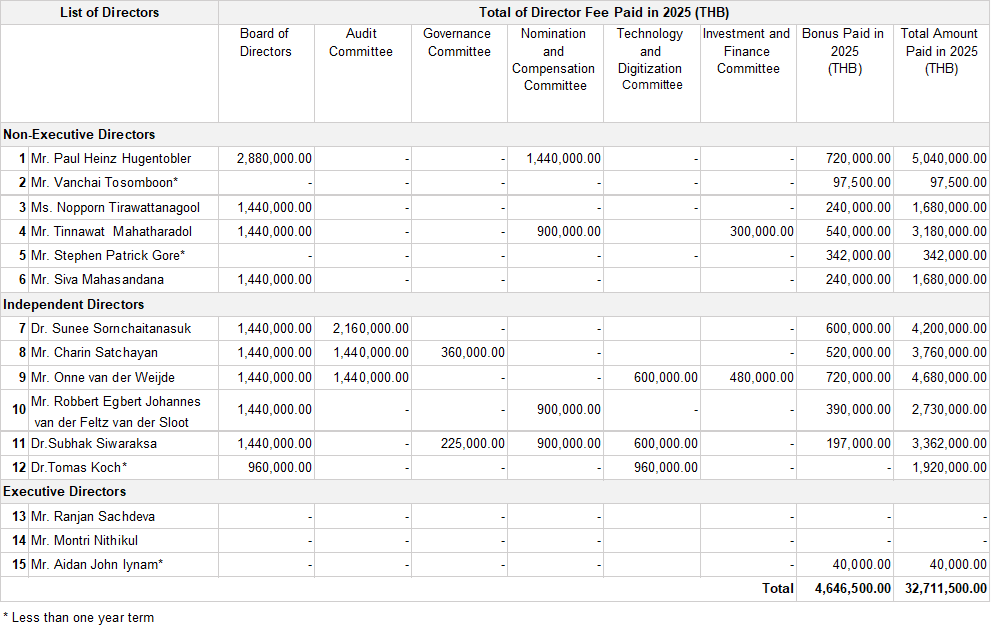
Remark:
Mr. Vanchai Tosomboon retired from the position as a director as of the AGM No. 31 (Year 2024.)
Mr. Stephen Patrick Gore resigned from the position as a director as of 19 August 2024.
Dr. Tomas Koch was appointed an independent director by the resolution of the AGM No. (Year 2025), held on 30 March 2025.
Mr. Aidan John Lynam resigned from his position as a director as of 9 February 2024.
Remuneration of the Board of Directors
Remuneration Payable — Introduction
The accrued directors’ remuneration represents a bonus for the Company’s performance in 2025, which will be paid in the first quarter of 2026 in the amount of THB 4,677,500, as allocated by the Board of Directors and approved by the Shareholders’ Meeting.
Remuneration or Benefits Payable to the Board
| Metric | Amount (Baht) |
|---|---|
| Remunerations or benefits pending payment to the board of directors over the past year (baht) | 4,677,500 |
Supervision of Subsidiaries & Associated Companies
Does the Company Have Subsidiaries or Associated Companies?
Yes
Is There a Mechanism for Overseeing Subsidiaries and Associated Companies?
Yes
Mechanism for Overseeing Management of Subsidiaries
The Board of Directors has set a clear framework for management of subsidiaries and associated companies, to ensure optimal direction and monitoring in all aspects of these companies’ operation. This includes:
Nomination of Representative Directors in subsidiary and associated company boards of directors
A Director or management the Company is always a part of a subsidiary or associated company’s Board of Directors, to ensure that the Company maintains its ability to align direction of such company. At least one member of the Group Executive Committee shall be appointed as a director in a subsidiary board of directors serves as a bridge between the subsidiary and the Committee to guarantee that the subsidiary’s operation aligns with the Group’s governance framework per the Company’s Organizational Regulations, the charter of the Nomination and Compensation Committee, and the charter of the Group Executive Committee. The Group CEO is responsible for nominating a Representative Director to a particular subsidiary or associated company’s board of directors, with the expertise and experience of the candidate being considered and without discrimination on gender or age. Candidates are presented to the Nomination and Compensation Committee, before being proposed to the Company’s Board of Directors for approval, and the subsidiary’s Board of Directors for subsequent approval and appointment processing as required by the relevant laws. The Board of Directors has clearly defined the role and responsibilities of a Representative Director to ensure that the Leading Representative Director acts in good faith and in the best interest of the subsidiary under the governance framework of the Company, with the responsibility to ensure full disclosure to the Company on matters including business performance, related party transactions, acquisition and sale of assets, change of capital structure, or any other matter that affects the risk framework of the Group, as well as to ensure consistent report of critical matters in the subsidiary to the Company’s Board of Directors, for complete transparency.
Governance, disclosure, and internal control of a subsidiary/associated company
Subsidiaries and associated companies are required by the Board of Directors to have in place a system for consistent performance reporting, which shall include business performance, financial condition, and governance performance (e.g. compliance, operational health and safety, cybersecurity) and shall be reported to the Group Executive Committee on a monthly basis, and to the subsidiary’s Board of Directors on a quarterly basis prior to the quarterly Board of Directors’ meeting of the Company. Executive of the subsidiary and the Representative Director of such subsidiary have the duty to report critical information, risk matters, and operation progress, in the interest of maintaining transparency and to facilitate the Board of Directors’ decision making.
The Board of Directors also requires that any exchange and disclosure of information by a subsidiary or associated company shall be performed via an official channel where disclosure is safely archived. Sensitive or confidential information is subject to requirements of the relevant laws and internal control policies of the Company, such as the Insider Trading Policy. Directors and Executives who act as Representative Directors are required to avoid any potential conflict of interest and shall only use or relay such information exclusively for the purpose of direction and governance.
For related party transactions, acquisition and sale of assets, and transactions that affect the Company’s financial condition, the Company requires that any transaction of such nature shall be thoroughly reviewed to ensure that it is transparent and compliant with any relevant law and the Company’s policy (e.g. the Related Party Transaction Policy). Acquisition and sale of assets of subsidiaries must be approved by the Company’s Board of Directors and in alignment with the Manual of Authority, to ensure that such acquisition aligns with the Company’s strategy.
The operation of a subsidiary must be sufficiently governed on the financial, business performance, risk management, and legal compliance fronts. The Company’s Group Internal Audit and Compliance fulfils this need, regularly auditing the subsidiaries’ operation and performance and enabling the Board of Directors to effectively govern subsidiaries and associated companies in a complete, transparent manner.
Oversight Mechanisms
| Mechanism |
|---|
| Sending representatives to act as directors, executives or controlling persons in proportion to shareholdings |
| Defining the scope of powers, duties and responsibilities of directors and executives who represent the company in setting important policies |
| Disclosure of financial information and operating results |
| Transactions between the Company and related persons |
| Other important transactions |
| Acquisition or disposal of assets |
| Internal control system of the subsidiary operating the core business is appropriate and sufficient in the subsidiary operating the core business |
Agreements Between the Company and Shareholders in Managing Subsidiaries
For the joint venture in Cambodia (Chip Mong INSEE Cement Corporation), in which the Company is a minor shareholder, to ensure maximum efficiency and output, the Company has entered into an agreement with other shareholders to reserve the right to veto against critical matters, in order to safeguard the Company’s investment.
Board Duty Performance — Overview
Board Duty Performance — Overall Description
Board composition review and redefinition for better contextual and strategic alignment, with one additional Independent Director (resulting in the Board of Directors having 6 Independent Directors from the total of 12 Directors) joining the Board, further diversifying the expertise, experience, and perspectives of the Board. Similarly, committees have been restructured, with the Investment and Finance Committee dissolved, and the Technology and Digitization Committee established.
Reinventionf Directors’roles to ensure compatibility with new strategies and challenges.
Establishment of the Technology and Digitalization Committee, which provides strategic guidance in addition to its function in corporate governance
Increased emphasis and utilization of each Director’s expertise for the Group’s benefits, with the Nomination and Compensation Committee submitting to the Board of Directors for approval appointments of Independent Directors as Directors of select subsidiaries’ boards, as would befit their experience, such as in human resource development or in cement production
Improvement to the governance framework for better alignment with the Group’s structural changes and developing challenges
Determination of roles and responsibilities of the Lead Director Representative who is a member of the board of a subsidiary that is listed company in the Stock Exchange of Thailand, to ensure that such listed subsidiaries operate in alignment with the principle of good governance and with transparency
Ensuring that critical matters are consistently monitored, such as major investments or strategic projects, as well as overseeing the successor pipeline for Management other than Group Executives by presenting strategy and implementation plan to the Board of Directors, to ensure that communications from the Board to Executives of the subsidiaries are effective and with clarity, and that Directors are able to voice their comments or suggestions where appropriate.
Creation of long-term roadmaps for the critical matters such as investments in maintaining critical revenue generating assets and elevating technological and digital capacity in order to improve the capacity of both primary and secondary businesses as well as support units of the Group, ensuring that all parts of the Group remain aligned with the vision, missions, and values of the Company, even as the context continues to shift.
Leveraging ESG performance for long term, sustained profit generation
The Board of Directors fully supports investments into product developments that result in less use of natural resources and increased long term profitability, adopting modern, internationally proven technologies to do so across the group, whether in the cement business, ready-mix cement, aggregates, building materials, or service-provider segment.
The Board of Directors fully supports digital literacy and capacity building of all our employees. This is through activities including providing opportunities for the sales teams to offer technical advice to clients and consumers, and responsible adoption and usage of AI.
The Board of Directors consistently reviews and assesses the Group’s operations and their environmental risks and impacts, to ensure that the Group’s risk management framework remains sufficient, ready for any potential impact, and sufficiently flexible for potential risks in the future.
Section Introduction
Consequent of the expansion of the Group in late 2024 by way of the acquisition of Lanna Resources Public Company Limited and Thai Agro Energy Public Company Limited, which are now respectively direct and indirect subsidiaries, which was resultant of the change of shareholding structure of major shareholders leading to a mandatory tender offer, the Company, under the obligation imparted by the chain principles.
In 2025 the Board of Directors has put more emphasis on elevating and adjusting various frameworks of all levels including at the Director and Executive levels, with a particular focus on its responsibility to lead the Company in building sustainability and ensuring compliance to the principles of good governance.
Sub-section Introduction
In addition to serving the shareholders’ interest by way of generating profitability and providing dividends to shareholders consistently in accordance with the Company’s policy, operating with stringent financial discipline, ensuring that assets and equipment critical for income generation remain operational and efficient, as well as competing in the industry by way of focusing on making critical investments with the Company’s cashflow, in 2025, the Board of Directors has also focused on multifaceted reinventions of the Company’s operations in preparation for fast-paced and complex changes, as well as to ensure that all operations are for the benefits of the Stakeholders and for improved governance level and ESG performance of the Company as a whole.
Managements of all Group companies have worked in alignment with this policy by the Board of Directors, focusing on the principle of People-Planet-Profit (3P), namely, the mutual understanding of all employees, environmental awareness on all operation levels, and efficient cost management for improved competitiveness.
Summary of the Board of Directors’ Duties and Performance over the Past Year that Contributed to the Organization’s Development is as Follows:
Audit Committee Duty Performance
Results of the Audit Committee's Duty Performance in the Past Year
Report of the Audit Committee
Dear Shareholders,
The Board of Directors of Siam City Cement Public Company Limited has appointed an Audit Committee comprising of three independent directors with deep experience across the cement industry, accounting and finance, legal matters and general business. All members meet the qualification requirements of the Securities and Exchange Commission, Thailand (SEC) and the Stock Exchange of Thailand (SET).
Throughout the year, the Audit Committee discharged its responsibilities objectively and independently in accordance with its charter, which is reviewed annually to reflect current priorities endorsed by the Board of Directors. The Audit Committee continues to promote a culture grounded in good governance, ethics, integrity, accountability and transparency to support sustainable performance.
In 2025, the Audit Committee, comprising three members, held a total of 9 meetings, with all members attending every meeting.
The Audit Committee’s annual self-assessment reflected satisfactory effectiveness and a commitment to continuous improvement. In establishing priorities for the 2026 audit plan, the Committee evaluated the Group’s business risks, enhancements to internal controls, organizational efficiency, cyber resilience, and preparedness for emerging sustainability reporting requirements.
The key activities of the Audit Committee for 2025 are outlined below:
Review of Financial Reports: The Audit Committee thoroughly reviewed material matters in quarterly financial information and annual financial statements of Siam City Cement Public Company Limited and its subsidiaries, in collaboration with Management and External Auditors, ensuring compliance with Thai Financial Reporting Standards (TFRS) and alignment with International Financial Reporting Standards (IFRS). Discussions with the Management and External Auditors covered financial statements accuracy, disclosures, significant accounting adjustments, audit scope, adequacy of accounting practices, Key Audit Matters (KAM) and internal control assessments. To uphold financial reporting standards and protect stakeholders’ interests, the Audit Committee also met privately with the External Auditors to discuss audit approaches, the quarterly and annual audit plan, to identify any unusual transactions, reaffirm audit independence and to address sensitive issues. The External Auditors found no significant concerns or indication of fraud affecting the Company’s financial statements. The Audit Committee also monitored changes in accounting standards and reviewed Management’s financial analysis reports. Additionally, it approved non-audit services provided by the External Auditor to maintain External Auditor independence.
Review of Related Party Transactions and Potential Conflicts of Interest: The Audit Committee conducted quarterly reviews of related party transactions and those potentially conflicting with the Company’s interests to assess their necessity, reasonableness, adherence to arm’s-length terms, and transparency. They also confirmed alignment with the financial statements through the External Auditor and ensured timely disclosure to the SET.
Risk Management Process Review: The Audit Committee conducted quarterly assessments of the Company’s risk management processes to monitor principal risks and mitigation and encourage enhanced risk sensing through data-driven dashboards and scenario analysis.
Evaluation of Internal Controls and oversight of the Group Internal Audit and Compliance function: The Audit Committee had monthly meetings with the Group Internal Audit and Compliance department, as well as the Group Chief Executive Officer and Group Chief Financial Officer, to evaluate the effectiveness of internal controls. In addition, quarterly reviews were conducted with External Auditors. These assessments focused on business priorities, organizational efficiency, and the ongoing enhancement of the internal control system through training and awareness initiatives. Management’s responses to audit findings and recommendations satisfied the Audit Committee, which concluded that the organization maintained sufficient internal controls. The External Auditors also confirmed that there were no major deficiencies affecting the Company's financial statements. Furthermore, the Audit Committee examined and approved the Group Internal Audit and Compliance Annual Plan for 2026, including its budget.
Compliance with Governance and Regulatory Requirement: The Audit Committee ensured adherence to SEC, SET, and other applicable regulations by reviewing quarterly compliance reports and fostering strong corporate governance through training and communication initiatives, including e-learning programs. The Audit Committee also evaluated reports from the Company’s whistleblowing system (INSEE Speak Up) regarding external complaints, fraud investigations, and risk assessments, implementing preventive measures as needed. In addition, updates to the Governance, Risk, and Compliance (GRC) framework were reviewed, including revisions to the Manual of Authorities and the Policy Landscape across the group. In its oversight of Environmental, Social, and Governance (ESG) risks, compliance, and reporting, the Audit Committee promoted transparency and accountability by aligning ESG disclosures with global standards, validating ESG data through internal controls, and encouraging ethical business practices such as anti-corruption policies. The Audit Committee further promoted board and management accountability for ESG integration, embedding sustainability considerations into corporate strategy and risk management to strengthen long-term business resilience and stakeholder confidence.
Review of Corruption Risk and Anticorruption criteria: The Audit Committee conducted a review on the Company’s anti-corruption policy, practices, and anti-bribery guidelines to safeguard the Company’s interests, including the overall corruption risk assessment and the adequacy of key preventive and detective controls. The Committee also reviewed the effectiveness of reporting and whistleblowing mechanisms including whistleblower protection and the oversight of complaint-handling and investigation processes, together with ongoing anti-corruption communication and related external engagement, as applicable. Based on internal audit results, no significant weaknesses were identified; therefore, the Audit Committee is of the opinion that the Company maintains appropriate internal controls and adequate supervision in accordance with applicable anti-corruption criteria.
Appointment of External Auditors for 2026: The Audit Committee recommends the appointment of Ms. Kamontip Lertwitworatep and/or Ms. Sarinda Hirunprasurtwutti and/or Mr. Chayanut Metkunakorn f EY Office Limited as the Company’s External Auditors for 2026 with the audit fees for the Board’s concurrence and the shareholders’ approval at the AGM 2026.
In conclusion, based on the performance of its duties throughout the year, the Audit Committee is of the view that the Company has continuously enhanced its governance framework, risk management processes, and internal control systems, with a strong focus on environmental, social and governance (ESG) matters, climate change–related risks, and the adoption of digital technologies to support sustainability, strengthen the effectiveness of governance, and enhance the Company’s long-term competitiveness. In addition, the Audit Committee considers that the Company’s financial statements have been prepared in accordance with applicable financial reporting standards. The related party transactions were conducted at arm's length on standard commercial terms. Furthermore, risk management processes, internal controls, and governance systems were determined to be both adequate and efficient. This ensures that the Company maintains full compliance with all relevant regulations.
Dr. Sunee Sornchaitanasuk
Chairperson of the Audit Committee