

CG Policy · 2025
In this section7 topics
Corporate Governance Policy
Has a Corporate Governance Policy
Yes
Policy Description
The Board of Directors of Siam City Cement Public Company Limited (SCCC) recognizes the importance of good governance and remains strongly committed to implementing and practicing Corporate Governance (CG) in all its operations. This commitment is aimed at achieving long-term sustainable growth and creating value for all stakeholders. We operate in adherence to the Corporate Governance Code 2560 (CG Code 2560) which includes 8 guidelines for the Board of Directors’ operation. These are: (1) Responsibility as a leader in creating sustainable value for the organization; (2) Responsibility to set the objectives and targets of the organization such that they are conducive of sustainability; (3) Responsibility in promoting effective operation; (4) Responsibility in recruiting and developing top level executives, and ensuring that human resource management is effective; (5) Promoting innovations and responsible business operation; (6) Ensuring sufficient risk management and internal control mechanisms; (7) Maintaining financial and disclosure credibility, and; (8) Communicating with shareholders and promoting shareholders’ participation
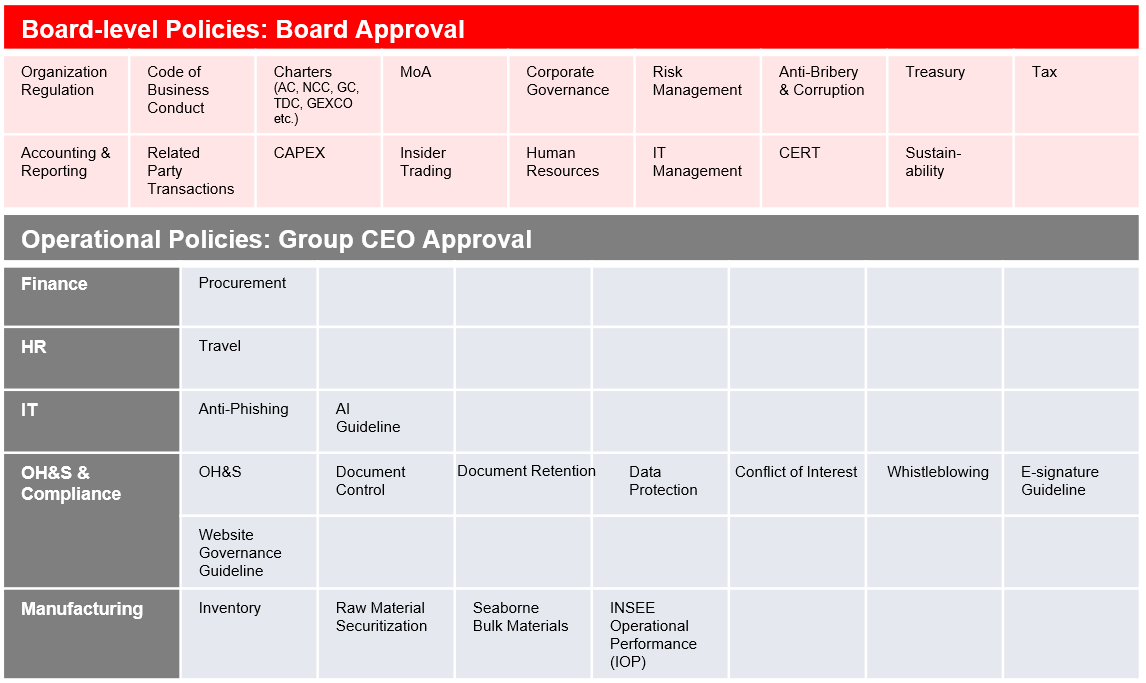
The Board of Directors has established the Group Policy Landscape to clearly define the authority framework for approving and reviewing changes to the Group’s policies. Under this structure, certain policies fall under the approval and review authority of the Board of Directors, such as the Corporate Governance Policy and the Code of Business Conduct. These policies are reviewed in accordance with the authority framework stipulated in the charter of the Corporate Governance Committee. The Board also ensures that such policies are communicated to directors, executives, and employees throughout the organization so that they serve as guiding principles and good practices for corporate governance across the Group.
For other policies, the Board of Directors has delegated the authority for approval and review to the Group Chief Executive Officer or the Chief Executive Officers of subsidiaries in accordance with the relevant authority framework.
In addition, the Company reviews the Group Policy Landscape at least once a year to ensure that the overall policy structure remains appropriate and aligned with applicable laws, best practices, as well as the evolving economic and social environment.
Governance, Risk, and Compliance (GRC) Framework
As an additional note, the Company also concurrently maintains and implements the GRC framework (Governance, Risk, and Compliance) for governance of operations in alignment with the Board of Directors' policies and guidelines. All operating units within the Company and subsidiaries are part of the systematic reporting hierarchy that ensures all critical matters are communicated effectively to the Board of Directors, via the subsidiaries' boards, framed as a standing agenda item of every Board of Directors' meeting.
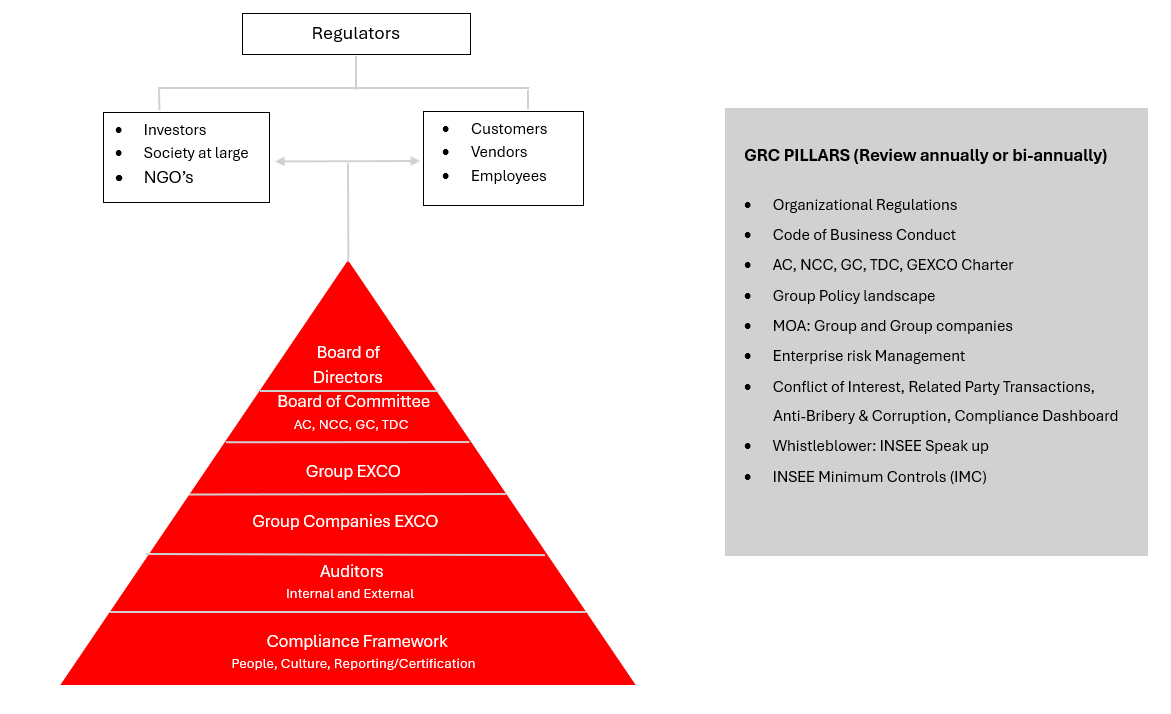
The Board of Directors also delegates to the Governance Committee the duty to review the Group’s governance performance on an annual basis and assess regulatory changes that concern governance performance in preparation for governance-related assessments and certifications such as the Thai Institute of Directors’ Corporate Governance Report or the ASEAN Corporate Governance Scorecard (ACGS), and to report findings to the Board of Directors, to ensure the Company is always operating at the level that meets international standards.
The Board of Directors adheres to the Principles of Good Corporate Governance for Listed Companies 2017 (CG Code) and has established a Corporate Governance Policy to serve as a guideline for operations across the Group. The policy is based on the corporate governance practices of the Stock Exchange of Thailand and the principles of the Organisation for Economic Co-operation and Development (OECD). It applies to employees, executives, directors, and any persons acting on behalf of or representing the Group. Subsidiaries listed on the Stock Exchange of Thailand that already have corporate governance policies aligned with this policy may continue to apply their own policies.
In addition, the Company has designated responsible units to communicate Group-level policies across the organization to ensure that directors, executives, and employees understand and comply with such policies. Communication is carried out through internal channels together with regular learning programs in both classroom and online channels.
Overview of the Group’s Policy Structure
Policy Document Link
https://investor.siamcitycement.com/storage/documents/corporate-policies/sccc-corporate-governance-policy-en.pdf
Policy & Practices — Board of Directors
Has Policy & Guidelines for the Board
Yes
Board Guidelines
| Guideline | Other — Please Specify | Detail |
|---|---|---|
| Nomination of Directors | The Nomination and Compensation Committee, as delegated by the Board of Directors, is responsible for reviewing and making recommendations on potential adjustments to the structure of the Board of Directors and the Company’s sub-committees. This includes consideration of diversity among non-executive Board or committee members, ensuring a balanced mix of knowledge, expertise, and experience that best serves the Group’s business interests. The selection process is conducted without discrimination based on gender, race, or nationality. In the nomination of directors, the Nomination and Compensation Committee applies the Board Skill Matrix as a guideline in determining the qualifications of candidates to ensure alignment with the Company’s strategy. In doing so, the Committee also takes into account Board Diversity, including professional skills, specific expertise, experience across various industries, gender, age, as well as race and nationality, to ensure that the Board comprises members with appropriate qualifications, expertise, and experience to effectively perform their duties and support the Company’s strategic direction. The Nomination and Compensation Committee may also engage professional search firms to identify and recruit qualified candidates, both domestically and internationally, in accordance with the specified criteria. The Committee is responsible for reviewing, selecting, and nominating suitable individuals for consideration by the Board of Directors, and subsequently proposing their appointment for approval at the shareholders’ meeting. Qualifications of Directors The Board of Directors currently consists of Directors who meet all qualifications and requirements, and none possess any prohibited traits per the Public Limited Company Act, BE 2535 (with amendments), and the Securities and Exchange Act B.E. 2535 (with amendments), and the relevant criteria maintained by the Stock Exchange of Thailand, the Securities and Exchange Commission, and other related organizations, as well as the Company’s own regulations. Considerations are also given to the diversity of vocational skills and specific expertise, with a strong emphasis on non-discrimination based on gender, age, nationality, ethnicity, religion, or any other characteristics. This ensures that the Company can meet its objectives and business goals, generate long-term returns and value for shareholders, and build trusts with all stakeholders, ultimately supporting the Company’s sustainable growth. Process of Director Appointment The shareholders' meeting appoints Directors in accordance with the method set forth in Article 12 of the Articles of Association. In summary, each share gets one vote. The shareholders vote on the Director nominations one by one. Each Director must be approved by more than half of the shareholders in attendance and casting their votes. The Board of Directors offers rights to minority shareholders to nominate a person to be elected as a Director at the annual general meeting of shareholders at least 3 months. The Board of Directors can appoint Directors in accordance with the procedures outlined in Article 14 of the Company's Articles of Association. In summary, this can be done only when a Director's position becomes vacant for reasons other than retirement by rotation, unless the remaining term of the Director is less than two months, and it must be approved by the Board of Directors by at least three-fourths of the remaining Directors. The Director elected as the replacement may serve only for the remainder of the term of the Director they replace. | |
| Determination of Director Remuneration | Criteria of Director Remuneration The Board of Directors has tasked the Nomination and Compensation Committee with considering the criteria for determining the remuneration of the Board of Directors and Board committees in a transparent process, taking into account the suitability and responsibilities of the position, as well as other factors such as the Company's business and operating results, norms in the same market and industry, economic conditions, and other facts, which are compared to industry standards. After careful consideration, the Nomination and Compensation Committee submits its opinion to the Board of Directors for consideration and screening, followed by a proposal to the shareholders for approval. All forms of Director’s remuneration must be approved by at least two-thirds of shareholders present at the meeting. The shareholders approved the principles for the payment of remuneration for the Company's Directors at the Annual General Meeting of Shareholders No. 32, held on April 30, 2025, and delegated to the Board of Directors the authority to rearrange the composition of subcommittees and readjust the director’s fee as appropriate under the limit as approved by the shareholders. | |
| Independence of the Board of Directors from the Management | The Board of Directors clearly understands its role and responsibilities, which are concretely separate from those of Management. Likewise, the roles and responsibilities of the Chairman of the Board of Directors and the Group Chief Executive Officer are concretely distinct, and each of these two positions are always assumed by two different individuals, in the interest of maintaining transparency and balance. The Organizational Regulations also clearly state the specific responsibilities of the Board of Directors, the Chairman of the Board, and the Group Chief Executive Officer. The Board of Directors has the duty to comply with the law and the Company’s regulations, operate in adherence to the principle of good corporate governance, direct the businesses of the Company, manage the administrative structure of the Company, and drive the Company towards achieving the 2030 Sustainability Ambitions, which includes managing business risks and opportunities relating to the climate, and ensure that the Company operates with complete transparency and satisfactory efficiency. The Chairman of the Board of Directors has the duty to comply with the relevant laws and regulations, support the operation of the Board of Directors, provide leadership to the Board of Directors such that the Board of Directors, Group Companies Boards of Directors, and strategic subcommittees are in complete alignment, represent the Board of Directors in any governance matter, and provide counsel to the Group Chief Executive Officer on the matter of Group strategy. The Group Chief Executive Officer has the duty to manage the businesses in accordance with the policies and strategy as approved by the Board of Directors and report the performance to the Board consistently. The Company also provides a mechanism for independent governance effort, with the presence of Independent Directors providing oversight and counsel in a systemic manner, with no less than half of the Board of Directors being Independent Directors. Consistent Board of Directors meetings also provide space for effective exchange of ideas and dialogues. The Group Chief Executive Officer is also consistently reviewed performance-wise. The Company is dedicated to maintaining good governance standards through proper balance of authority and effective oversight mechanisms, to ensure that the Company continues to be an organization that shareholders, investors, and all stakeholders can put trust in, and that long-term sustainability is achieved. The roles and responsibilities of the Board of Directors and Chairman of the Board of Directors in detail can be found on the Company’s website. | |
| Director Development | The Board of Directors encourages Directors, and helps facilitate them, to continuously expand their knowledge. Capacity development of the Board is shaped such that knowledge and thorough understanding in directorship and the nature of the businesses of the Company, as well as good governance practices, are the priorities. Such courses include those by the Thai Institute of Directors (IOD), overseas organizations, relevant authorities, and internal training courses. Company site visits are also available, as are client site visits, depending on the needs of each Director relative to the businesses of the Company. For new Directors, the Company Secretary is responsible for the preparation of the documents and critical information pertaining to the role and capacity of a Director, with a “Director’s Manual” available for reference as they carry out the responsibilities pertaining to their directorship. The manual contains information on:
The Company Secretary is responsible for ensuring that any information provided by such manual can be readily processed and utilized by new Directors. In tandem, Management is responsible for the Director Orientation Program, which is aimed at familiarizing new Directors with the Company’s businesses and their objectives and the structure of Group and critical functions, as well as the operation of the Group Companies, with site visits available.
| |
| Board Performance Evaluation | The Board of Directors requires that the performance of the Board of Directors, Group Companies Boards, and subcommittees, as well as that of individual Directors, are reviewed consistently at least once each year. Performance evaluation uses the same approach as recommended by the Stock Exchange of Thailand, covering the roles, duties, and responsibilities as described by the Board and committee’s charters, with the evaluation being done on an annual basis. Cross-evaluation is also used in this process to reflect multiple viewpoints. The results of such evaluation are analyzed and discussed by the Board of Director as part of the ongoing dialogue to improve the efficiency of the Board of Directors’ operation. | |
| Corporate Governance of Subsidiaries and Associated Companies | The Board of Directors recognizes its responsibilities in supervising all companies within the Group, leading establishment of governance policies for subsidiaries and associated companies that are fully aligned, transparent, and adherent to the principle of good corporate governance. The Group’s governance structure provides the means for checks and balances between the subsidiaries/associated companies and the Group Management. For example, the CFO of a subsidiary reports to the subsidiary’s CEO and the subsidiary CEO reports to the Group CEO. In addition, there are other corporate functions such as Strategy, Manufacturing, and Group Internal Audit and Compliance which provide independent oversight and feedback to the Audit Committee and the Board of Directors. Additionally, the Company uses the same standard for all reports and disclosure across all subsidiaries to facilitate easy monitoring, risk assessment, and business review. The Company also clearly defines its recruitment and appointment process for Directors and company representatives in a subsidiary or associated company, taking into account the experience and expertise of the Director or representative in question with no discrimination for age and gender. Candidates are proposed to the Board of Director of a subsidiary or associated company for joint approval before proposing that the subsidiary or associated company proceed with nominating and registering the candidate as laws and regulations require. | |
| Other guidelines regarding the board of directors | Directorship in a Listed Company | The Company’s Governance Policy dictates that each Director may hold directorship in no more than 5 listed companies under the Stock Exchange of Thailand. This is to ensure each Director can devote sufficient time and effort to directing the Company. We are pleased to report that all Directors remain fully compliant to this policy. The Company’s policies disallow a member of the Group Executive Committee holding directorship in any other company, exceptions being companies that are part of the Group. Such directorship is subject to the Nomination and Compensation Committee’s consideration and the Board of Directors’ approval. The Board of Directors has the responsibility to closely monitor this matter by including it as part of the Conflict of Interest Report which covers the Company’s securities holdings, disclosure of related persons, and other interests, as well as the holding of positions in other juristic persons. The Company Secretary is responsible for reporting on these matters quarterly to the Board of Directors. |
Policy & Practices — Shareholders and Stakeholders
Has Policy & Guidelines for Shareholders and Stakeholders
Yes
Shareholder & Stakeholder Guidelines
| Guideline | Detail | Document Link |
|---|---|---|
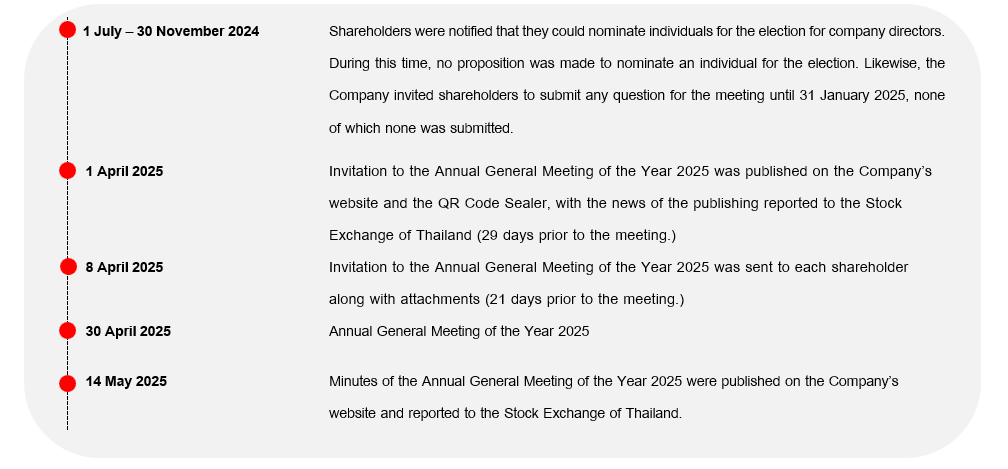
| Shareholder | The Company is firmly committed to protecting the rights and interests of our shareholders, and to ensuring that shareholders are able to participate in decision making on matters of significance to the Company, as well as respecting the rights of major and minor shareholders and all stakeholders, with no tolerance for any action that can potentially violate the rights of shareholders, as dictated by the Company’s Corporate Governance Policy. Annual General Meeting 2025 The Company’s Annual General Meeting of 2025 was held on 30 April 2025, exclusively through electronic media (e-AGM) to facilitate shareholders and proxyholders joining the meeting from anywhere conveniently. The Annual General Meeting 2025 was prepared and conducted per the following timeline.
The Board of Directors has ensured that shareholders are able to exercise their rights with ease by:
You can find additional information regarding shareholder rights, the invitation letter to the meeting, and documents related to the 2025 Annual General Meeting of Shareholders at https://investor.siamcitycement.com/en/downloads/shareholders-meeting | |
| Employee | Respecting human rights and fairness in employment Our employees are critical to our long-term success, and as such the Board of Directors has established the human resource framework that is focused on fairness, equality, and the dignity of all employees. We adhere to the Labor Laws of Thailand, national and international human rights standards, and the Group’s governance principles with no lapse. The Group’s Business Code of Conduct dictates that employment of illegal labor, child labor, and workers that are pregnant are not acceptable, and strives to create a work environment that is safe and up to national and international standards, supplemented by appropriate employee benefits, with the priority being our employees’ quality of life. The Group’s policy dictates that the hiring process must be fair and equal opportunity, open to all individuals who have the skills and expertise for the position they apply to, with no discrimination. The Company promotes a work environment that respects our employees’ dignity and diversity, and which treats all employees with fairness and transparency in all its processes, from recruitment and selection to hiring and career development that fits with an employee’s capability. Employees are entitled to work that is appropriate for their strength, valued, and dignified, as well as reflective of the Company’s commitment to sustainability and the ideal of an inclusive workplace. Details on the number of persons with disabilities employed are disclosed in Section 3.4.2 Social operating results Employee care The Company manages compensation and employee benefits fairly and with great care and transparency, a process which we believe is a critical component in a good human resource governance framework. The Company’s policy provides a clear guideline on managing compensation and benefits such that they are appropriate, legally sound, and conducive t providing a satisfactory level of quality of life in the long term for our employees. For compensation, the Company is dedicated to remaining competitive relative to the job market in the same or similar industries. We aim to attract, retain, and develop people of great capabilities, and design the compensation package based on a position’s responsibilities, the standard compensation level of such position offered in the market, and the Company’s own ability to pay, as well as data from surveys of the job market by reliable sources. The compensation scheme is also designed such that employees receive sufficient and satisfactory compensation relative to living expenses, ensuring that good quality of life for all our employees. We determine our employees’ compensation increase based on their performance assessed through the annual evaluation process, reflective of the Company’s focus on results and accountability. The Company also offers an annual bonus based on our business performance, as thanks to our employees. In addition, the Company also focuses on providing benefits that cover aspects including health, livelihood, and sustainability. We provide our employees with annual checkups, vaccination programs for various diseases, health insurance, life insurance, personal accident insurance, living expenses aid package, and emergency support such as support packages for employees affected by floods by flooding in the northern and southern regions, support packages for employees affected by the earthquake in 2025, and family support packages which include education allowance for employees’ children, or an aid package for employees in case of a death in the family. The Company consistently reviews and revises these support packages to adapt to the current context and ensure that our employees lead a life that is safe and secure. The Company also promotes employees’ savings and financial security through a provident fund and other financial discipline programs, complemented by financial management training. These initiatives support employees in planning for a stable future and ensuring appropriate financial protection throughout their working life and after retirement. On safety, the Company’s Operational Health & Safety Policy dictates that all safety protocols and standards must be adhered to strictly, to ensure that the workspace remains safe for everyone, and that workplace environment remains open, friendly, efficient, free of incidents, and conducive to productivity. On the people development, the Company promotes development of our employees’ capacity through the platform INSEE Academy, which acts as the center of learning and capacity building both in the short and long-term. Leadership skills, expertise relevant to a specific business of the Company, and skills relevant to future technologies and innovations are all addressed by INSEE Academy’s | |
| Customer | The Company prioritizes delivering products and services that are safe and reliable, and strive to operate with complete transparency and fairness, and with complete adherence to all relevant legal and regulatory requirements. The Board of Directors has established as well that safety and responsibility towards customers are matters governed by the Company’s internal control systems, which requires that safety performance is supervised, monitored, and reported directly to the Group Executives and/or subsidiaries’ Boards of Directors and/or the Board of Director. The Company always prioritizes our clients’ health and safety with a focus on fair treatment and protection of the clients’ data throughout our value chain from production to distribution and after-sales services. We also track clients’ satisfaction and work to improve our products and services using such feedback. Lastly, the Company also focuses on advertising and promoting products responsibility, with an emphasis on providing product information that is complete, correct, and not conducive to non-factual assumption which may be exploited for the Company’s gain. The Company’s commitment to health and safety is reflected in our objective to ensure employees, contractors, and clients fully understand and comply to all requirements and protocols for their own safety and that of others’. All activities must comply with our health and safety management system, as safety is our culture on an organizational level. On cybersecurity, the Company understands the importance of customer’s data protection. We have developed an IT system that is secure and resilient against cyberattacks, and have established proactive measures where threats are constantly monitored, prevented, and responded to, with complete alignment with the relevant laws, regulations, and guidelines. The Board of Directors works to ensure that there is constant communication on matters such as workplace rules and instructions, operational risk assessment, silo repair safety, etc., and consistently promotes safe driving in our franchisees to ensure products and services are delivered safely and up to international standards. Transport providers working with us are required to be equipped with personal protective equipment and their vehicles equipped with safety signages, for efficient and effective safety management in the franchisees’ areas of operation. In addition, the Company also discloses product specifications complete with all critical information such as volume, usage guidelines, warnings, and certification signages, to ensure customers are supplied with information that is easy to access and conducive to making informed purchase decisions. This is another tool through which we communicate with and support our clients in the matter of consumer safety. | |
| Business competitor | The Company understands the importance of fair competition and complies to all relevant laws that concern business competition with great commitment. Our objective is to help safeguard the free economy and promoting healthy market competition. The Company encourages employees to collect, share, and use publicly available data of our competitors as permitted by law and as would be ethically sound, without accessing and utilizing competitors' non-public information. This aligns with our Code of Business Conduct, which focuses on responsibility, transparency, and good corporate governance. In 2025, the Company had no disputes with its competitors. | |
| Business partner | Supplier Management and the Promotion of Sustainable Business Practices The Company places importance on managing suppliers throughout the supply chain in a transparent, fair, and non-discriminatory manner. It has established a procurement policy and clear procurement practices to ensure that the supplier selection process is appropriate, auditable, and aligned with good corporate governance principles. In addition, the Company adopts the Supplier Code of Business Conduct and Supplier Privacy Policy as frameworks for working together. In this regard, the Company considers suppliers that demonstrate the capability to conduct business sustainably, provide products and services of standard quality, deliver on time, and operate in compliance with applicable laws, including labor laws, human rights principles, and personal data protection requirements. In addition to supplier selection, the Company is committed to continuously promoting suppliers’ capabilities and potential in order to grow together sustainably. This is carried out through communication of relevant policies and requirements, knowledge sharing, training sessions or joint discussions, as well as collaboration in developing products, services, work processes, and innovations that benefit both the Company and its suppliers. These efforts help enhance operational efficiency, quality standards, and long-term business relationships. In 2025, the Company continuously carried out activities with suppliers to improve operational standards and strengthen mutual understanding of sustainable business practices. These efforts helped enhance suppliers’ readiness to operate in line with the Company’s expected standards, while jointly creating business value and sustainability together. Further details on supplier management and green procurement are provided in Section 3.4.2 Social Performance. | https://investor.siamcitycement.com/storage/documents/corporate-policies/sccc-supplier-code-of-conduct-privacy-policy-en.pdf |
| Creditor | The Board of Directors understands the significance of the Company’s commitment to its creditors and strive to conduct business in a manner that is conducive to building trust among our stakeholders and fair to our creditors, with practices relating to our creditors as follows :
Financial Problem and Solutions In approving any transactions or presenting any comments to a shareholders’ meeting, the Board must be confident that such transactions will not affect the continuity of the business operations, liquidity, or solvency. The Board must monitor controls to ensure that the company has an implementation plan or other mechanism to address financial problems and keep such plan or mechanism closely monitored and overseen to ensure that the corporate businesses are maintained with due care and in compliance with the requirements in relation to the information disclosure by taking into account the impartiality towards the stakeholders including creditors as well as monitoring the follow-ups to solve the problems which, in this respect, the Management shall be the party to regularly report the relevant situation. The Board must be confident that any decision making in addressing corporate financial problems irrespective of any method must be in a reasonable manner. Financial Liquidity and Solvency The Board of Directors reviews the capital structure of the Company on a quarterly basis, with any sign of liquidity concerns or issues relating to solvency being brought to Management’s attention to be promptly addressed, to keep any potential risks at an acceptable level in accordance with the Company’s strategic targets and risk tolerance level. As of this report, the capital structure and solvency of the Company remain in an appropriate state relative to the business environment and the Company’s commitment to sustainability. | |
| Government agency | The Board of Directors prioritizes doing business in a manner that is compliant to all relevant laws and regulation and supports the Company closely collaborating with government agencies and public organizations with transparency. The Company frequently communicates with government agencies through official, public channels, and consistently joins government agencies in relevant forums or seminars to discuss and exchange ideas as well as to provide support for activities that are for the public good, that are anti-corruption in nature, and that are conducive to sustainable social development. | |
| Community and society | The Board of Directors has the aim to develop community development activities that create value for the communities in a tangible way. To this end, the Board has established a strategic framework that conjoins business expertise with community development work by way of adapting available knowledge and technology to address community needs effectively. Communities and stakeholders, as well as government agencies and other private sector companies are encouraged to voice their opinion and participate in community development through a channel specifically created for this purpose, to ensure that community needs are truly met, and that the communities can maintain their sustainable growth. The Company’s emphasis is on creating shared value and maintaining good relationships with the communities surrounding the Kaeng Khoi and Muak Lek plants in Saraburi province. Our focus is on the following three dimensions:
These activities align with the Company’s policy which is consistently communicated to all stakeholders. The Company aims to continue with our community development work in a manner that is transparent and open to participation and collaboration, with the focus firmly on sustainability. Our emphasis is on good relationships with the communities and long-term quality of life of the community members, in alignment with our 2030 Sustainability Ambition.
|
Code of Conduct
Has a Business Code of Conduct
Yes
Code of Conduct Description
The Board of Directors has established the Code of Business Conduct as a guideline for conducting business ethically and responsibly. This Code serves as a standard for all Directors, Executives, and Employees of the Group to uphold integrity, transparency, and honesty in their work. This commitment aligns with the Group’s core value of
“Doing What is Right”. Strict adherence to ethical principles is a fundamental foundation for sustainable growth and long-term success. The Company has communicated the Code of Business Conduct through internal communication channels and published it on the Company’s website to ensure accessibility for all stakeholders.
The Group’s Code of Business Conduct was developed to create a secure and sustainable future for employees and shareholders, with the following objectives. First, to ensure that all employees are aware of and comply with applicable laws and regulations, referencing the Group’s policies and practices aligned with legal requirements in each country where the Group operates. Second, to emphasize personal responsibility in adhering to the Code and highlight the importance of honesty and integrity in the workplace, in business dealings, and toward society as a whole.
The Code of Business Conduct is an essential tool that helps employees comply with laws and regulations correctly while reflecting the Group’s commitment to doing what is right, a key to success and building a secure and sustainable future.
The Group has consistently adhered to the principles of good corporate governance, enabling the Company to remain competitive, deliver strong performance, adapt to change, create value for society, and continuously reduce negative environmental impacts in line with its goals.
Code of Conduct Link
https://investor.siamcitycement.com/storage/documents/corporate-policies/sccc-code-of-business-conduct-en.pdf
Code of Conduct Practices
| Guideline | Detail | Document Link | ||||||||||||||||||||
|---|---|---|---|---|---|---|---|---|---|---|---|---|---|---|---|---|---|---|---|---|---|---|
| Prevention of Misuse of Inside Information | Conflict of Interest Policy The Board of Directors has established a Conflict of Interest Policy to promote integrity, transparency, and adherence to good corporate governance principles, while preventing inappropriate related-party transactions. The policy sets clear standards, practices, and approval procedures for transactions that may involve conflicts of interest, ensuring compliance with applicable laws and safeguarding the best interest of the Company and its shareholders. For transactions of significant size or material impact on the Company's operations, Management must seek prior approval from the Board of Directors before execution. Additionally, all related-party transactions under Management’s authority are reported to the Audit Committee for review and subsequently disclosed to the Board of Directors on a quarterly basis. Recognizing the importance of preventing conflicts of interest, the Board has implemented clear guidelines and procedures to ensure that all related transactions follow proper processes and legal disclosure requirements. Stakeholders with a vested interest in such transactions are prohibited from participating in decision-making to maintain independence and transparency. Communication and Awareness The Company communicates its policies and practices for preventing conflicts of interest to Directors, Executives, and Employees at all levels through various channels, including the intranet, e-learning training programs, and Board meetings. These efforts aim to strengthen understanding of corporate governance principles and reinforce the importance of transparency and avoiding behavior that may lead to conflicts of interest. The Group’s Code of Business Conduct also addresses conflicts of interest, defining it as “a situation that creates personal benefits, whether financial or otherwise, which affect or conflicts with the Company’s best interests. Employees should avoid any actions that may cause such conflicts and must report them to their supervisors for appropriate and transparent resolution.” Implementation Measures The Company enforces strict measures to prevent conflicts of interest. Personnel involved in approvals or procurement must disclose any transactions conducted by themselves or their relatives with the Company and/or its subsidiaries within the past 12 months via an electronic disclosure system. This ongoing measure enhances employee awareness of transparency and the need to avoid activities that may conflict with the Company’s interests. The Board of Directors has established guidelines requiring Directors and Executives to disclose any conflicts of interest prior to the consideration of agenda items at Board meetings. Such disclosures must be recorded in the minutes of every meeting. Furthermore, the Board ensures that any Director with a significant conflict of interest, which may impair independent judgement, refrains from participating in discussions of voting on the relevant agenda item. In addition, Directors and Executives are required to report any changes in their own or related parties’ interests and submit these reports to the Company Secretary, who will prepare a summary for the Board’s acknowledgment at each meeting. | https://investor.siamcitycement.com/storage/documents/corporate-policies/sccc-conflicts-of-interest-policy-en.pdf | ||||||||||||||||||||
| Anti-corruption | Anti-Bribery and Corruption Policy One of the Company top priorities is combating corruption. The Board of Directors approved the Anti-Bribery and Corruption Policy in 2012 to provide clear guidance for directors, executives and employees at all levels to understand and act appropriately. The policy is regularly reviewed for relevance and effectiveness. Key provisions include a strict prohibition on all forms of bribery and a restriction on hiring government officials in positions that may create conflicts of interest unless they have been out of their previous role for at least two years. These measures aim to prevent conflicts of interest and strengthen corporate governance. Implementation of the Policy The Company has consistently implemented its Anti-Bribery and Corruption Policy, joining the Thai Private Sector Collective Action Against Corruption (CAC) initiative in 2015 and becoming a certified member on August 18, 2017 with ongoing renewal assessments to maintain certification. Building a Transparent Corporate Culture The Company is committed to fostering a culture of transparency and zero tolerance for bribery or corruption. The policy includes clear practices such as leadership setting a strong example, prohibition of offering or accepting bribes, transparent operations and audits, regular training and communication internally and externally. Additionally, the Company conducts risk assessments for high-risk units, identifying potential corruption indicators and implementing risk mitigation and control measures. Internal control include adherence to the Code of Business Conduct, prevention of conflicts of interest, whistleblowing mechanisms, strict approval processes, and whistleblower protection – all designed to build a transparent and sustainable corporate culture. Monitoring and Oversight The Audit Committee is responsible for continuously monitoring and reviewing the implementation of the Anti-Bribery and Corruption Policy, assessing the adequacy of anti-corruption measure, and examining complaints or whistleblower reports. It also proposes corrective actions and preventive measures to address potential issues. The results of these reviews are reported to the Board of Directors on a quarterly basis to ensure effective, oversight and improvement of the measures. During the past year, there were no complaints related to fraud or corruption. Communication and Whistleblowing Channels The Company promotes awareness of Anti-Bribery and Corruption Policy and practices among Directors, Executives, and Employees through ongoing training and communication. The policy is regularly reviewed and updated to align with changing circumstances and applicable laws. To encourage participation in preventing corruption, the Company provides secure channels for reporting policy violations or suspected corrupt practices, along with measures to protect whistleblowers from retaliation. The reporting process is designed to be transparent, verifiable, and effective in resolving issues. | https://investor.siamcitycement.com/storage/downloads/policy-and-report/sccc-anti-bribery-corruption-policy-en.pdf | ||||||||||||||||||||
| Whistleblowing and Protection of Whistleblowers | The Company has established clear mechanisms and processes for handling complaints and whistleblowing reports, covering all steps from recording and tracking progress to resolving issues and reporting outcomes to the Audit Committee, which operates independently from management. This ensures transparency and accountability throughout the process. To encourage reporting, the Company provides protective measures for whistleblowers acting in good faith and offers convenient, accessible, and multiple reporting channels. These channels are publicly disclosed on the Company’s website and in the Form 56-1 One Report, reinforcing stakeholder confidence and participation. The Board of Directors has adopted a Whistleblowing Policy, which is regularly reviewed for appropriateness. This policy reflects the Company’s commitment to good corporate governance and provides employees and stakeholders with the opportunity to report illegal acts, regulatory violations, or unethical conduct, such as corruption, financial statement fraud, bribery, theft, misuse of Company assets or information, and breaches of the Conflicts of Interest Policy. The Company operates INSEE Speak Up, an external, professionally managed platform for receiving complaints and whistleblowing reports. The Screening Committee, which operates independently from management, is responsible for verifying facts and conducting investigations in accordance with established procedures. The results of the investigations are reported to the Audit Committee and the Board of Directors on a quarterly basis. To ensure fairness, the Company has implemented measures to protect and mitigate harm to whistleblowers, including maintaining confidentiality, especially in cases where reports are based on suspicion and made in good faith, even if subsequent disclosure leads to harassment or inappropriate actions. The INSEE Speak Up consists of 2 channels as follows:
For operations in Bangladesh, the Company requires that reporters and whistleblowers submit reports exclusively through the website, as there is no toll-free infrastructure in the country. Reports must be submitted via the INSEE Speak Up channel, a system that allows all stakeholders to raise complaints, report rights violations, or incidents that may cause harm to the Company. All information received is sent to the Company’s Board of Directors through a platform operated by an independent, professional third party to ensure neutrality and accountability in the process. The Company has established a structured complaint-handling process, including clear procedures for fact-finding and investigation in each case. Policies and guidelines are in place to protect employees and whistleblowers, ensuring that reporting does not result in negative consequences for the individual. Additionally, all stakeholders can submit complaints to the Board of Directors through designated channels, which are clearly disclosed on the Company’s website or via email companysecretary@siamcitycement.com | https://investor.siamcitycement.com/storage/downloads/policy-and-report/sccc-whistle-blowing-policy-en.pdf | ||||||||||||||||||||
| Preventing the Misuse of Inside Information | In relation to the prevention of misuse of inside information, the Board of Directors has implemented an Insider Trading Policy and established a Blackout Period practice, during which Directors, Executives, employees, and individual’s privy to inside information are prohibited from trading the Company’s shares. This period spans 30 days prior to the dissemination of financial statements and significant financial information and continues for no less than 24 hours after the information is made public. This policy ensures that there is no exploitation of undisclosed information for personal gain. The Corporate Governance Policy dictates that Directors and Executives must produce and submit a report to the Chairman of the Board of Directors or the Company Secretary on any exchange activity they undertake of the Company’s shares at least one day before the action, and Directors and Executives must produce and submit a report on the holding of assets in accordance with the requirements of the Office of the Security and Exchange Commission (SEC) under Section 59 of the Security and Exchange Act, B.E. 2535 within three working days after the transaction date, or once one of the following conditions is met, whichever occurs first: (a) The cumulative value of all unreported transactions reaches THB three million (b) six months have elapsed from the date the first unreported transaction. The Board ensures that lists of insiders with access to non-public, important information are reviewed regularly in accordance with the current situation. All relevant parties, including Directors, Management, staff and employees, shall be notified of this policy and its practical guidelines to ensure compliance and awareness of the associated penalties for violation or noncompliance. Additionally, compliance with these measures will be regularly monitored. The Code of Business Conduct mandates that “Use of insider information or non-public information in supporting the investors’ decision whether to buy, sell or hold stocks or securities is considered unethical and illegal, and will result in disciplinary and criminal charges.” Questions regarding the insider trading can be directed to the Company Secretary. The Company regularly reviews the list of insider’s persons to ensure its relevance to the current situation, establishes guidelines for safeguarding inside information, communicates these guidelines and policies to all members of the organization, and consistently monitors compliance. | https://investor.siamcitycement.com/storage/documents/corporate-policies/sccc-insider-trading-policy-en.pdf | ||||||||||||||||||||
| Giving or receiving gifts, entertainment, or business entertainment | The Board of Directors ensures that the Company’s business operations comply with all applicable laws and standards, while promoting awareness and adherence to the Anti-Bribery and Corruption Policy among subsidiaries and business partners. To reinforce this commitment, the Company has implemented a No Gift Policy, requiring employees and executives to decline gifts, souvenirs, or any form of benefit. This measure helps mitigate corruption risks and fosters a transparent corporate culture. In addition, the Company conducts regular training programs to ensure that employees at all levels understand the Anti-Bribery and Corruption Policy and related practices, reaffirming its commitment to ethical business conduct and good corporate governance. | https://investor.siamcitycement.com/storage/downloads/policy-and-report/sccc-anti-bribery-corruption-policy-en.pdf | ||||||||||||||||||||
| Compliance with laws, rules and regulations | The Board of Directors understands the importance of adhering to the Fiduciary Duty to the best of its ability and its obligation to the Duty of Care. The Board operates with strict adherence to the Duty of Loyalty, free of any conflict of interest, and with full compliance to the relevant laws, regulations, and the Company’s resolutions as part of its obligation to the Duty of Obedience. This is described with utmost clarity in the Company’s Organizational Regulations The Board of Directors has established policies and guidelines that act as mechanisms of governance and transparency which applies both to the Board of Directors and Executives. These include the Insider Trading Policy, the Conflict of Interest Policy, the Related Party Transaction Policy, and the Conflict of Interest Declaration form. In addition, the Board of Directors also established tracking mechanisms for the holding of securities of Group Companies held by Directors and Executives, directorship and status as an executive in other companies, and related person status, and maintains a practice where a Director who may be a stakeholder in a particular agenda item during a Board meeting is to withdraw participation and abstain from voting in the voting process. The Company also focuses on protecting all of our stakeholders' data, be they shareholders, employees, clients, or trade partners. We comply with all requirements by the Personal Data Protection Act (PDPA), with our own policy clearly structuring the roles and responsibilities of employees in safeguarding data and ensuring that the Company has sufficient capability to protect the data of all stakeholders. Details of the Privacy Policy can be found on the Company's website. The INSEE Speak Up platform is also available to all stakeholders for voicing complaints and providing information on wrongdoings, with complaints and grievances and allegations being investigated by the Whistleblowing Policy. To this end, we are pleased to report that no complaints have been submitted relating to violation of data privacy of any stakeholder. Even still, we remain committed to improving our data protection measures and shall strive to maintain our reliability and credibility in this matter. The Board of Directors also maintains and regularly reviews the Manual of Authority, which acts as a reference point for all Group Companies to ensure they are aligned in the matter of governance, and that their operations are systemic, transparent, and with clear accountability. The Board has also established INSEE Minimum Controls, which act as an internal control system for Group Companies, ensuring complete compliance to the relevant regulations and policies of the Group at all times. The Board of Directors also delegated key matters its subcommittees for review and recommendation to the Board. These matters include, among others, the review of financial statements, related party transactions, risk management, the effectiveness of internal control and governance systems, and compliance with applicable regulations and principles of good corporate governance. The roles and responsibilities of each subcommittee are set out in their respective committee charters. In addition, the Board of Directors is aided by Group Internal Audit and Compliance, and the Company Secretary which acts as the gatekeeper to ensure the Board of Director is sufficiently advised in matters relating to its legal duties, and duties as described by the Organizational Regulations, and to ensure that requirements by relevant authorities are consistently satisfied, such that the Board of Directors’ operation remains transparent, credible, and accountable to all stakeholders. | |||||||||||||||||||||
| Use and maintenance of data and assets | The Board of Directors promotes efficient use of all available resources, including financial resources, raw materials, intellectual properties, human resources, and social and business relationships. To this end, policies are established to outline the appropriate approach to managing resources, which applies to all relevant parties of the company. Additionally, the Board of Directors encourages environmental consciousness in regard to use of resources, preferring conservative use of resources with optimal efficiency, safeguarding of irreplaceable resources, and reuse of secondary materials to lessen potential environmental impacts. Responsible Resource Usage and Business Impact The Board of Directors works to ensure that the Company’s business is conducted in a responsible manner, conscious of potential impacts the use of certain resources may leave, as well as potential impacts these resources may have within the value chain of the Company. The Company is aware that different business models leave different impacts, and so have chosen the business models that the Company deems of appropriate value and efficiency relative to the use of resources, and that are ethical, responsible, and conducive to maintaining a sustainable business environment. The Board of Directors has monitored to ensure that in attaining the business objectives, Management has reviewed, developed, and supervised the matter on the efficient and effective use of the resources by always considering the internal and external factor changes. Intellectual Property Management The Board of Directors sees the importance of appropriate intellectual property management. Business and confidential information as well as private data are handled to the standards and requirements of relevant laws and regulations and international requirements to prevent access by unauthorized parties. The Company also emphasizes awareness of data protection among employees, and consequently, adherence to IT Management Policy. On intellectual properties, the Company systematically manages its patents, licenses, trademarks, trade secrets, and other intellectual properties to prevent any breach of contract and retain the Company’s competitive edge. Concurrently, the company acknowledges the significance of respecting the intellectual property rights of others. It has established a policy requiring directors, executives, and employees to uphold business ethics, avoid any infringement on the rights of others, and ensure the proper protection of the company's intellectual property. | https://investor.siamcitycement.com/storage/documents/corporate-policies/sccc-code-of-business-conduct-en.pdf | ||||||||||||||||||||
| Anti-competitive | The Board of Directors oversees the Company’s operations to ensure they are conducted openly, transparently, and without creating unfair competitive advantages. The Company is committed to maintaining fair and free trade practices and refrains from actions that violate competition laws or harm the reputation of competitors. These practices form an integral part of the Company’s Business Code of Conduct, which emphasizes responsible operations, transparency, and adherence to good governance principles—building trust among all stakeholders. | https://investor.siamcitycement.com/storage/documents/corporate-policies/sccc-code-of-business-conduct-en.pdf | ||||||||||||||||||||
| Cyber security | Management of information technology across the Group The Board of Director has established the IT Management Policy which acts as a framework for IT management that is closely aligned with the businesses’ specific needs in a manner that is legally and regulatorily compliant. The policy also acts as a guideline for efficient IT resource management to ensure that available resources are utilized effectively and in the best interest of business continuity. The policy also outlines the priority levels of technological projects, with higher priority given to projects that are aligned with the Group’s strategy, sufficiently impact the Group’s businesses, are urgently required, or majorly relevant on the human resource or budget fronts. The Company delegates the responsibility of designing and managing the Group’s IT system to INSEE Digital Co, Ltd., a subsidiary specialized in technology. The priority is on controlling the IT processes such that efficiency in handling information and its security are assured. Alongside the above, the Company also has in place the Anti-Phishing Policy and continuously works to promote cybersecurity awareness through various mandatory training programs on cybersecurity on a monthly basis for employees and Executives, as a measure to help safeguard against external threats such as cyberattacks, data theft, and various malwares. Management of IT risks The Company works continuously to bolster our resilience against IT risks. Notable measures include the Business Continuity Management framework, incident management, asset management, and cybersecurity insurance framework development. The Company’s IT security is a major responsibility of INSEE Digital Co., Ltd., which is ISO/IEC27001:2013 certified (specifically concerned with confidentiality, correctness and completeness of data, and readiness of data, as well as preventive measures against unauthorized access or inappropriate use of confidential information, all of which ensures the Company’s IT system remains secure and conducive of the Company’s businesses performing effectively.) | |||||||||||||||||||||
| Environmental management | The Company is committed to sustainable business practices. We are fully aware of the impacts of our business on the environment, and as such we are dedicated to effective environmental management in a manner that benefits all stakeholders while reducing the environmental impacts of our operations. The Company has established the Sustainability Policy, as well as long-term and short-term sustainability goals, which shall serve to drive the sustainable growth of the Group. Our Sustainability Ambition 2030 encompasses climate change-related operations, including a CO2 reduction target, electricity consumption reductions, alternative electricity sources, and use of the circular economy, with an eye on increasing use of renewable energy, biodiversity and water related activities aiming for net positive impact, water processes streamlining, etc. In the previous year, the Sustainability Committee conducted a series of self-assessments on risks and opportunities from climate changes to the standards of the Task Force on Climate related Financial Disclosures (TCFD). In addition, 2025 saw the Company heavily promoting awareness of environmental issues and sustainable business operation, with a particular focus on employee participation which was facilitated through various activities including: Waste sorting activity for refuse derived fuel (RDF) processing for fuel substitution in cement production, which results in reduced coal use, reduced landfill waste, and increased compatibility with the circular economy principle, which is an important aspect of the Company’s sustainability targets. Throughout 2025, the Company saw 1,550.50 kg of waste being sorted and entered into RDF process, which equates to 98 trees planted. Energy produced by such fuel is the equivalent of 1.41 tons of coal used in co-processing, with 666 kg of CO2 being emitted. Construction of a 15-meter-long check dam, and seed bombing for reforestation, both of which are activities under the project INSEE Green Heart Plus Club, which was aimed at growing green areas surrounding the quarry in Suphanburi, in collaboration with the Jarakae Sampan community and the CSR-DRM Network based in the Wat Khao Tam Suea forest area, Uthong district, which surrounds the INSEE Aggregate’s quarry. The activities were aimed at promoting mutual learning (under the concept of Show & Share) between the mining entrepreneur network and the local communities and promoting the Group’s Sustainability Ambition 2030.
In addition, the Company is in the process of verifying the greenhouse gas (GHG) emissions for 2025 for the Saraburi plant in Thailand, covering Scope 1, Scope 2, and Scope 3 emissions. The verification is conducted by V Green KU Co., Ltd., an organization accredited by the Thailand Greenhouse Gas Management Organization (Public Organization) or TGO, to ensure that the disclosure and reporting of information are accurate, transparent, and in compliance with the requirements of TGO. You can find more details about environmental management operations and the assessment of business risks and opportunities arising from climate change, according to the standards of climate-related financial disclosure, in the section on Driving Business for Sustainability, under Environmental Sustainability Management. | |||||||||||||||||||||
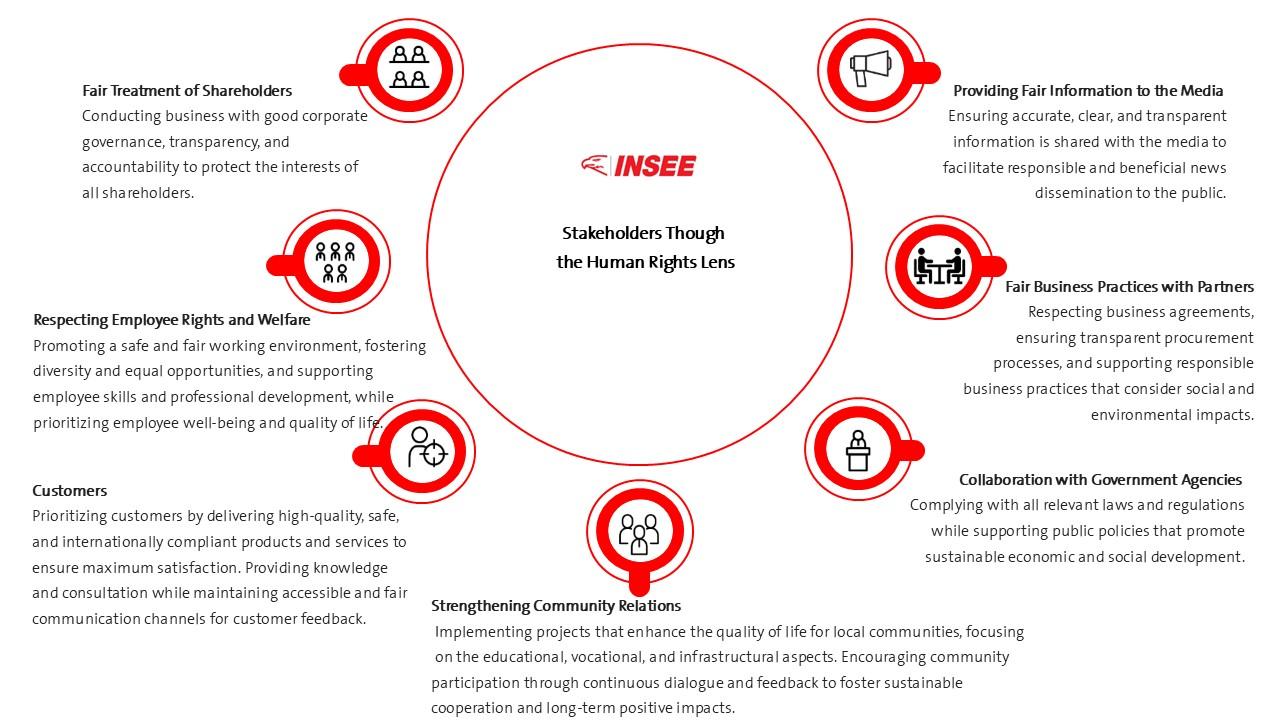
| Human rights | The Board of Directors understands the significance of creating values for all stakeholders and has worked to ensure that fair treatment of all stakeholders, consistent with their rights as prescribed by relevant laws and any agreements in place between said stakeholders and the Company, are always upheld. We also strive to continuously uphold stakeholders’ trust and foster a healthy relationship with the stakeholders, be they Company employees, local communities in proximity of our business operations, the society at large, shareholders, investors, customers, suppliers, creditors, government agencies or business competitors. The Company has also established a framework for systematically compensating stakeholders whose rights have been violated. This includes multiple secure reporting channels, establishment of a committee with the duty to manage complaints and grievances fairly and transparently, and setting up a prompt, timely compensation system in case of violation to ensure that any human rights concerns are addressed efficiently and fairly. The Company has a resolute commitment to human rights and has made human rights adherence an integral part of the Company’s business procedures, focusing on doing business fairly and transparently, whether with employees, customers, business partners, or any other party. The Company likewise expects all parties it deals with to adhere to the principle of human rights with equal devotion, in the interest of fostering a long-term, sustainable partnership with all stakeholders with the following:
You can find more information about incidents related to violations of laws or regulations concerning social and human rights in the section on Driving Business for Sustainability, under Social Sustainability Management.
| https://investor.siamcitycement.com/storage/documents/corporate-policies/sccc-code-of-business-conduct-en.pdf | ||||||||||||||||||||
| Occupational health and safety | The Company sees great importance in occupational health, safety, and the work environment, and has establishing an Occupational Health and Safety Policy which acts as a fundamental framework for a safe and healthy workplace. The policy aims to create a safe workspace, reduce the risk of accidents and occupational diseases, and ensure the overall well-being of employees. The Company is committed to achieving the "Zero Harm & Zero Fatality" goal by complying with relevant laws and best safety practices while fostering a strong safety culture within the organization. This includes implementing risk prevention and control measures, monitoring employee health, providing continuous safety training, and continuously improving preventive measures against accidents to ensure they remain appropriate relatively to the constantly changing work environment. Additionally, the Company sees the importance of a healthy work environment. This is expressed through consistent workspace cleanliness with appropriate airflow, and a work environment that is safe and friendly. We also encourage employee participation throughout work health and safety processes, as part of the Culture of Safety that enables our employees to work efficiently, and with confidence in their safety. | https://siamcitycement.com/ckeditor/upload/files/id38/file/Occupational_Health_and_Safety_P.pdf |

Promoting Compliance with the Code of Conduct
Promotes Compliance by Directors, Executives and Employees
Yes
Description
Promotion of the culture of ethical business conduct
The Company places great importance on communicating and instilling a culture of business ethics among Directors, Executives, and Employees at all levels to ensure continuous awareness and adherence to good corporate governance principles.
For Directors
The Company conducts orientation programs for new directors, managed by the Company Secretary, to provide information on the Code of Business Conduct and corporate governance practices. Regular communication and awareness sessions are held annually, with the same content provided to existing Directors through an annual refresher program. In 2025, all Directors (100%) received comprehensive communication and reinforcement on these topics.
For Employees and Executives
The Company emphasizes the principle of “Doing What is Right” and integrity from the start by including Code of Business Conduct content in new employee orientation programs, with periodic refresher for all positions. A refresher training on the Code of Business Conduct is provided every two years through the Company’s Learning Management System (LMS). In 2025, all employees and Executives (100%) completed training, and acknowledgment of compliance with the Code of Business Conduct.
Additionally, the Company provided annual training on related topics, including conflict of interest prevention, anti-bribery and corruption policy, and insider trading policy. All courses are aligned with the Code of Business Conduct framework and include post-training assessments to measure understanding and reinforce ethical practices as part of the corporate culture.
Monitoring and Auditing of Business Conduct Compliance
The Company has established measures to monitor compliance with the Code of Business Conduct through internal audit mechanisms and whistleblowing systems, ensuring strict confidentiality of whistleblowers. These measures aim to promote proper practices and continuous monitoring, including post-training assessments to reinforce knowledge and confirm understanding. All employees are required to acknowledge and commit to the Code of Business Conduct annually. Meanwhile, the Board of Directors and Management regularly review and oversee these practices.
In cases of violations, disciplinary measures are applied based on severity to uphold ethical standards, transparency, and organizational discipline which is the essential foundations for good governance and long-term sustainability.
Anti-Corruption Networks & Projects
Joined or Declared Intent to Join Anti-Corruption Networks
Yes
Networks & Projects Joined
| Network / Project | CAC Certified |
|---|---|
| Thai Private Sector Collective Action Against Corruption: CAC | Y |
| United Nations Global Compact (UNGC) | |
| Participation of anti-Corruption networks and initiatives |
Material Changes & Developments in CG
Reviewed the CG Policy or Board Charter in the Past Year
Yes
Material Changes or Developments in the Past Year
Yes
Policy Review — Description
The Company is committed to consistent compliance to the corporate governance principles, and in doing so supporting transparency, sustainability, and good governance in business operation. In the past year, the Board of Directors has reviewed all Group policies and has approved the following significant changes:
The Corporate Governance Policy – Changes made to improve alignment with the current business environment, with the listed subsidiaries may continue to apply their own internal policies, provided that such policies are consistent with and aligned to the parent company’s policies, in order to ensure coherent and consistent governance across the Group.
The Anti-Bribery and Corruption Policy – Changes made to improve alignment with the current context and existence of current authorities, and for improved alignment with the Thai Private Sector Collective Action Against Corruption’s (CAC) standard and membership requirements.
The Insider Trading Policy – Changes made to improve alignment with the current context and to ensure the policy encompass trade of securities of insider persons, with insider persons now forbidden from trading securities of the Company and listed subsidiaries. This is to elevate our transparency standard and prevent potential unlawful use of insider information. The listed subsidiaries may continue to apply their own internal policies, provided that such policies are consistent with and aligned to the parent company’s policies.
CAPEX Policy – Improvements made to the principles and authorization processes to ensure alignment with the Group’s management structure and elevate the level of clarity and agility in all our operations.
The Board of Directors has also reviewed the committees’ charters, which were initially reviewed by the committees themselves before submission to the Board for final approval, including those of the Audit Committee, the Nomination and Compensation Committee, the Governance Committee, and the Technology and Digitization Committee.
The Company’s constant review of policies and charters reflects our commitment to elevate our governance standard and keep it attuned with the fast-changing business environment, stakeholders’ expectations, and the principles of good governance. The review processes were thoroughly audited by all relevant committees, such that it is assured our governance framework remains strong, transparent, and conducive of sustainable growth.
Implements the CG Code for Listed Companies
No
CG Code — Description
Alignment with the Principles of the Corporate Governance Code for Listed Companies 2017 (CG Code 2017)
The Board of Directors recognizes its ultimate responsibility for setting the Company’s direction and exercising effective oversight over its operations in alignment with the Principles of Good Corporate Governance for Listed Companies
B.E. 2560 (2017). Accordingly, the Board has assigned the Governance Committee to annually review the alignment of the Company’s policies, practices, and corporate governance systems with the CG Code and to report the results to the Board for consideration. In 2025, the Governance Committee concluded that the Company’s practices were, overall, aligned with the CG Code, with only minor deviations that did not affect the effectiveness of the Company’s overall corporate governance. The Board has established a clear governance structure by formally separating the roles and responsibilities of the Chairman of the Board and the Group Chief Executive Officer, which are held by different individuals, and by clearly defining the duties and accountabilities of each position and of the Group Management in writing. Significant matters submitted to the Board are subject to an appropriate review and screening process by relevant Board committees or the Group Management, as applicable, prior to being tabled for consideration.
Meeting agendas and approval processes are reviewed and monitored by the Company Secretary to ensure compliance with applicable laws, delegated authorities, and the INSEE Minimum Control (IMC) framework. At each Board meeting, the Chairman invites all Directors to propose additional agenda items as appropriate, and the Directors exercise independent and prudent judgment, acting in the best interests of the Company and without undue influence from management. This reflects the Board’s continued accountability and commitment to good corporate governance.
In addition, the Board recognizes the importance of selecting a suitable individual as Chairman of the Board and of maintaining an appropriate Board composition that supports independent judgment. While the Company has not formally adopted a policy limiting the consecutive tenure of Independent Directors to nine years, the Independent Directors who currently serve as members of the Audit Committee have held their positions for more than nine consecutive years. Nevertheless, both directors were appointed through an independent nomination process involving an external search firm, with recommendations reviewed by the Nomination and Remuneration Committee prior to approval by the Board of Directors and the shareholders’ meeting. The Board has carefully and prudently considered the re-appointment of these directors and is of the view that they continue to perform their duties independently and contribute relevant knowledge, expertise, and experience for the benefit of the Company and its shareholders as a whole.
Other CG Performance & Outcomes
The Board of Directors plays an important part in corporate governance. The Board itself, Executives, and all employees all performed their functions with adherence to the duty of care and the duty of loyalty, to ensure that all business operations are compliant to all relevant laws and regulations, and consistent with the resolutions of the shareholders and the principles of the Securities and Exchange Commission’s (SEC) CG Code 2560, as well as requirements by any other relevant authorities, and in the past year we have operated without straying from such aspiration.
In 2025, the Company holds the following recognition for its corporate governance performance:
CGR at excellent level for 10thconsecutive year by Thai Institute of Directors Association (IOD).
Full score 100 of the quality of the 2025 Annual General Meeting of Shareholders (AGM Checklist) as assessed by the Thai Investors Association.
Certification as a member of the Private Sector Collective Action Coalition Against Corruption (CAC) since 2017.
ESG Ratings of “AA” highlighting our position as a responsible investment option aligned with Stock Exchange of Thailand (SET)
2024 ASEAN Corporate Governance Scorecard Award for ASEAN Asset Class PLCs (result disclosed later in 2025).
The Company operates in a way that is consistent with all 8 principles of SEC’s CG Code 2560 and has implemented Group-wide policies adherent to these principles that encompass the Board of Directors, shareholders, and stakeholders. Details can be found in the section for Corporate Governance Policy, Governance Structure, and Report on Significant Corporate Governance Performance.
Principle 1 Recognizing the role and responsibility of the Board of Directors as organizational leaders in creating sustainable value for the business
Board of Directors with Leadership Role
The Board of Directors is fully aware of and understands its duties and responsibilities as a driving force behind the business. These duties and responsibilities are clearly defined in the Company’s Organizational Regulations. To this end, the Board of Directors and the Group Executive Committee have fulfilled their responsibilities in accordance with their fiduciary duties. This includes acting with care and integrity (Duty of Care), remaining free from conflicts of interest (Duty of Loyalty), and complying with the law, the Company's objectives and Articles of Association, and resolutions of the Board of Directors and Shareholders' Meeting (Duty of Obedience). Additionally, the Board of Directors ensures that shareholders receive accurate, complete, transparent, verifiable, and timely information (Duty of Disclosure).
The Organizational Regulations clearly reflect these principles.
The Organizational Regulations (OR) were established to define the roles and responsibilities of the Board of Directors, Chairman and Vice-Chairman, Subcommittees (i.e. Audit Committee (AC), Nomination and Compensation Committee (NCC), Governance Committee (GC) and Technology and Digitalization Committee (TDC), as well as the roles and responsibilities of the Group Executive Committee (GEXCO), Group Chief Executive Officer (GCEO) and Group Chief Financial Officer (GCFO). These roles are clearly defined to maintain a proper division of duties between the management and the directors. The Organizational Regulations, along with the Charters of Board of Directors, Charter of Board Committees and GEXCO, are reviewed annually to ensure they reflect the current situation.
The Board of Directors recognizes the importance of providing business direction and strategy. To this end, the Board incorporated both risks and opportunities and ESG contexts into the setting of short-term and long-term strategy and ESG goals for the Group. The Board also focused on resource allocation to effectively drive the Group’s success.
The Board of Directors also closely monitors the Group’s operations on a quarterly basis to ensure that Management implements the strategy set by the Board in a systematic and effective manner, significantly contributing to the Group’s strength and growth.
The Board of Directors also recognizes the importance of sustainability through good corporate governance. To this end, it has assigned the Sustainability Steering Committee with duty to implement the Environment, Social, and Governance (ESG) policies and directives approved by the Board, while also coordinating with all overseas subsidiaries on such matters. The Committee is further tasked with aligning the Group’s operations with its 2030 Sustainability Ambition and enhancing the Group’s financial disclosures to ensure compliance with the Task Force on Climate-related Financial Disclosures. The Sustainability Committee reports directly to the Board of Directors on a regular basis and provides performance reports to shareholders as well.
The Company has also established the Risk Management Steering Committee, which is responsible for overseeing business risks management mechanisms, assessing risks and opportunities, and closely monitoring specific risk factors. The Committee reports any changes in risks to the Audit Committee for review. Furthermore, reports are provided to the Board of Directors on a quarterly basis, and the operations are regulatory reported to the shareholders.
Governance Agenda of the Board of Directors and the Board Committees
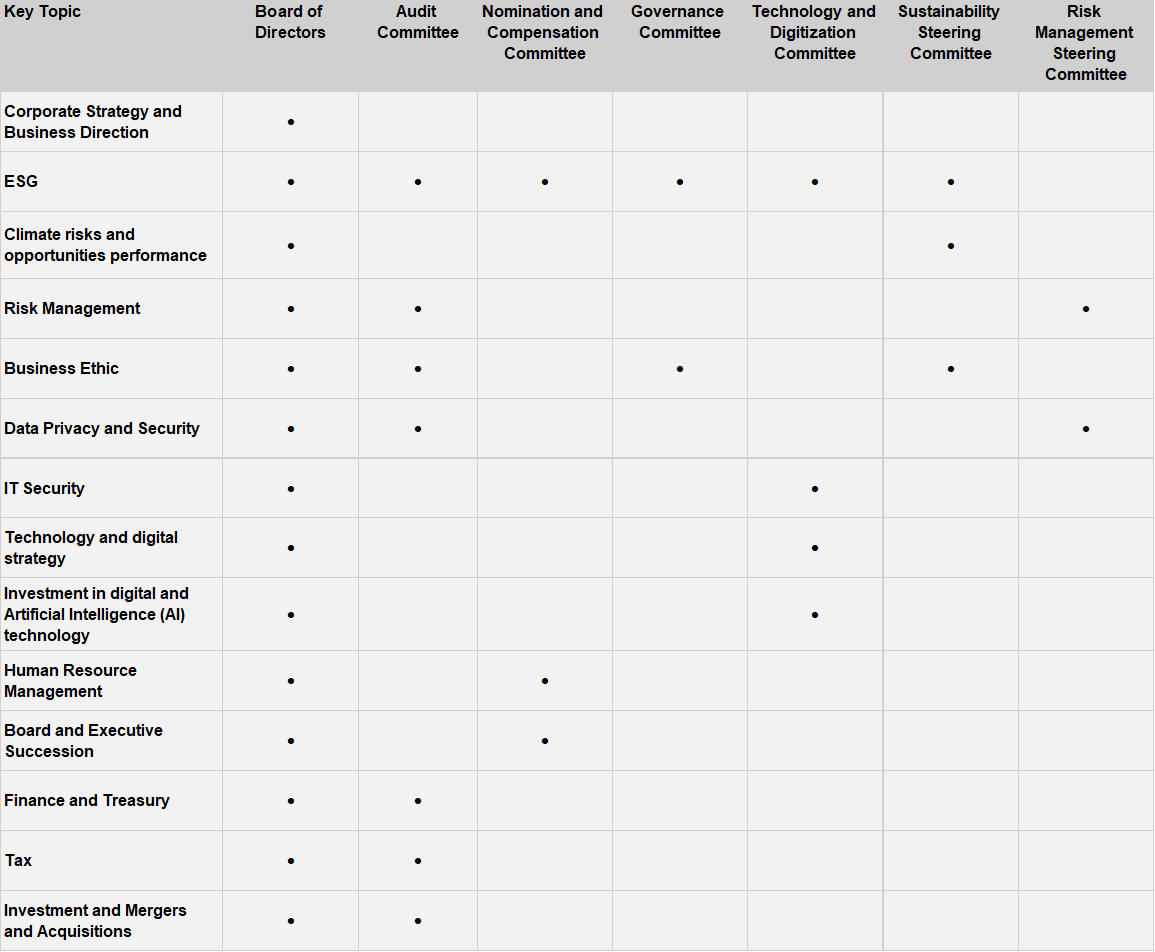
The Board of Directors has established policies and guidelines that act as the catalysts for secure and transparent business operation. These policies and guidelines encompass the Board of Directors and Executive, and ensure that all operations are legally compliant, performed with care, free of conflict of interest, and consistent with the Company’s Code of Business Conduct.
Further details regarding the business ethics practices can be found in Section 6.2.1 Business Ethics Policy and Practices, and Section 8.1.4 Monitoring Compliance with Corporate Governance Policies and Practices.
Principle 2 Define Objectives that Promote Sustainable Value Creation
Vision, mission, and corporate values that consider stakeholders and are consistent with goals and corporate strategy
The Company has established clear long term business and sustainability objectives, and along with these the vision, obligations, and corporate culture that support achieving such objective. These are reviewed annually. The objectives shall remain consistent with sustainable value creation for business, the clients, the stakeholders, and society at large. Employees are consistently communicated with on this matter to ensure alignment.
The Company has also established several long term targets such as the climate and energy change management target, reduction target for greenhouse gases emission, and community relations and stakeholder relations targets, which are, again, consistent with the Company’s long term business goals.
On governance and strategy, the Board of Directors has reviewed the medium term and long term workplans business strategies (3 – 5 years) to ensure alignment with the 2030 Sustainability Ambition. Critical subjects such as low carbon products, improve energy efficiency, effective management of resources, environmental standard elevation, and digital and innovation development to support business sustainability.
The Board of Directors closely monitors implementation of established strategies, with Management assigned the responsibility to report on a quarterly basis to the Board of Directors’ meetings progresses of strategically critical projects. This is to ensure the Board of Directors can accurately assess, govern, and support Management’s operations effectively.
In this regard, the Company has adopted information technologies that support the decision making processes of the Board of Directors through data analysis and preparation methods that are modern secure, and accurate, as well as those for online conferences and online submission of meeting documents such that Directors are able to monitor the progresses of strategic implementations and performance of work relating to our sustainability goals in all aspects.
Details on our visions, obligations, and corporate culture can be found in the section Policy and Business Overview.
Principle 3 Enhancing the Effectiveness of the Board of Directors
The Board of Directors plays an important role in directing the Group’s business such that it is driven in a manner that is efficient, transparent, and consistent with the corporate governance principles. The structure and components of the Board of Directors are designed such that it is varied and that the Directors are qualified and possess the skills and knowledge necessary for their functions, supported by our Board Skill Matrix that shows in detail the skills and expertises of our Directors.
The Board of Directors has also established the policy relating to the recruitment and nomination of the Chairman of the Board of Directors, Independent Directors, and Directors of the subsidiaries’ boards of directors, as well as the performance assessment of the Board of Directors, subsidiary boards of directors and committees, and individual Directors. This is to ensure an optimal balance of power. The policy also supports effective capacity development of Directors, compensation determination, Board of Directors’ performance assessment, performance of subsidiaries’ boards of directors and committees, and individual Directors, and also to ensure good governance practice in the Board of Directors’ operations, with support such as meeting facilitation, access to critical information, Management performance report, and effective management of subsidiaries.
The Board of Directors is also responsible for helping to create and maintain, as well as review, mechanisms that prevent conflicts of interest, creating a clear boundary of authority of the Chairman of the Board of Directors and Executives, and fostering an ethical corporate culture, to ensure alignment with the long term objectives and that shareholders and stakeholders are provided sustainable value.
Details on these subjects can be found in 6.1.1 Policy and Guidelines Relating to the Board of Directors, and 8.1.1 Report on Board of Director Recruitment / Director Capacity Development / Director’s Performance Assessment.
Principle 4 : Nomination and Development of Executives and People Development
Nomination, Training and Development and Succession Plan for the Executives
The nomination of the Group Chief Executive Officer and senior executives
The Board of Directors sees the importance of the Group’s executives’ capabilities, and so mandated that the recruitment processes of all Executives are meticulous and transparent, to ensure Executive candidates are of utmost professionalism. The duties of nomination and structural review of critical Group Executive positions are delegated to the Nomination and Compensation Committee (NCC) per the NCC Charter, with counseling services from third parties of international standards in addition to the existing criteria set by the Company. For the Group CEO position, which is the highest executive position within the Group, the NCC is responsible for considering the qualifications of the candidates, conducting interviews, and presenting suitable candidates to the Board of Directors for approval. It should be noted that the nomination processes for high level executive positions must consider a wide range of criteria, including the knowledge, experience, the ability to manage the Company in alignment with the established strategy, past notable achievements, and the integrity of a candidate. The Company hence proceeds with such nomination with great care and transparency, ensuring that the eventual Executives resultant of these processes are of sufficient capability to lead the Company to long term, sustainable prosperity.
Succession Plan for Executives
In developing succession plans, the NCC is delegated by the Board of Directors with creating a transparent environment, establishing the scopes for Executive assessment, overseeing succession candidates, ensuring that the succession pipelines are prepared with high capacity younger generation of candidates at the ready, reviewing existing succession plans in conjunction with the Group CEO, reviewing capacity building programs for subsidiaries’ Directors and Company’s representatives acting as Directors of companies wherein the Company hold shares. All of this is to ensure the matter of succession is handled efficiently, with the NCC being responsible for reporting operations relating to these topics to the Board of Directors for further approval.
The Group has established a systematic succession scheme via Developing Leadership Quality (DLQ) which was designed to identify and access potential successors suitable for critical executive roles, using INSEE Competency, which covers all core competencies and leadership competencies, as the benchmarking tool, focusing particularly on shape transformation strategies and INSEE Agility Mindset, which emphasizes work agility and adaptability. This shall ensure future Executives of the Company are capable of driving the Company towards sustainability in the most effective manner.
Training and Development of Executives
The Board of Directors has approved the Group's Human Resources Policy, which was reviewed and recommended by the Nomination and Compensation Committee in order to establish a framework and basic criteria for human resource management that is consistent throughout the organization.
The NCC is charged by the Board of Directors with building the leadership capacity of Executives and Senior Management, with the goal being to build expert leaders of their respective fields. Assessment of the leadership capacity of these personnel is provided by independent experts. The Board of Directors promotes and supports Senior Executives to undertake trainings relevant to their roles and responsibilities. The following are corporate governance programs Executives of the Company have attended, up to the end of 2025:
No. | Executives | Training Courses until end of 2025 | |
1 |
|
| |
2 |
|
| |
3 |
| - | |
4 |
|
| |
Note: *Training in 2025
Principle 5: Nurture Innovation and Responsible Business
Nurturing Innovation at Siam City Cement
The Board of Directors sees the importance of promoting the use of innovation in response to the changing global context and the technological expectations of our customers, partners, and key stakeholders for changes that are beneficial or create shared values for the business, customers, business partners, society, and the environment. The transformation, however, must be based on sound business practices. The Board of Directors has directed Management to include innovation promotion in strategy reviews and to plan for consistent operational growth. In particular, the Company’s focus is to continuously strengthen the Company’s competitiveness and at the same time reduce our carbon footprint and the carbon intensity in our products, and we are now actively adopting an open innovation network approach by joining technology and industry leaders for joint development projects. Such partnerships are supporting our needs to access leading technologies faster and, thus, reducing time to incubate and commercialize. The scope of these partnerships covers all critical functions from product and application development to manufacturing technologies including the deployment of artificial intelligence applications in many business segments we are operating in.
The Board of Directors and the Group Executive Officer support activities and promote innovations in the organization that are critical to its long-term viability, as follows:
Employees Participation in an Innovative Culture and New Products or Businesses
Siam City Cement Group understands the importance of innovation as a result of technological developments and the changing market environment and promotes the company as an innovative organization. Employees are encouraged to participate in innovation as part of the company's culture. Throughout the year, seminars and workshops are held on a regular basis and provide ideas to improve and boost efficiency in business operations (core innovation), as well as encourage initiatives among young thinkers to create new business models to generate income and a mechanism to help fulfil market demands in a changing environment.
Support for Sustainable Innovation Organization
The Company is well aware of the importance of creating and supporting sustainable innovations within the organization. In this regard, the Group CEO assumes the duty to be directly responsible in mapping out the policy, management and operations of all innovative promotional activities which includes providing support and facilitations of employees initiatives in carrying out operations on various innovation projects, in an expeditious and efficient manner, as well as providing support and resources for education or research to acquire additional information that is beneficial to the developments of creative projects that give rise to new business models.
The Company understands the significance of innovation and its mutual corporate value for the benefit of the business, customers, business partners and stakeholders as well as the society and environment. In this respect, emphasis on the creation of corporate culture, and support to various activities as well as working in collaboration with related external organizations in order to promote for the acquisition of new innovation is an evergreen goal of the Company.
Responsible business conduct towards society and the environment
Our commitment is to doing business in a manner that is responsible to the society and the environment, mindful of any impact to all stakeholders. The Company has also established policies, strategies, and measures for environmental management, community development, and sustainable quality of life elevation. These are all interlinked with our sustainability targets, and facilitate our business growing sustainably and responsibly.
For more details, please see 6.1.2 Policy, Guidelines, and Measures on Shareholder and Stakeholder Treatment.
Principle 6 : Effective Risk Management and Internal Control
Risk Governance and Management for Group Companies
The Board of Directors emphasizes that Management must ensure Group-wide alignment in all business undertakings of the Group companies, and has delegated the responsibility to INSEE Digital Company Limited, a subsidiary with expertise in digital technology, to act as the Group’s IT improvement centre, and to increase Group efficiency in all work processes, including data management and control to prevent data loss.
The Company and all subsidiaries have a risk management system that encompasses all work processes to ensure that they align with the Company’s objectives and are prepared against potential risks. This system encompasses financial risk management which includes liquidity monitoring, IT risk management including cyber security and measures against data leak, and operation risk management, to ensure that all operations align with the Company’s established standard.
Governance by the Board of Directors
The Board of Directors regularly visits the Company and its subsidiaries both domestic and overseas to have a better understanding of the business environment and nature of the Group's business. The Directors work extensively with Management and have full support from the Group CEO, the Group CFO, the Group Head of Internal Audit and Compliance, the Company Secretary, and the Secretaries of all board committees. In addition, the Board of Directors has access to the meeting documents via an application system designed to facilitate more efficient meeting arrangements and provide a realistic view to Management as well as a channel for feedback to Management for beneficial and practical suggestions.
Risk Management and Internal Control
The Board of Directors oversees the information security system, which includes establishing confidentiality policies and practices, maintaining information integrity and availability, and managing sensitive information. Furthermore, the Board of Directors ensures that the information security policy is adhered to by the Directors, senior executives, employees, and relevant external parties such as legal and financial advisors.
The Company recognizes the importance of risk management as a key component of effective management and good corporate governance. The Board of Directors has established a risk management policy that aligns with the Company’s objectives, key goals, strategies, and acceptable risks levels. This policy also serves as the foundation for the Company’s risk and opportunity assessment framework, ensuring a unified approach to risk management across the organization.
The Board of Directors oversees the establishment and maintenance of an effective and sufficient internal control system, adhering strictly to international standards set by the Committee of Sponsoring Organizations of the Treadway Commission (COSO) and the guidelines provided by the SEC. This ensures that the Company's operations align with its objectives and goals, as well as with applicable laws, rules, regulations, and business requirements. The system is designed to minimize operational risks and implement reasonable fraud prevention measures. Additionally, the Group Internal Audit and Compliance (GIAC) unit, which reports directly to the Audit Committee, has been established to oversee internal control, auditing, and risk assessments across the Company’s operations.
Risk Management Projects and Processes
The Company has established a risk management structure that encompasses all levels of operation. Key responsible entities include the Board of Directors, which sets and directs risk management policies; the Audit Committee, which reviews the Group’s risk management system; and the Risk Management Steering Committee, which assesses risks and opportunities and manage them collaboratively.
The Group sees the significance of the risk assessment, analysis, and prioritization processes as well as risk mitigation based on internal and external factors that may leave impacts on the business, reviewing such matter quarterly. Risks are separated into categories as follows: (1) Business risks, (2) financial risks, (3) operational risks, (4) regulatory risks, (5) environmental and social risks, (6) investment risks, (7) overseas investment risks, and (8) emerging risks.
The assessed risks will be presented to the Board of Directors, with group-aligned future risk management measures potentially based on these assessments. Risks and opportunities are ranked based on their significance and probabilities, which are reviewed by the CEO of each Group Company. The Risk Management Steering Committee then assess these risks and opportunities through Group level perspective and present them to the Board of Directors on a quarterly basis, for Group wide alignment and effective implementation of risk management of each subsidiary.
Strengthening Risk Management Culture
In today’s volatile, uncertain, complex and ambiguous (VUCA) world, SCCC transforms the risk management culture from reactive measures to a proactive and integrated approach which focuses on people – namely, employees, stakeholders, and their collective capabilities. We have been continuing to cultivate a risk management culture focusing on employee and stakeholder engagement, coupled with targeted capability development. Organizations can cultivate a robust risk management culture that not only mitigates potential threats but also capitalizes on emerging opportunities in the complex and dynamic VUCA world. This people-centric approach is essential for long-term success and sustainability.
Employee engagement: Empower employees at all levels to identify and report potential risks. Provide them with the tools and resources they need to effectively manage risks within their areas of responsibility. Establish clear feedback mechanisms and communications between risk champions and top managements to capture employee insights and concerns regarding risks. Act on this feedback to continuously improve risk management processes.
Stakeholder engagement: Foster collaboration across business units and departments to share knowledge and perspectives on risks. Break down silos to ensure a holistic view of potential threats and opportunities. Collaborate with key stakeholders on developing and implementing risk mitigation strategies. This strengthens the organization's resilience.
Leadership and people capability development: Invest in developing core risk management skills, such as risk identification, assessment, analysis, and mitigation. Focus on developing competencies that are crucial for navigating the VUCA world as part of individual development plan, such as adaptability, resilience, critical thinking, and problem-solving. The company has trained employees and executives (top and senior management level) on policies and processes regarding Enterprise Risk Management (ERM). Additionally, equip leaders with the skills and knowledge to champion a strong risk management culture. Leaders must model the desired behaviors and promote a risk-aware mindset. Furthermore, the risk management structure has been communicated to the Board to ensure consistency across all levels.
Alignment with Future Strategy & VUCA World: Implement agile risk management processes that can adapt quickly to changing circumstances. Embrace flexibility and iterative approaches. Encourage innovation and experimentation in risk management. Explore new approaches and technologies to enhance risk management effectiveness. Focus on building organizational resilience to withstand disruptions. Develop strategies to recover quickly from adverse events.
The establishment of the Audit Committee and its role in risk governance.
The Board of Directors has established the Audit Committee whose responsiblities include governing internal control performance, manage risks, ensuring effective and independent financial report operation. All members of the Audit Committee are Independent Directors who are qualified per the standards of the Stock Exchange of Thailand and the Securities and Exchange Commission, and two members have expertise in accounting.
The duties and roles of the Audit Committee are as described in the Committee’s charter, and encompass overseeing risk management operation and international control system implementation in accordance with the Corporate Governance Code 2560. The Audit Committee is also responsible for reviewing the sufficiency of the risk management processes, internal control processes, and compliance with relevant laws and regulations.
To facilitate the Committee’s effectively performing its tasks, the Board has ensured that mechanisms are in place that allow the Audit Committee to access necessary information to perform its duties, such as:
Executives being invited to directly clarify risks and internal control matters
Discussion with the Auditor to review the accuracy of the financial statements and the sufficiency of the internal control system
Independent opinions from external advisors or experts for high risk or high complexity matters
The Company also maintains a department whose function is to independently evaluate the efficiency of the risk management and internal control systems, the reports of such evaluation being regularly submitted to the Audit Committee. Results of said review are disclosed on the 56-1 One Report in the section Internal Control and Audit Committee Performance Result.
Principle 7 : Ensure Disclosure and Financial Integrity
Financial Report Preparation and Significant Information Disclosure
SCCC is committed to the transparent, truthful, accurate, and timely disclosure of information, including financial data, performance reports, and other non-financial information. It is paramount that investors and stakeholders have access to accurate information, sufficient for making informed decisions. The information we disclose is available both in Thai and English and can be found both on the SET IT systems as well as the Company’s website, ensuring accessibility for all.
The Board of Directors has ensured that personnel involved in the preparation and disclosure of information possess the appropriate knowledge, skills, experience, and have a sufficient team size to fulfil their responsibilities.
The Board has established a robust process for preparing financial reports and ensures the information presented is accurate, in accordance with the generally acceptable accounting standards, and audited by independent auditors certified by the SEC. The Board also takes responsibility for the financial report, which includes the independent auditor report in the annual report by giving approval on such financial information disclosure. The Board has already taken considerations on the factors, the matter of the adequacy evaluation of the internal control system including the observations of the auditors through other communication channels, comments of the Audit Committee and alignment with the objectives, main goals, strategies and Company’s policies.
The Board has monitored controls over the information disclosures which include financial statements, 56-1 One Report that adequately reflect the Company’s financial status and operational result including the encouragement of the Company to conduct the management discussion and analysis or MD&A to support the financial statement disclosure every quarter, so as to enable the investors to know the information and understand the changes that are occurring to the Company’s financial statements and operational result. Other than solely the numeric figure information in the financial statements and in the case of any information disclosure which is related to any Director, Directors in particular must ensure that the disclosure on their part is completely and accurately undertaken.
Under the principle of maintaining financial and disclosure credibility, the Company has managed all tax matters transparently and responsibly, with a clear tax policy established to ensure all tax burdens are attended to as legally required, with full respect to the principle of good governance, reflecting our commitment to being a responsible tax payer and supporting sustainable business practices. Details on the policy are per below.
Tax Policy
Siam City Cement Public Company Limited and its subsidiaries (the Group) are aware of their roles and responsibilities as a good taxpayer. Therefore, it has implemented a Tax Policy which applies to all levels of Management and working staff and covers all aspects of taxation operations and payments with strict adherence to tax laws to ensure compliance and contributions to all stakeholders. The policy covers the following tax aspects.
Tax compliance: Manage documentation, operation and transactions including tax payment in accordance with the relevant regulation and tax laws that are currently in effect, remaining readily adaptable to potential revisions to such laws and regulations, for the maximal benefits of our stakeholders. The Group also focuses on avoiding transactions that may constitute tax evasion at all costs.
Transfer pricing: Related party transactions are required to apply the principle of comparison between the transfer price and market price (Arm’s length price) in order to ensure that the taxation is accurate and proper according to the Arm’s Length Principle.
Tax risk management: The tax risk management structure including its roles and responsibilities are clearly defined. The Audit Committee and Corporate Governance Committee reviews the tax risk management to ensure it is appropriate.
Tax coordination: Make available dedicated people who have sufficient knowledge and skills to collaborate with government tax agents to provide accurate facts of business operations. Further, provide knowledge and advice to internal parties to build up awareness and ensure all operations are in compliance with tax laws.
Tax incentives: Proper utilization of the incentives by following the rules and regulations under tax laws including any special taxation measures as provided to stimulate the country and economy.
Sustainability Report
The Board of Directors has considered the appropriate disclosure of information in compliance with the laws, the ethical code, anti-corruption policy, treatments of employees and stakeholders which include fair treatments and respect to human rights, social and environmental responsibilities. The Board of Directors also takes into account the report framework acceptable at domestic or international level which has been defined as the policy, to fully reflect the Company’s commitment to building value for our organization in a sustainable manner.
The Company reports its operations and sustainability development based on the Global Reporting Initiative (GRI) standards and discloses key performance results according to the Global Cement and Concrete Association (GCCA) standards. The focus is on presenting key sustainability indicators to provide stakeholders with transparent information, enabling them to assess the Company’s performance effectively.
The Board of Directors has established the Sustainability Policy which promotes works relating to the promotion of sustainability in economic, social, and environmental aspects. The Sustainability Steering Committee is charged with overseeing and reviewing the implementation of this policy, with regular monitoring and assessment, to ensure that the Company’s commitment to sustainability is fully served.
The Sustainable Development Report has been reviewed and approved by the Sustainability Steering Committee for its accurate reflection of Company’s operation in relation to and in alignment with the established Sustainability Development Policy. In addition, the Board of Directors pays special attention to reviewing the Company’s operation and its potential for long-term, sustainable value building for all stakeholders.
Details on sustainability performance and development can be found under the topic Sustainability Development and the Company’s website
Disclosure and the Capital Market Communication
The Board of Directors sees the importance of the duties of the Company’s “Spokesperson” who must be suitable to perform such duties, understands the corporate business including the objectives, main goals, values and well communicate with the capital market. Because the person appointed to perform such duties has to perform his/her duties with due care, the CEO is therefore designated to be responsible as the spokesperson for giving information to third parties.
Siam City Cement Public Company Limited understands the importance of accurate, clear public disclosure, sufficient for investors to make informed decisions, with such disclosure accessible to all parties equally, in a timely and appropriate manner. The Company also understands the importance of safeguarding confidential information and information that affects securities prices, with the organization in alignment with the SET disclosure rule.
The Company also sees the importance of equitable and transparent treatment of all shareholders with which they will be provided with important, complete, and updated information, as well as a channel on which the Company’s information may be found that is conveniently accessible to all stakeholders. Notably, at the shareholders’ meeting, no new or modified agenda items or changes to any significant information without notice to the shareholders in advance shall be presented.
In addition to the disclosure made to the Stock Exchange of Thailand including the 56-1 One Report from the Board of Directors also arranges for disclosure, both in Thai and English, of such report on the Company’s website at www.siamcitycement.com. Information disclosed is always improved and kept up to date, in accordance with the good corporate governance principle for listed companies.
Investor Relations
The Board of Directors also sets out the SET disclosure rule, and the Communication Policy. Respectively, the tasks related to Investor Relations (IR) are assigned to a specific person in order to communicate it with third parties, including investors, institutional investors, general investors, analysts, and associated state agencies with equality and fairness. The Company provides the opportunity to such parties to visit our Executives as appropriate.
In 2025, the Company continuously carried out investor relations activities with the objective of providing transparent and consistent disclosure of key information, covering the Company’s operating performance, current situation, strategies, and future outlook. The Executives, together with the Investor Relations team communicated with shareholders, investors, and other stakeholders on various occasions. Quarterly meetings with analysts were arranged
as a channel to communicate the Company’s information and to receive feedback and suggestions, which are beneficial for shaping the Company’s future strategies. Quarterly newsletters were also published on the Company’s website.
Principle 8: Ensure Engagement and Communication with Shareholders
The Company understands the importance of preserving the rights of the shareholders and promoting transparent and fair participation. We have established communication channels that are easily accessible for shareholders to ensure that information disclosed to shareholders is correct, complete, and timely, whether it be information on performance, strategy, business direction, or other investment related information. We also promote participants in governance work by the shareholders through attending shareholders’ meetings, casting votes, and proposing agenda items or Director candidates prior to meetings as well as by providing constructive feedback and opinions that will lead to improvement of transparency, reliability, and shared value amongst all involved.
Further details of the policies, guidelines, and measures relating to shareholders can be found in Section 6.1.2: Policies, Guidelines, and Measures Concerning Shareholders and Stakeholders.