

Sustainability · 2025
In this section52 topics
- Sustainability Policy4 items
- Sustainability Goals & UN SDGs3 items
- Policy Review3 items
- Business Value Chain1 item
- Stakeholder Analysis2 items
- Environmental Policy & Guidelines5 items
- Environmental Policy Review2 items
- Energy — Plan & Guidelines2 items
- Energy — Electricity Consumption1 item
- Energy — Fuel Consumption2 items
- Energy — Targets2 items
- Energy — Performance & Outcomes2 items
- Water — Plan & Guidelines2 items
- Water — Withdrawal, Discharge & Consumption1 item
- Water — Targets2 items
- Water — Performance & Outcomes2 items
- Waste — Plan & Guidelines2 items
- Waste — Generation, Disposal & Recycling1 item
- Waste — Targets2 items
- Waste — Performance & Outcomes2 items
- GHG — Plan & Guidelines2 items
- GHG — Emissions2 items
- GHG — Emissions Verification3 items
- GHG — Principles & Standards1 item
- GHG — Targets1 item
- GHG Targets — Other Targets1 item
- GHG — Performance & Outcomes2 items
- Environmental Legal Incidents1 item
- Other Environmental Management2 items
- Social Policy & Guidelines3 items
- Social Policy Review1 item
- Social — Principles & Standards Practised1 item
- Human Rights Due Diligence1 item
- Employees — Plan & Guidelines3 items
- Employees — Workforce2 items
- Employees — Remuneration & Provident Fund1 item
- Employees — Training & Development1 item
- Employees — Occupational Health & Safety1 item
- Employees — Labour Relations1 item
- Employees — Employee Representation3 items
- Employees — Targets2 items
- Employees — Performance & Outcomes2 items
- Customers — Plan & Guidelines4 items
- Customers — Satisfaction Results1 item
- Customers — Targets2 items
- Customers — Performance & Outcomes2 items
- Community & Social — Overview1 item
- Community & Social — Plan & Guidelines3 items
- Community & Social — Targets2 items
- Community & Social — Performance & Outcomes2 items
- Other Social Management2 items
- Law Violation Incidents1 item
Sustainability Policy
Has a Sustainability Policy
Yes
Policy Description
2025: A Year of ESG Commitment to Profitable and Sustainable Growth
At Siam City Cement (SCCC, also known as INSEE,) we understand that cement is essential to building modern infrastructure, yet we are also highly aware of our responsibility in addressing climate change. As cement production is
a significant source of greenhouse gas emissions, we are committed to transforming our processes to support global efforts in limiting temperature rise to 1.5 degrees Celsius, as suggested by the Paris Agreement.
Our Environmental, Social, and Governance (ESG) practices are deeply integrated into our business growth strategy, driving us to enhance operational sustainability, reduce our carbon footprint, and innovate for a greener future. By aligning business growth with ESG priorities, we are not only strengthening our resilience but also contributing meaningfully to the global climate agenda.
In alignment with the United Nations' Sustainable Development Goals (SDGs), SCCC is dedicated to enhancing sustainability, particularly our decarbonization journey, through strategic partnerships with the Global Cement and Concrete Association (GCCA) and the Thailand Cement Manufacturers Association (TCMA). These collaborations have significantly bolstered our decarbonization efforts, addressing both the COP26 climate agreement and Thailand's ambitious Net Zero roadmap, which targets carbon neutrality by 2050, and Net Zero by 2065. By leveraging global and national frameworks, we are accelerating our transition to low-carbon solutions, ensuring our contributions align with international and local sustainability goals.
SCCC conducts its business in accordance with the principles of good corporate governance and responsible business practices, with due consideration for environmental and social impacts. The Board of Directors has established a Group-level sustainability policy and integrated sustainability considerations into the Company’s business strategy to support long-term value creation, enhance competitiveness, and strengthen organizational resilience in a rapidly changing business environment. To this end, the Board considers the Company’s operating context, stakeholder expectations, and sustainability-elated risks and opportunities that may affect the achievement of strategic objectives.
Board Oversight of Climate Change and Sustainability
The Board of Directors plays a central role in providing strategic guidance and overseeing sustainability management
in alignment with the enterprise risk management framework. Management is tasked with integrating environmental, social, and governance (ESG) objectives into business planning, operational decision-making, and day-to-day execution.
The Board regularly reviews sustainability performance and progress against key initiatives to ensure effective monitoring of management, enabling timely adjustments to strategies and management actions as circumstances evolve.
Where appropriate, sustainability considerations are linked to management performance evaluation to support consistent and effective implementation.
The Company has established clear governance structures, policies, and processes for identifying, assessing, understanding, and prioritizing sustainability-related risks and opportunities. These processes are integrated into
the Company’s risk management system and encompass both internal and external factors, with risks evaluated
based on potential impact and likelihood and prioritized according to their significance to long-term value creation.
A Sustainability Working Committee, comprising senior executives and representatives from relevant functions, supports the execution of sustainability policies, monitors progress, and reviews ESG-related risks and emerging issues.
The Committee reports regularly to the Group Chief Executive Officer and the Board of Directors to ensure alignment with strategic direction and the Company’s defined risk appetite.
With respect to climate-related matters, the Company identifies, assesses, and monitors climate-related risks and opportunities as part of its overall risk management process. This includes both transition-related risks and operational risks that may affect the Company’s performance and competitiveness. Appropriate risk mitigation measures are implemented and periodically reviewed through established governance mechanisms to support prudent risk management and informed decision-making. These practices are intended to enhance resilience and transparency,
and do not imply assurance of specific climate-related outcomes. In 2025, risks relating to natural disasters are a category of risks that directly concerns our operations and one that Group Management is closely monitoring.
The Board of Directors further supports the implementation of the sustainability strategy through the consideration
and approval of capital expenditure (CAPEX) that aligns with the Company’s strategic priorities and risk management framework. Such investments aim to improve operational efficiency and reduce environmental impacts,
while taking into account expected returns and associated risks. Examples include investments in solar power generation to increase the use of renewable energy, enhancements to production processes and advanced control systems to improve energy efficiency and reduce emissions, and initiatives to improve resource efficiency and waste management in production operations.
Management of Material Environmental Matters
At present, the Company has established targets and implemented initiatives to reduce carbon dioxide emissions arising from both its direct operations (Scope 1) and electricity consumption (Scope 2). These efforts focus on improving production process efficiency and increasing the proportion of electricity sourced from renewable energy, while targets related to other greenhouse gas emission scopes remain under assessment.
Although the Company’s cement production process is primarily a dry process, which requires relatively low water usage compared to other industries, the Company continues to prioritize efficient water management. Group-level targets have been established to reduce specific water consumption and increase the use of surface water sources, supporting sustainable resource use and mitigating potential long-term risks.
In relation to biodiversity, the Company recognizes the impacts associated with quarrying activities and
has established a target to achieve a Net Positive Impact on biodiversity by 2030. The Company’s approach emphasizes post-quarry rehabilitation, the implementation of site-specific biodiversity action plans, and the use of complementary measures—such as conservation projects or partnerships with external organizations in certain countries—based on local context and risk characteristics, under the oversight of the Board of Directors.
The Company also considers waste and waste-derived resources management to be a material environmental matter. Its approach extends beyond managing waste generated from its own operations to include the provision of environmental solutions for industrial customers and communities through its subsidiary, INSEE Ecocycle. Within
the Group’s energy-intensive cement manufacturing operations, the Company applies circular economy principles
by converting certain waste materials into alternative fuels for use as thermal energy in production processes.
This approach reduces waste sent for disposal, decreases reliance on conventional fossil-based energy, and contributes to overall greenhouse gas emission reduction.
The integration of sustainability considerations into strategy, governance, risk management, capital allocation, and environmental management reflects the Board of Directors’ responsibility for overseeing responsible, transparent, and forward-looking business practices, as well as its accountability for ensuring appropriate and consistent corporate disclosure. Sustainability is therefore embedded as a strategic consideration supporting prudent decision-making and long-term value creation, without implying assurance of specific sustainability outcomes.
Policy Document Link
https://investor.siamcitycement.com/storage/documents/corporate-policies/sccc-sustainability-policy-en.pdf
Page Number in Report
1-6
Sustainability Goals & UN SDGs
Has Sustainability Goals
Yes
Goals Description
In 2021, guided by our INSEE Commitment to "Caring about our Future" – a principle deeply embedded in every SCCC employee - we launched the INSEE Sustainability Ambition 2030, a comprehensive framework with clear and actionable targets. Following a thorough assessment and evaluation in 2023, we have identified opportunities to elevate our sustainability ambition. By stretching our 2030 targets, we are positioning ourselves to deliver even more impactful decarbonization results, directly addressing one of the most urgent global challenges of our time. The Sustainability Ambition 2030 is also a part of the Company's long-term strategy (covering 8 years of operation from the year the ambition is announced.)
Reduction to CO2 emissions across the Group to <470 kg/ton CEM, representing a large 25 percent reduction from our 2020 baseline
Increase to use of waste derived fuels in our cement kilns to over 1.4 million tons, with a Group-wide Thermal Substitution Rate (TSR) goal set now at 40 percent
An aggressive new target for the use of By-Products (Fly ash, Slag, Gypsum etc) has been set at over 1.7 million tons in our operations, with a SCCC Group-wide Clinker Factor (CF) target of 65 percent.
Using 2020 as our baseline year, these ambitious targets emphasize our deep commitment to implementing effective decarbonization strategies across our cement and clinker operations.
When it comes to the impact on our environment, it is important for all of us to make a well-informed decision.
INSEE Group has proudly declared that we are the first cement manufacturer in Thailand to acquire and promote Environmental Product Declarations (EPD) for clinker and all cement types. Additionally, products from INSEE overseas subsidiaries in Vietnam, Sri Lanka, Bangladesh, and our business joint venture in Cambodia have also received EPD certification, underscoring INSEE Group's dedication to environmental stewardship.
EPDs demonstrate clarity in the environmental footprint of the company’s cement products and enables
the transparent evaluation of cement solutions for project owners and the designers of these projects.
As we intensify our decarbonization effort Scope 2, in 2024, SCCC joined hands with B.Grimm Power, beginning
the construction of its first-phase solar panel project at the Siam City Cement plant in Kaeng Khoi district, Saraburi province, under the new joint venture INSEE B.Grimm Solar Company Limited. This clean energy initiative is expected
to reduce carbon dioxide emissions by up to 54,000 tons annually, emphasizing the Group's strong commitment
to reducing carbon dioxide emissions and increasing the use of electricity from alternative energy sources in our Thailand’s cement production to at least 50 percent by 2030.
The Plant is expected to be completed by April 2025, and is scheduled to begin generating electricity for
the Siam City Cement facility in September the same year.
Throughout the Group, we are also working to increase surface water utilization to over 45 percent of our total water consumption in manufacturing, thereby safeguarding groundwater reserves and conserving clean water resources for future generations.
Our commitment also extends to creating a net-positive impact on biodiversity, in collaboration with the International Union for Conservation of Nature (IUCN) through the MoU the Group has signed with them.
Additionally, we maintain a “Zero Harm” objective for Occupational Health and Safety, aiming to protect not only
our employees but also contractors, customers, and suppliers. Furthermore, we actively strive to enhance the quality of life in the communities where we operate, in alignment with our sustainability policy, ensuring our actions contribute positively to their well-being and development.
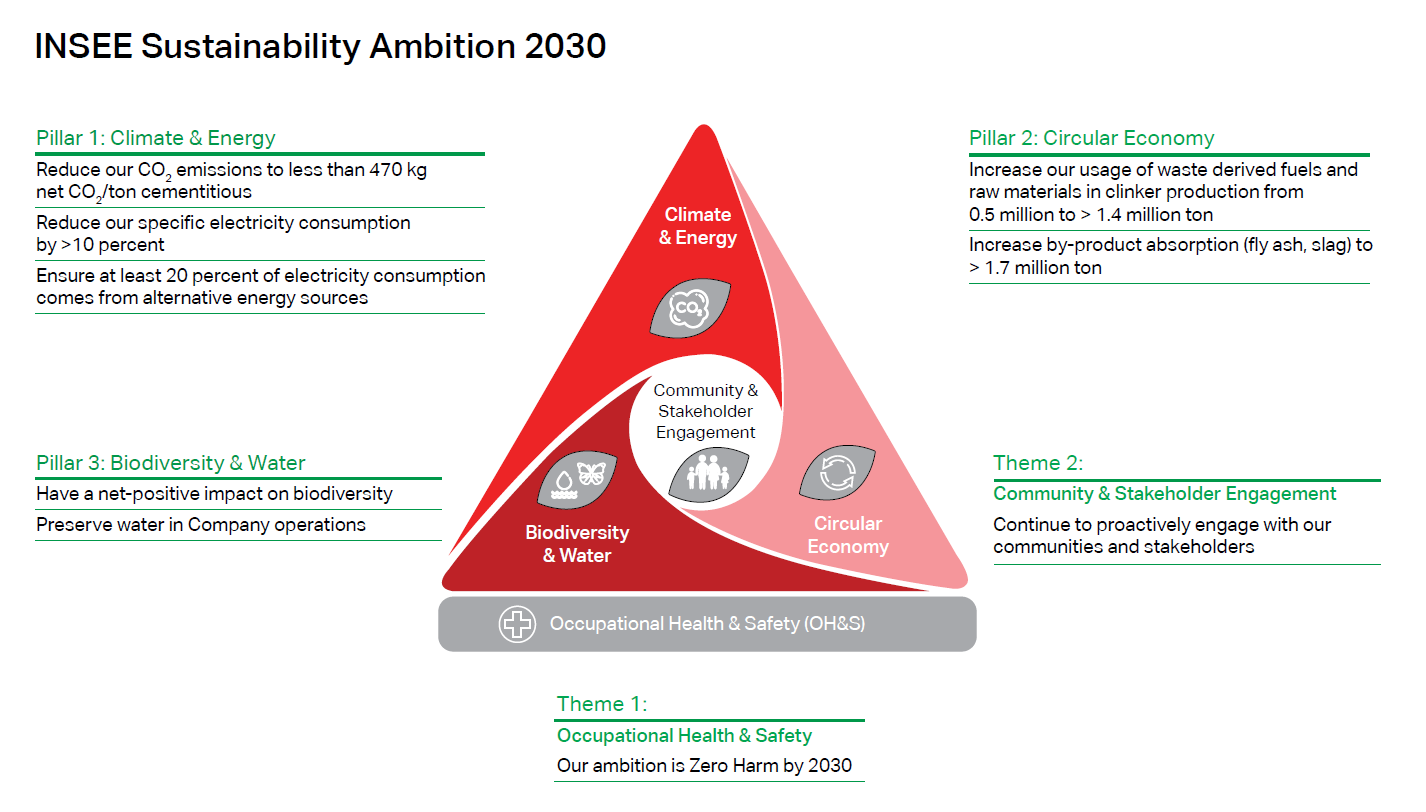
SCCC continuously monitors and evaluates our progress against those targets and evolving risks to stay on track
to our long-term goals. We then annually review and disclose our sustainability performance by integrating key
non-financial metrics, performance indicators, climate risk assessment into our Annual Report, and our website, in line
with enhanced Stock Exchange of Thailand guidelines, Task Force on Climate-related Financial Disclosures standards,
and KPIs of Global Cement and Concrete Association (GCCA), as well as FTSE Russell disclosures requirements.
These metrics specifically address crucial aspects such as climate change, workplace safety, and inclusivity within
the workplace. To ensure comprehensive reporting, our Annual Report follows the "GRI Standards" established by
the Global Reporting Initiative (GRI), with the GRI Index prominently featured in our disclosure. This reporting
and disclosure commitment underscore our dedication to transparently communicating our sustainability efforts
and achievements.
The Company follow ISO14001 standards in our environmental management, based on the latest ISO14001:2015 version, which includes all significant processes of our organization. This commitment aligns with our Sustainable Development Policy, establishing benchmarks for corporate governance and generating economic, environmental,
and social value.
To drive the agenda and our commitment to our established Sustainability Ambition 2030, the Board of Directors has directed the Group Executive Committee to set up the Sustainability Steering Committee (SSC), which, as of this report, consists of production technic and process experts who are responsible for enhancing the Group's operational long-term efficiency and sustainability, executives responsible for alternative fuels management, and executives responsible for organizational communication. This Group-level committee works to align the Group's projects with the Sustainability Ambition 2030 and the Group's objectives at large. SSC is also responsible for monitoring the year-to-year operation meets annual targets, and to this end the Board of Directors is consistently reported to by SSC, as part of its charter-mandated operation.
ESG Materiality Assessment
Siam City Cement regularly reviews the importance of sustainability issues to align with the direction of business operations with reference to the GRI Standards. SCCC has identified key materiality issues that are significant and areas where focus are needed for SCCC business operations as follows.
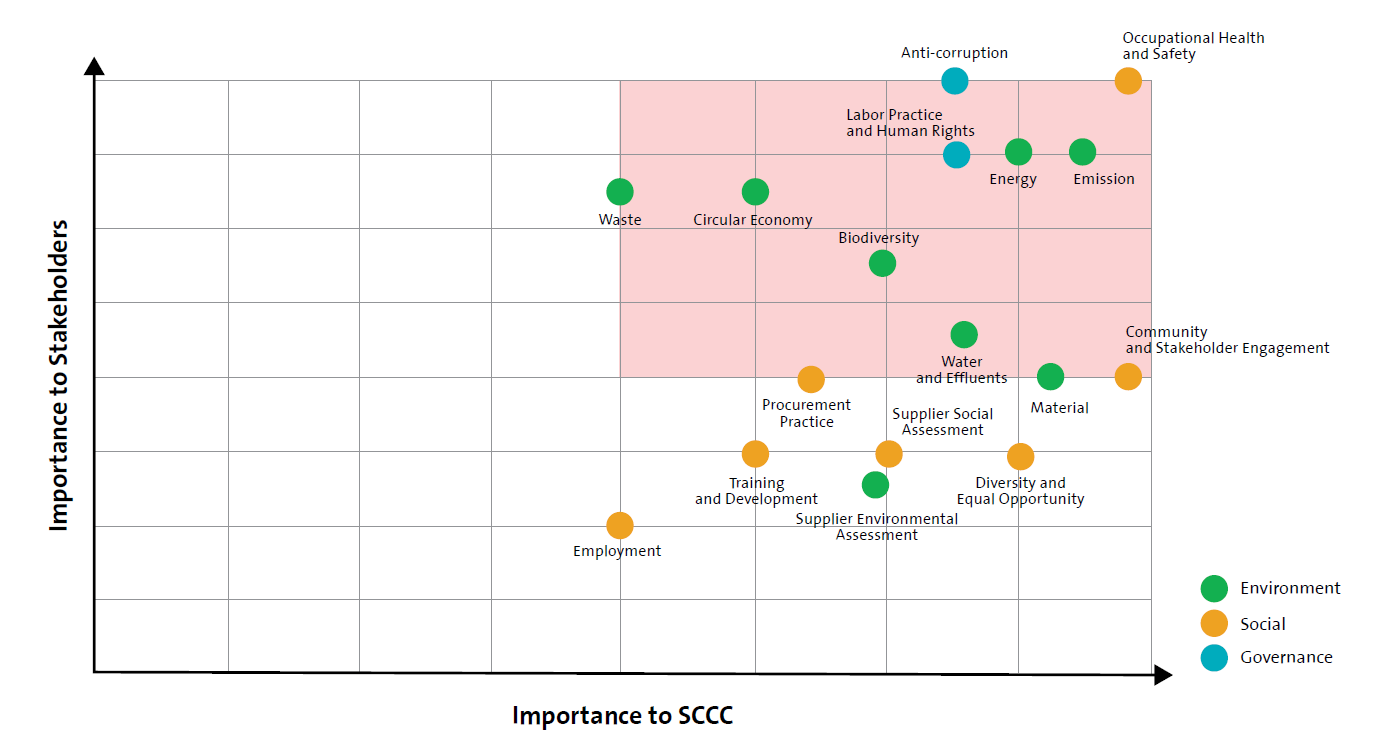
Read more about ESG Materiality Assessment on the Company's website at
https://www.siamcitycement.com/en/esg/-esg-materiality-assessment
UN Sustainable Development Goals
| SDG Goal |
|---|
| Goal 4 Quality Education |
| Goal 6 Clean Water and Sanitation |
| Goal 7 Affordable and Clean Energy |
| Goal 9 Industry, Innovation and Infrastructure |
| Goal 12 Responsible Consumption and Production |
| Goal 13 Climate Action |
| Goal 14 Life below Water |
| Goal 15 Life on Land |
Policy Review
Policy Reviewed This Year
Yes
Policy Changed This Year
No
Review Details
Our 2025 SD Performance Highlights - compared with 2030 Targets
Dimensions | 2030 Target | 2025 Actual Performance / 2025 Target |
Environment CO2 Emission % Clinker Factor % Thermal Substitution Rate (TSR) Usage of Waste Derived Fuels Absorption of by-products % Surface Water Utilization Social Lost Time Injury Frequency Rate | < 470 CEM < 65% > 40% > 1.4 mil ton > 1.7 mil ton > 45% Zero | 526 / 519 67.3 / 66.3 28.9 / 28.2 0.911 / 0.829 mil ton 1278 / 1425 mil ton 39.9 / 40.4 0.2 / 0.13 |
The disclosed information includes information from the Group's cement segment, domestic and international, which includes Siam City Cement Public Company Limited, Siam City Cement (Vietnam) Limited, Siam City Cement (Bangladesh) Limited, and Siam City Cement (Lanka) Limited, and the waste heat power generation business which includes Siam City Power Company Limited.
Business Value Chain
Value Chain Description
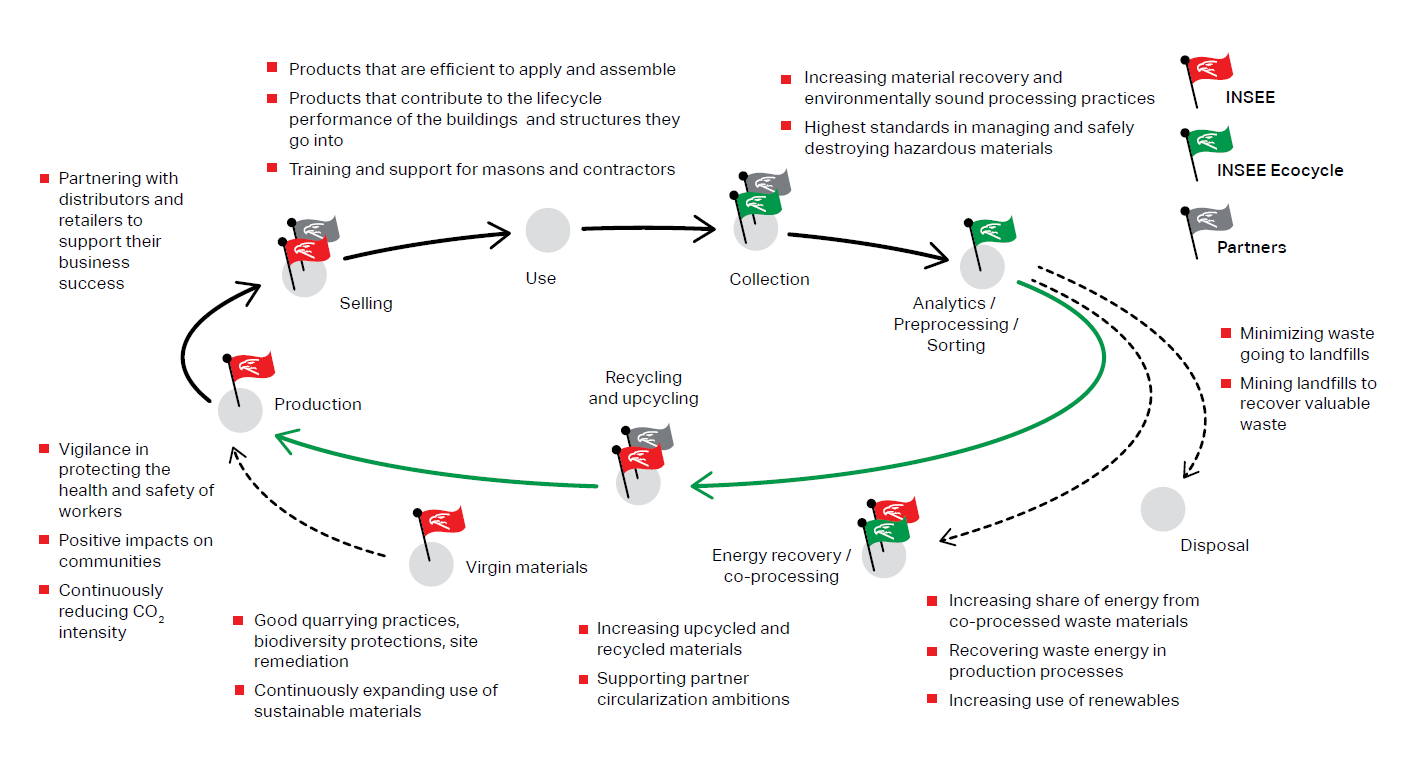
Sustainability Commitments throughout Our Business Value Chains
INSEE incorporates sustainability across our entire value chain, as illustrated below, to uphold the highest standards of good governance. Our aim is to minimize our environmental impact, follow international best practices, and optimize production. Within this value chain, we remain dedicated to promoting the health and well-being of our workers, reducing our CO2 emissions, optimizing energy use, positively impacting biodiversity and water conservation, and actively engaging with communities and stakeholder.
Stakeholder Analysis
Introduction
Along the value chain, INSEE Group identifies the groups of stakeholders to ensure the effectiveness of our business operations by placing high value on information, suggestions, and recommendations from key stakeholders. We analyze obtained information to formulate our engagement strategy to meet the requirements and expectations of stakeholders.
Stakeholder Analysis
| Stakeholder Type | Stakeholders | Stakeholder Expectations | Response to Expectations | Communication Activities |
|---|---|---|---|---|
| Internal stakeholders | 2921 · Description: Employees | Create safe work environments and promote employee’s health & wellbeing. Ensure equal opportunities and offer learning and career development within
the workplace.
| - Develop leadership capabilities in supervisors to be more attentive to subordinates.
- Promote engagement and two-way communications within the organization.
- Develop a safety culture in the workplace and build awareness about the environmental impact of our business.
- Conduct employee engagement survey to regularly listen to employees’ opinions.
| 2941 · Description: Online Communication · 2942 · Description: Internal Meeting · 2945 · Description: Complaint Reception · 2946 · Description: Employee Engagement Survey · 2947 · Description: Satisfaction Survey · 2948 · Description: Training / Seminar |
| External stakeholders | 2923 · Description: Customers | Build and enhance long-term relationships with customers | - Arrange regular meetings and customer visits physically and virtually.
- Develop communication channels, online sales and support system to increase speed, convenience and effectiveness to the customer’s needs.
- Provide customer training and knowledge sharing.
- Constantly conduct surveys to listen to customer’s opinions for continuous improvement.
| 2938 · Description: Visit · 2940 · Description: Social Event · 2941 · Description: Online Communication · 2945 · Description: Complaint Reception · 2947 · Description: Satisfaction Survey · 2948 · Description: Training / Seminar |
| External stakeholders | 2902 · Description: Community | Implement CSR-in-process to prevent or minimize operational impact on the communities, including creating projects to continuously support the communities’ sustainable development the so-called CSR-after-process.
| - Regularly conduct surveys of communities’ opinions.
- Develop communication channels, both official and unofficial.
- Arrange factory visits for community leaders and the public.
- Promote the community’s engagement and joint management in some important projects.
- Create a fund for community development and environment, as well as community advisory panels.
| 2938 · Description: Visit · 2940 · Description: Social Event · 2945 · Description: Complaint Reception · 2947 · Description: Satisfaction Survey · 2948 · Description: Training / Seminar |
| External stakeholders | 2936 · Other name: Goods & Service Suppliers · Description: Others | Promote good collaboration and mutual support to create business opportunities and mutual growth. | - Announce and implement the Suppliers Code of Conduct.
- Announce and implement the Sustainable Procurement Policy and Guidelines.
- Arrange meetings with suppliers to promote good communications and training programs on various topics.
| 2941 · Description: Online Communication · 2942 · Description: Internal Meeting · 2943 · Description: External Meeting · 2945 · Description: Complaint Reception · 2948 · Description: Training / Seminar |
| External stakeholders | 2913 · Description: Shareholders | Carry out business operations with good corporate governance while building sustainable progress for the organization. | - Organize the Annual General Meeting of Shareholders (AGM).
- Maintain regular communication and organize site visits, including consistent participation in CSR and environmental conservation activities.
| 2940 · Description: Social Event · 2941 · Description: Online Communication · 2944 · Description: Annual General Meeting (AGM) · 2945 · Description: Complaint Reception |
| External stakeholders | 2936 · Other name: Government Agencies & Independent Organizations · Description: Others | Strictly adhere to the laws and ensure good cooperation with the government sector. Seek opportunities for joint activities and projects which are beneficial to the society and the nations. | - Study legal implications and control all aspects of the business to ensure legal compliance.
- Participate in meetings, seminars and forums with government agencies, as well as support official exhibitions and seminars.
- Support and participate in projects for society and the nation as organized by the government sectors. | 2940 · Description: Social Event · 2941 · Description: Online Communication · 2943 · Description: External Meeting · 2945 · Description: Complaint Reception · 2948 · Description: Training / Seminar |
| External stakeholders | 2929 · Description: Media | Promote good understanding of the company’s operations, including policies and major projects so that the media is able to communicate them accurately to our stakeholders and the general public. | - Regularly provide the media with information, operational facts and figures, and progress of major projects.
- Regularly arrange opportunities for the media to meet senior management, visit factory and participate in ESG-related activities. | 2938 · Description: Visit · 2940 · Description: Social Event · 2941 · Description: Online Communication · 2945 · Description: Complaint Reception |
Environmental Policy & Guidelines
Introduction
Following the Global Cement and Concrete Association's (GCCA) roadmap, the decade between 2020 and 2030 is crucial for accelerating carbon dioxide (CO2) emissions reduction through key initiatives: increasing clinker substitution with Supplementary Cementing Materials (SCM); reducing the consumption of fossil fuels and increasing the use of alternative fuels; and reducing CO2 emissions in concrete by lowering cement usage through optimized mix designs,
as well as at the structural level by optimizing designs to use less concrete per element.
In this context, Siam City Cement Public Company Limited has reviewed its Scope 1 CO2 emissions reduction ambition: revising the target from the originally defined 530 kg of net CO2 per ton of cementitious material to 470 kg of net CO2 per ton of cementitious material by 2030. This represents a 25 percent reduction compared to the 2020 baseline year. This 2030 target is consistent with a pathway to limit the global temperature increase to 1.5 degrees Celsius by 2050,
in accordance with the International Energy Agency (IEA) reports.
Has an Environmental Policy
Yes
Policy Description
As the reality of climate change becomes increasingly apparent, we are all conscious that humanity is currently consuming resources at a rate beyond the level our planet can sustain in the long term. Although cement and
concrete are, to date, among the lowest carbon-intensive building materials per unit of strength and per unit of cost, the concrete industry must play its part in continuously reducing the carbon intensity of the built environment.
Maintaining the balance between productions and caring for the environment is an important element of our mission statement. To that end, Siam City Cement Public Company Limited has adopted the ISO14001: Environmental Management System as the organization’s guideline in the management of the environment.
Inspired by the promise of a more sustainable and prosperous future for all, SCCC Group has devised the Sustainability Ambition 2030 which the Thailand Cement Business supports. However, we develop our ambitious targets based on business operations in Thailand, in alignment with all business units across the Group, to ensure that the Company can make a positive impact on the environment as one.
Policy Document Link
https://investor.siamcitycement.com/storage/documents/corporate-policies/sccc-sustainability-policy-en.pdf
Environmental Guidelines
| Guideline |
|---|
| Electricity Management |
| Renewable/Clean Energy Management |
| Water Management |
| Waste Management |
| Biodiversity Management |
| Greenhouse Gas and Climate Change Management |
| Air Quality Management |
Environmental Policy Review
Policy Reviewed This Year
Yes
Review Details
-
Energy — Plan & Guidelines
Has an Energy Management Plan
Yes
Plan Description
SCCC, as a cement manufacturer, sees energy as a critical component of our production process. Thermal energy is required for clinker production, while electrical energy supports raw material preparation, grinding, and overall plant operations. Recognizing the energy-intensive nature of our industry, we are firmly committed to responsible energy utilization, continuous efficiency improvement, and long-term sustainability.
In response to the global climate crisis and the urgent need to limit global warming, we have aligned our 2030 ambition with the 1.5 degrees Celsius pathway of the International Energy Agency (IEA).
Climate and Energy, together with Circular Economy, represent two of the three core pillars of our 2030 ambition and are intrinsically linked to effective energy management.
We acknowledge our responsibility to contribute meaningfully to global decarbonization efforts and
to operate in a manner consistent with internationally recognized climate goals.
Our energy management approach focuses on maximizing efficiency while accelerating the transition toward low carbon
and renewable energy sources.
1. A key priority is increasing the Total Substitution Rate (TSR) through greater utilization of alternative and
renewable fuels, thereby reducing reliance on fossil-based thermal energy and lowering direct CO2 emissions.
2. In parallel, we are expanding the use of renewable electricity through on-site solar photovoltaic installations
and waste heat recovery systems.
By increasing the share of solar power and recovered energy in our electricity mix, we reduce dependence on
fossil-based grid power and lower indirect CO2 emissions.
Energy — Electricity Consumption
Electricity Consumption
| Metric | Current Year | Previous Year | Two Years Ago | Remark |
|---|---|---|---|---|
| Total electricity consumption within the organization (Kilowatt-Hours) | 1,382,552,070 | 1,387,937,981 | 1,344,777,911 | In 2025, the Company revised the reporting boundary to cover only the cement manufacturing operations. Data for 2023–2024 were prepared based on the previous reporting boundary, which included the head office of Siam City Cement Public Company Limited. |
| Electricity purchased for consumption from non-renewable energy sources (Kilowatt-Hours) | 1,026,800,452 | 1,099,907,176 | 1,049,588,287 | |
| Electricity purchased or generated for consumption from renewable energy sources (Kilowatt-Hours) | 355,751,618 | 288,030,805 | 295,189,624 |
Energy — Fuel Consumption
Fuel Consumption
| Metric | Current Year | Previous Year | Two Years Ago |
|---|---|---|---|
| Crude oil (Barrels) | |||
| Coal (Metric tonnes) | 1,070,261 | ||
| Jet fuel (Litres) | |||
| Diesel (Litres) | 15,041,873 | ||
| Gasoline (Litres) | 2,918 | ||
| Fuel oil (Litres) | 1,519,322 | ||
| Natural gas (Standard cubic feet) | 148,156,326 | 115,100,637 | 185,915 |
| LPG (Kilograms) | |||
| Steam (Metric tonnes) |
Other Fuels
| Fuel | Unit | Previous Year | Two Years Ago |
|---|---|---|---|
| Conventional fossil fuels | 1672 · Description: Kilograms | 1,192,913,083.42 | 1,278,220,140 |
| Biomass fuels | 1672 · Description: Kilograms | 196,564,825 | 101,840,806 |
| Alternative fossil and mixed fuels | 1672 · Description: Kilograms | 501,645,572 | 386,883,505 |
Energy — Targets
Has Set Targets
Yes
Targets
| Target | Base Year | Base Year Value | Target Year | Target Change (%) | Unit | Unit — Please Specify |
|---|---|---|---|---|---|---|
| Increase of electricity consumption from renewable energy sources | 2,020 | 17.4 | 2,030 | 20 | Others | % |
| Increase of fuel consumption from renewable energy sources | 2,020 | 11.3 | 2,030 | 50 | Others | % |
Energy — Performance & Outcomes
Has Performance Results
Yes
Performance Description
Driven by our continuous commitment to enhancing energy efficiency and expanding the use of renewable energy sources, the Group successfully increased its renewable electricity consumption to 20.9 percent in 2025, representing
a 3.5 percent increase from the baseline year. Concurrently, the utilization of alternative fuels rose to 28.9 percent, marking a 17.6 percent increase from the baseline year.
The Group also reduced Specific Thermal Energy Consumption (STEC) from 3,658 to 3,615 MJ per ton of clinker, while increasing the Total Substitution Rate (TSR) by 0.4 percent.
In 2025, Thailand achieved a 1.7 percent increase in TSR compared to 2024, driven by alternative fuel quality improvements implemented by INSEE Ecocycle. Enhanced fuel selection and processing—resulting in lower moisture content and higher net calorific value (NCV)—enabled smoother and more stable kiln feeding.
Despite the ramp-up in TSR, Thailand demonstrated strong performance in reducing STEC. Key initiatives included
the implementation of Advanced Process Control (APC) at Kiln No. 6, installation of a newly designed splash box
to improve heat exchange efficiency between gas and material, and Free CaO (FCaO) optimization. Through these integrated measures, Thailand achieved a reduction of 21 MJ per ton of clinker.
A major contributor to the Group’s STEC reduction was the Vietnam plant, achieving a significant improvement of
137 MJ per ton of clinker. This performance was primarily driven by a CAPEX project involving clinker cooler inlet modification. The system was redesigned into two chambers with the installation of an additional fan, enhancing cooling efficiency and optimizing heat recovery.
Further improvements were realized through strict control of clinker bed height, ensuring stable and efficient cooler operation. In addition, main burner momentum optimization and effective preheater exit temperature control were implemented to further enhance overall thermal efficiency.
At INSEE Lanka (SCCLK), the installation of a high-precision coal feeder significantly minimized fluctuations in coal dosing. This initiative was complemented by the implementation of an online raw meal analyzer, effectively reducing raw meal variability. Collectively, these enhancements improved kiln stability, enabled higher production rates, and delivered a 57 MJ per ton of clinker reduction in STEC.
In addition, improvements in AF mixed-bed operations further strengthened process reliability, enabling the plant to sustainably maintain a TSR above 40 percent, representing a 1.2 percentage-point increase compared to 2024.
Water — Plan & Guidelines
Has a Water Management Plan
Yes
Plan Description
Water is a fundamental resource for sustainable development, playing a critical role in supporting biodiversity and human life. However, increasing water scarcity poses serious challenges, contributing to biodiversity loss and disrupting nutrient cycles in soils, vegetation, and essential food crops. These interconnected issues also influence land degradation, erosion, and the regulation of water quality and availability.
The protection of water resources and biodiversity is therefore essential and cannot be overlooked. To address these challenges, best practices in water management must be widely adopted and strengthened. In line with the United Nations Sustainable Development Goal (SDG) 17, which calls for collective action to ensure clean water and sanitation for all, Siam City Cement remains firmly committed to advancing water stewardship.
Water — Withdrawal, Discharge & Consumption
Water Withdrawal, Discharge & Consumption
| Metric | Current Year | Previous Year | Two Years Ago | Remark |
|---|---|---|---|---|
| Total water withdrawal (Cubic meters) | 4,330,107 | 4,299,562 | 5,393,881 | In 2025, the Company revised the reporting boundary to cover only the cement manufacturing operations. Data for 2023–2024 were prepared based on the previous reporting boundary, which included the head office of Siam City Cement Public Company Limited. |
| Total water withdrawal by third-party water (Cubic meters) | 261,093 | 251,844 | 401,881 | |
| Total water withdrawal by surface water (Cubic meters) | 1,725,806 | 1,579,002 | 1,945,000 | |
| Total water withdrawal by groundwater (Cubic meters) | 2,343,208 | 2,468,716 | 3,047,000 | |
| Total water withdrawal by seawater (Cubic meters) | 0 | 0 | 0 | |
| Total water withdrawal by produced water (Cubic meters) | 0 | 0 | 0 | |
| Percentage of wastewater treated before discharge (%) | ||||
| Total water discharge (Cubic meters) | 475,987 | 662,424 | 907,000 | |
| Total water discharge to third-party water (Cubic meters) | ||||
| Total water discharge to surface water (Cubic meters) | 475,987 | In 2025, the Company began disclosing water discharge data by discharge destination. Such information was not disclosed in 2023–2024. | ||
| Total water discharge to groundwater (Cubic meters) | ||||
| Total water discharge to seawater (Cubic meters) | ||||
| Total water consumption (Cubic meters) | 3,854,120 | 3,637,138 | 4,486,881 | |
| Recycled water (Cubic meters) | 96,956 | In 2025, the Company began disclosing water discharge data by discharge destination. Such information was not disclosed in 2023–2024. |
Water — Targets
Has Set Targets
Yes
Targets
| Target | Base Year | Target Year | Target Change (%) | Unit | Unit — Please Specify |
|---|---|---|---|---|---|
| Reduction of water consumption | 2,020 | 2,030 | 20 | Other | % |
| Increase of recycled water for consumption | 2,020 | 2,030 | 45 | Other | % |
Water — Performance & Outcomes
Has Performance Results
Yes
Performance Description
By 2030, the Group aims to reduce specific water consumption by more than 20 percent and increase the use of surface water collection to over 45 percent. These actions reflect our commitment to improving water efficiency
and strengthening responsible water resource management.
In 2025, the Company maintained a strong focus on responsible water stewardship across its operations.
Total water withdrawal amounted to approximately 4,330 megaliters, sourced primarily from groundwater and
surface water, with limited reliance on third-party supplies.
Through efficient water management practices, total water consumption was contained at around 3,854 megaliters, equivalent to about 240 liters per ton of cement produced, reflecting continued improvements in water-use efficiency. Wastewater management remained robust, with over 93 percent of wastewater treated prior to discharge, and nearly
97 megaliters of recycled water reused within operations. These measures demonstrate the Company’s commitment
to minimizing freshwater abstraction, improving recycling and treatment, and reducing water-related impacts while supporting stable production performance.
Waste — Plan & Guidelines
Has a Waste Management Plan
Yes
Plan Description
At Siam City Cement, responsible waste management is integral to our commitment to sustainable development and operational excellence. We aim to increase the utilization of waste-derived fuels and raw materials in clinker production, while increasing by-products absorption.
Aligned with United Nations Sustainable Development Goal 12 (Responsible Consumption and Production), we strive to minimize waste generation and maximize resource efficiency across our value chain. Through continuous improvement, and collaboration with partners, we aim to reduce environmental impacts while supporting circular economy principles and creating long-term sustainable value.
Waste — Generation, Disposal & Recycling
Waste Generation, Disposal & Recycling
| Metric | Current Year | Previous Year | Two Years Ago | Remark |
|---|---|---|---|---|
| Total waste generated (Kilograms) | 14,286,060 | 12,301,715 | 9,938,193 | For accuracy, the data for 2022 and 2023 has been adjusted. |
| Non-hazardous waste (Kilograms) | 12,852,671 | 10,612,955 | 8,409,043 | |
| Non-hazardous waste - Landfilling (Kilograms) | 1,244,110 | 1,151,020 | 700,350 | |
| Non-hazardous waste - Incineration (with energy recovery) (Kilograms) | 731,349 | 1,241,499 | 1,037,174 | |
| Non-hazardous waste - Incineration (without energy recovery) (Kilograms) | 39,400 | 69,860 | 62,070 | |
| Non-hazardous waste - Other disposal operations (Kilograms) | 10,837,812 | 8,150,576 | 6,609,449 | |
| Hazardous waste (Kilograms) | 1,433,389 | 1,688,760 | 1,529,150 | |
| Hazardous waste - Landfilling (Kilograms) | ||||
| Hazardous waste - Incineration (with energy recovery) (Kilograms) | 181,601 | 416,673 | 229,748 | |
| Hazardous waste - Incineration (without energy recovery) (Kilograms) | 1,216,185 | 1,242,552 | 1,284,730 | |
| Hazardous waste - Other disposal operations (Kilograms) | 35,603 | 29,535 | 14,672 | |
| Total reused/recycled waste (Kilograms) | 10,814,510 | 8,005,808 | 6,569,281 | |
| Reused/Recycled non-hazardous waste (Kilograms) | 10,784,550 | 7,980,208 | 6,558,791 | |
| Reused non-hazardous waste (Kilograms) | 52,100 | 248,060 | 1,371,730 | |
| Recycled non-hazardous waste (Kilograms) | 10,732,450 | 7,732,148 | 5,187,061 | |
| Reused/Recycled hazardous waste (Kilograms) | 29,960 | 25,600 | 10,490 | |
| Reused hazardous waste (Kilograms) | 20,060 | 22,920 | 1,310 | |
| Recycled hazardous waste (Kilograms) | 9,900 | 2,680 | 9,180 |
Waste — Targets
Has Set Targets
Yes
Targets
| Waste Type | Disposal Approach | Target | Base Year | Base Year Value | Target Year | Target Change (%) | Unit |
|---|---|---|---|---|---|---|---|
| Non-hazardous waste and hazardous waste | 2758 · Description: Reuse · 2759 · Description: Recycle | Increase waste utilization | 2,020 | 11,352,730 | 2,030 | 10 | Kilograms |
| Non-hazardous waste and hazardous waste | 2758 · Description: Reuse · 2759 · Description: Recycle · 2760 · Description: Landfilling · 2761 · Description: Incineration with energy recovery · 2762 · Description: Incineration without energy recovery | Reduce waste volume | 2,020 | 14,128,174 | 2,030 | 10 | Kilograms |
Waste — Performance & Outcomes
Has Performance Results
Yes
Performance Description
In 2025, the Group generated a total of 14.13 thousand tons of waste, comprising 12.35 thousand tons of
non-hazardous waste and 1.78 thousand tons of hazardous waste.
Non-hazardous waste was primarily managed through recycling and resource recovery, with 10.83 thousand tons
reused or recycled, while the remaining volumes were managed through controlled treatment routes such as incineration with energy, and other permitted pathways. Only a limited portion was sent to landfill (Inert Material). Particularly in Thailand, Vietnam, Bangladesh we achieved zero waste to landfill.
Hazardous waste was handled under strict regulatory controls, with 0.52 thousand tons reused or recycled, and
the remainder treated predominantly via controlled incineration.
Overall, the Group achieved a strong waste recovery performance, with 11.35 thousand tons of total waste reused or recycled, reinforcing continued progress toward waste minimization, higher resource efficiency, and alignment with circular-economy principles.
GHG — Plan & Guidelines
Has a GHG Management Plan
Yes
Plan Description
With respect to climate-related matters, the Company identifies, assesses, and monitors climate-related risks and opportunities as part of its overall risk management process. This includes both transition-related risks and operational risks that may affect the Company’s performance and competitiveness. Appropriate risk mitigation measures are implemented and periodically reviewed through established governance mechanisms to support prudent risk management and informed decision-making. These practices are intended to enhance resilience and transparency,
and do not imply assurance of specific climate-related outcomes.
The Board of Directors further supports the implementation of the sustainability strategy through the consideration
and approval of capital expenditure (CAPEX) that aligns with the Company’s strategic priorities and risk management framework. Such investments aim to improve operational efficiency and reduce environmental impacts, while taking into account expected returns and associated risks. Examples include investments in solar power generation to increase the use of renewable energy, enhancements to production processes and advanced control systems to improve energy efficiency and reduce emissions, and initiatives to improve resource efficiency and waste management in production operations.
Management of Significant Climate and Environmental Issues
At present, the Company has established targets and implemented initiatives to reduce carbon dioxide emissions arising from both its direct operations (Scope 1) and electricity consumption (Scope 2). These efforts focus on improving production process efficiency and increasing the proportion of electricity sourced from renewable energy, while targets related to other greenhouse gas emission scopes remain under assessment.
Task Force on Climate-related Financial Disclosures (TCFD)
International standard setters, regulators and investors call for TCFD reporting, and more and more jurisdictions have TCFD-aligned reporting requirements (e.g., Hong Kong, Japan, New Zealand and Singapore in the APAC region).
The TCFD-aligned information focusing on governance, strategy, risk management as well as updated metrics and targets.
Strategy: Impacts of Climate-related Risks and Opportunities
Global warming is one of the most urgent challenges the world is facing. If left unaddressed, it will impact both
our climate system and the security of the population in general. Risks are related to deregulation of land and oceans temperatures; heat waves; drought; higher precipitation; and negative consequences across the food supply chain.
SCCC acknowledges the importance of this problem as well as the need to reduce carbon emissions and has developed a climate and energy ambition with Group and country-specific climate and energy roadmaps, targets and initiatives.
The most significant climate-related risks and impacts have been identified, reviewed and prioritized in line with
the Business Risk Management the significance and likelihood were assessed based on the financial and reputational impacts considering different time horizons: short-term (until 2027), medium-term (until 2032) and long-term (after 2032). Focus of 2024 was to continue addressing risks and identifying opportunities.
Climate-related risks and opportunities assessment outcome
Risk Type | Risks / Opportunity | Time horizon | Description | Impact (-) = negative impact |
Physical risks | ||||
Chronic & acute | Changes in weather patterns as well as increased severity and frequency of extreme events | Short / Medium-term | Countries where SCCC operates are experiencing heavier rainfall and flooding and sea level rise. An increase in severity and frequency of extreme events will affect business operations due to the proximity of some plants to shorelines and rivers as well as soil erosion risks. | - The impact of changing weather patterns could affect our assets, production, and potentially the market in some countries, increasing operating costs and negatively impacting our revenue. There may be a need to relocate at-risk assets. + Mitigation action such as flooding, and landslide protection could lead to an increased demand for cement and concrete and may open up opportunities for more resilient infrastructure projects. |
Transition risks | ||||
Technology | Substitution of existing products and services with lower emission options | Short / Medium-term | Increasing demand and pressure from stakeholders for lower carbon intensity in cement and its associated semi-finished products, clinker content must be reduced continuously over time. | - Increasing demand of secondary materials associated with low carbon cement production such fly ash, alternative fuels and raw materials results material scarcity and increasing operational costs. + Opportunities arise from the low-carbon product development, improvement, substitution and diversification of the product portfolio to meet market demands, without compromising excellent quality of our products in performance applications and be a competitive advantage. |
Risk Type | Risks / Opportunity | Time horizon | Description | Impact (-) = negative impact |
Technology | Transition to lower emissions technology | Medium / Long-term | Require capitalizing in higher R&D cost, develop/bring new technology to enhance low-carbon product production. | - Increasing upfront capital investment to deploy low-carbon emission technologies in operations and loss competitiveness if the technologies are operational less profitable and if customer continue to use high-carbon emission products. - Operation costs could rise periodically as companies adapt to working with new technology. + Gain competitive advantage on low carbon process and product development, and benefit from new technology adoption barrier. |
Reputation | Changing public perception of the sector | Medium-term | Public sentiment around sustainability and climate change issues affects all value chain players. In addition, ESG including decarbonization capability issue become an increasing important factor for investors when making decisions about where to allocate their capital. | - Negative perceptions and result in reputational damage and influence customer decisions. - Not responding to the demand for low carbon products combined with a curtailment of high-emission products could disrupt the business. + Positive perceptions/reputation create opportunities to attract customers, talent, and investors. |
Risk Type | Risks / Opportunity | Time horizon | Description | Impact (-) = negative impact |
Policy & Legal | Regulatory changes | Short-term | Experience mandated changes toward lower carbon products and services that conform with specifications, limits on certain materials/fuel.
| - Introduction of new processes and regulations potentially leading to greater compliance costs and increased risks of fines and project implementation costs. - New product specification and regulatory compliance have to be met in order to secure funding from investors. + Anticipating new product specification provide the opportunity to expand the product portfolio and innovate new products ahead of peers. |
Policy and Legal | Pricing of GHG emissions | Medium / Long-term | A tax on GHG emissions is to be expected after 2025 in some of the countries where SCCC operates. | - Increased pricing of GHG emissions drives up relative operation and distribution costs, present significant cost burden and technical hurdles for implementation of carbon reduction facilities due to demands for company to reduce operational emission. + New products and services with lower CO2 emissions are seen as an opportunity to differentiate SCCC from other players. + Opportunities to commercialize CO2 utilization, carbon credit from the CO2 reduction implementation and offset some operational costs. |
Risk Type | Risks / Opportunity | Time horizon | Description | Impact (-) = negative impact |
Market | Increasing cost of raw materials, shift in consumer preferences | Short / Medium-term | Market exposure to raw material volatility risks due to climate change, influence consumers to seek alternative or substitution material/product options | - Increased energy prices and new raw material costs affect operational cost. + Changing demand could offer opportunities for demand generation in specialization and solutions, such as the expansion of low emissions products. |
Risk Management: Identification, Management and Management of Climate-Related Risks
The Board of Directors of Siam City Cement Public Company Limited establishes a risk governance structure by assuring risk assessment and management at all levels of the business, as well as awareness of and action on both risks and opportunities as they arise.
In 2024, we assessed climate-related risks and opportunities with representatives from our different operations in Thailand, Bangladesh, Cambodia, Sri Lanka, and Vietnam. The risks were chosen based on the WBCSD Construction and Building Materials TCFD Preparer Forum and have been assessed the likelihood significance of physical and transitional risks at our different operations. The likelihood was thereby equated to time horizons, i.e., a risk is very likely if it occurs by 2027, potentially likely if it occurs between 2027-2032, less likely if it occurs after 2032. Significance was assessed in line with our Business Risk Management considering financial and reputational impacts. The outputs were approved by the Sustainability Steering Committee and the Board of Directors and are included in our risk and opportunity disclosure.
Group Management oversees risk management through working committees such as Investment Committee, CAPEX Committee, Sustainability Steering Committee. In addition, the Board of Directors and the Audit Committee set
the agenda for reviewing risk identification and management of risk mitigation on a quarterly basis.
This process covers changes in market, competitive, operational, financial, and talent conditions that potentially affect our performance and growth—positively or negatively—and review of actions to address changes. In 2024 the SD coordinators in each country reviewed the climate-related risks with the Business Risk Management Champions
on a quarterly basis and the action plans defined for the most significant climate-related risks are reviewed at
least on a yearly basis.
GHG — Emissions
Introduction
The Company discloses its greenhouse gas emissions in accordance with the guidelines of the Global Cement and Concrete Association (GCCA), which provides an industry-specific methodology for the cement sector. The disclosure covers greenhouse gas emissions from cement manufacturing operations, including direct emissions (Scope 1) and indirect emissions from purchased electricity (Scope 2).
GHG Emissions
| Metric | Current Year | Previous Year | Two Years Ago |
|---|---|---|---|
| Total GHG emissions (Metric tonnes of carbon dioxide equivalent) | 9,514,816 | 9,859,254.07 | 10,218,016.89 |
| Total greenhouse gas emissions 1 (Metric tonnes of carbon dioxide equivalent) | 8,927,862 | 9,277,940 | 9,638,679.32 |
| Total greenhouse gas emissions 2 (Metric tonnes of carbon dioxide equivalent) | 586,954 | 581,314.07 | 579,337.57 |
| Total greenhouse gas emissions 3 (Metric tonnes of carbon dioxide equivalent) |
GHG — Emissions Verification
Introduction
The Company conducted greenhouse gas (GHG) emissions verification for the year 2025 for its cement business in Thailand. The scope of the verification covered GHG emissions from the cement manufacturing plant in Kaeng Khoi District, Saraburi Province, covering Scope 1, Scope 2, and Scope 3 emissions. The verification was performed by V Green KU Co., Ltd., an accredited verification body in accordance with the criteria set by the Thailand Greenhouse Gas Management Organization (Public Organization) (TGO), to ensure that the Company’s GHG disclosure and reporting are accurate, transparent, and in compliance with TGO requirements.
The greenhouse gas emissions are as follows:
Scope 1 emissions : 6,994,292 tCO2e per year
Scope 2 emissions:343,825 tCO2e per year
Scope 3 emissions:403,049 tCO2e per year
Emissions Verified by a Third Party
Yes
Verifying Body
3181
GHG — Principles & Standards
Principles & Standards Applied
| Standard | Other — Please Specify |
|---|---|
| 2671 | |
| 2734 | ISO14001:2015 |
GHG — Targets
Has Set GHG Targets
Yes
GHG Targets — Other Targets
Other GHG Targets
| Emission Scope | Base Year | Base Year Emissions | Near-term Target Year | Near-term Target Value | Near-term Target Change (%) | Target Year | Target Year Emissions | Target Change (%) | Unit | Unit — Please Specify |
|---|---|---|---|---|---|---|---|---|---|---|
| 2717 | 2,020 | 624 | 2,030 | 470 | 25 | 2,030 | 470 | 25 | Others | kg/t-cementitous |
GHG — Performance & Outcomes
Has Performance Results
Yes
Performance Description
To enable the Group to achieve the aforementioned targets, the Company has established the following key strategies:
Increasing the proportion of low carbon cement products.
Utilizing alternative energy sources for both thermal and electrical energy needs.
Improving operational efficiencies across various areas to strengthen the foundation and minimize energy loss throughout the production process.
Adopting new technologies and innovations as key drivers in achieving these goals.
Through these initiatives, the Group successfully reduced its carbon dioxide emissions—the primary component of greenhouse gases—to 526 kg/ton of cementitious material in 2025. This represents a reduction of over 15.7 percent compared to the baseline year.
Environmental Legal Incidents
Legal Violation Incidents
| Metric | Current Year | Previous Year | Two Years Ago |
|---|---|---|---|
| Number of cases or incidents of legal violations or negative environmental impact (cases) | 0 | 0 | 0 |
Other Environmental Management
Plan — Introduction
Biodiversity Management
At Siam City Cement, we acknowledge that our mining activities have an inherent impact on biodiversity. We therefore take responsibility for managing these impacts with care and rigor. Our approach is guided by the mitigation hierarchy, which prioritizes impact avoidance wherever possible, followed by minimization, rehabilitation, and, as a last resort, biodiversity offsetting. Through this structured approach, we aim to achieve a Net Positive Impact (NPI) on biodiversity by 2030.
To support this ambition, we are actively exploring nature-based solutions that contribute to ecosystem restoration
and resilience. These initiatives include the development of artificial reefs to enhance marine habitats and
the establishment of mangrove nurseries, ensuring alignment with our broader climate and energy objectives.
Plan Description
In 2025, the Company continued to demonstrate a strong commitment to biodiversity conservation and responsible quarry management. All quarries identified as having high biodiversity value had biodiversity management plans fully implemented, ensuring the protection and restoration of sensitive ecosystems throughout the quarry lifecycle.
In parallel, rehabilitation plans were fully implemented at the majority of quarry sites in alignment with legal requirements, reflecting the Company’s systematic approach to land restoration during and after extraction activities. Environmental investments supported these efforts through habitat management, rehabilitation works, and ongoing monitoring.
These actions underscore the Company’s commitment to minimizing biodiversity impacts, restoring disturbed land,
and integrating nature-positive practices into its long-term resource management strategy.
Employees — Plan & Guidelines
Has an Employee Management Plan
Yes
Plan Description
Employee Compensation and Benefits
SCCC maintains a structured Compensation and Benefits framework to support a high-performing organization and ensure fair, competitive, and equitable rewards. Compensation is based on clearly defined job levels, salary ranges, and performance outcomes, with all employees rewarded without discrimination based on gender, age, background, or position. Regular market benchmarking and internal equity reviews are conducted to ensure competitiveness and compliance with applicable laws and international standards. Our benefits and welfare programs support employee well-being in areas such as health, financial security, and work–life balance, and are periodically reviewed for continued relevance. Through these practices, the Company upholds fairness, transparency, and good governance in managing its total rewards, supporting talent attraction, performance motivation, and long-term retention.
Employee Training and Development
Policy and Approach to People Development
SCCC firmly believes that the development and growth of its employees form the foundation of organizational success. To this end, the Company conducts a comprehensive Learning Needs Analysis to identify and address gaps in employees' skills, knowledge and capabilities that require further development. Training programs are carefully designed based on data from individual employee skill assessments, organizational challenges and business strategies. Each program emphasizes the enhancement of INSEE Competency, which includes Core Competency for employees
at all levels and Leadership Competency for employees who have subordinates with managerial responsibilities.
These efforts are essential for driving the organization toward sustainable success.
One of SCCC’s priorities is the Company’s people, as employees are a valuable resource and serve as the foundation on which any sustainable business can be built. SCCC believes that success and growth rely directly on having employees whose values and capabilities align with the Company’s direction at all levels, as well as on the Company’s support for employees’ career development. As such, SCCC focuses on developing and expanding employees’ leadership skills, operational and management abilities that meet international standards and are aligned with both current and future requirements. SCCC also strives to become a leading domestic and ASEAN regional construction materials manufacturer, taking every necessary step to prepare its employees for this goal.
Management encourages good teamwork and fosters responsible citizenship, ethics, and care for the communities to which employees belong, while also prioritizing safety and minimizing any impact their actions may have on society and the environment.
SCCC has established INSEE Academy as SCCC Group’s center for short- and long-term strategic people development across each business segment, including Cement, Ready-mixed Concrete and Aggregates, Light Building Materials (LBM) and Waste Management and Industrial Services. INSEE Academy focuses on developing technical and leadership competencies through various development programs, aiming to ensure that these programs promote long-term capability growth.
SCCC believes that building knowledge and fostering employees’ capability to apply that knowledge effectively to their responsibilities are crucial for achieving the organization’s goals. As a result, SCCC focuses on advanced learning systems with modern learning activities that align with business direction and are appropriate for employees, based on
the 70-20-10 learning principle. For example, 70 percent of learning activities are experiential, contributing to increased organizational effectiveness and efficiency; 20 percent are based on learning from others, particularly through coaching and feedback; and 10 percent involve classroom and self-learning.
SCCC also promotes Individual Development Plan (IDP) and continuous learning through the Learning Management System, where employees can search for and select various learning opportunities, including classroom sessions, workshops, customized e-learning, on-the-job training, and virtual classrooms. Additional, SCCC offers a Group Knowledge Management platform that enables employees to exchange, share, and store critical knowledge within
the organization for maximum utilization. This supports our aspiration to be a Learning Organization, with a focus
on sustainability.
Training Information
In 2025, INSEE Academy organized learning and training for employees in various training categories, such as:
Leadership Development Program and Transitional Development
Technical and Functional Development Program
Induction and On-boarding Program for new joiners
OH&S and Sustainable Development Program
Digital Learning Programs on company policies, compliance and conflict of interest
Environment laws related to the cement industry
2025 | 2024 | 2023 | |
Training Hour | 29.24 | 28.99 | 26.44 |
Cost of Training and Development | 8,410.44 | 8,197.74 | 10,446.35 |
Total cost of training and development, excluding lodging and travelling expenses (Million Baht) | 35.76 | 34.86 | 46.62 |
Remark:
SCCC suggests a minimum of 20 hours of training per employee each year to ensure that Learning and Development are adequately addressed. This amount covers only Education-Based Learning. In addition,
we encourage our employees to grow by integrating various development approaches that focus on Exposure and Experience-Based Learning. These approaches help sustain learning and capability development. Coaching with supervisors, on-the-job learning, and real project implementation are key components of these methods.
The above information does not include companies within the group of Lanna Resources Public Company Limited and Thai Agro Energy Company Limited.
In 2025, the Company introduced a sustainability knowledge development program for employees across
the organization under the course title “ESG Learning.” This mandatory program applies to employees from First Management Level to Top Management Level under cement segment. The program aims to enhance employees’ knowledge and understanding of the significance and impacts of ESG (Environmental, Social, and Governance) on
the Company’s business operations, while encouraging them to integrate sustainability concepts into the organization’s strategy and operations.
In 2025, the Company introduced a sustainability knowledge development program for employees across
the organization under the course title “ESG Learning.” This mandatory program was required for employees from
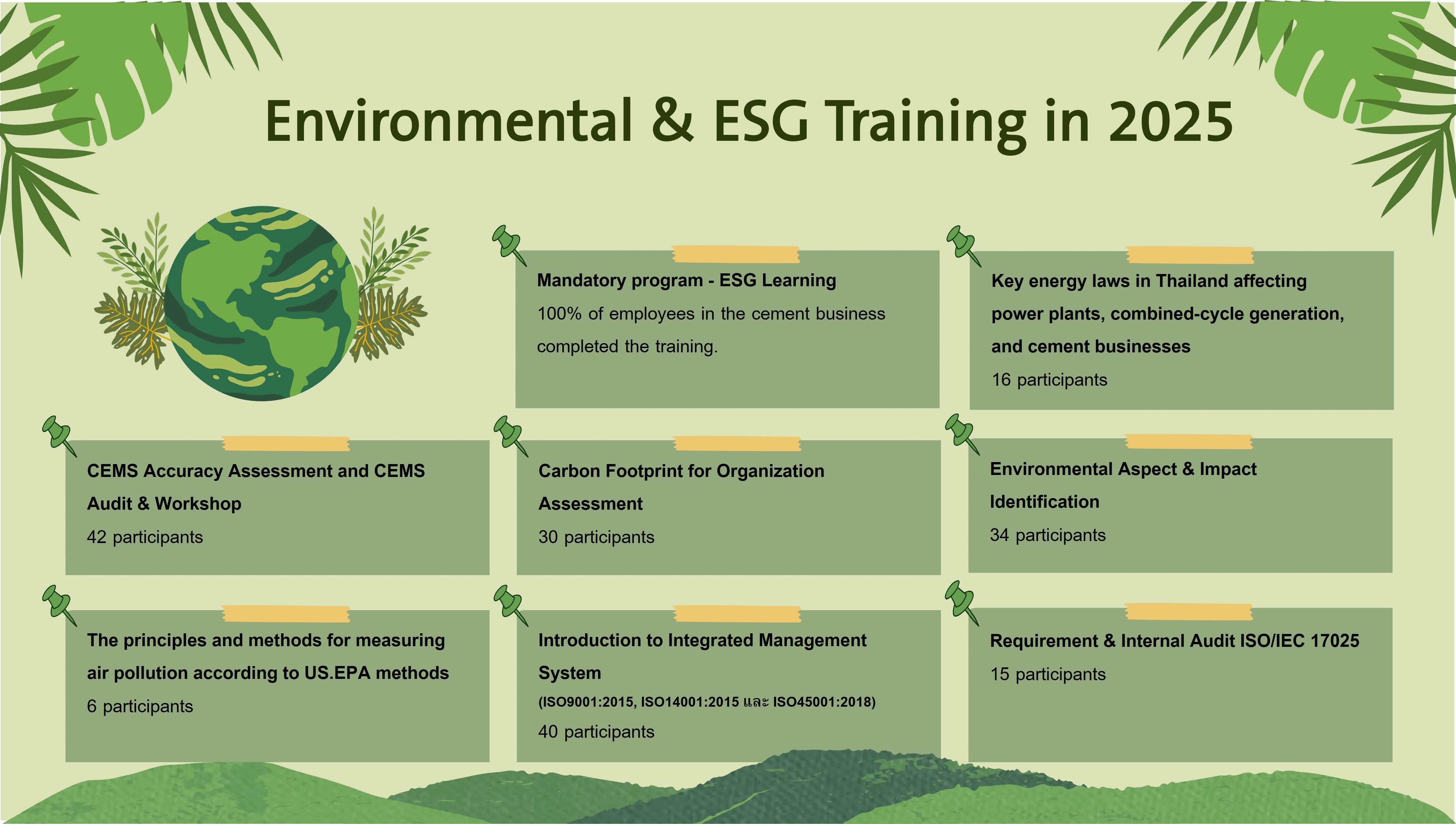
First Management Level, Top Management Level to Top Management Level in the cement business, with a 100 percent participation rate. The program aimed to enhance employees’ knowledge and understanding of the significance and impacts of ESG (Environmental, Social, and Governance) on the Company’s business operations, as well as to encourage their active participation in integrating sustainability concepts into the organization’s strategy and operations.
The ESG Learning program was designed in consideration of the global context in the VUCA era (Volatility, Uncertainty, Complexity, and Ambiguity), as well as the climate change crisis, which affects economic, social, and environmental systems. It also takes into account increasingly stringent government regulations and rapidly changing market expectations.
The program is intended to enable employees to apply the knowledge gained in a practical manner and to motivate them to participate in driving sustainable change for both the organization and society as a whole.
In addition, the Company organized various environmental training programs for general employees, with a total of
183 participants, in order to strengthen their knowledge, understanding, and skills related to environmental operations in compliance with relevant standards and laws. The training programs included the following:
CEMS Accuracy Assessment and CEMS Audit & Workshop (42 participants)
The principles and methods for measuring air pollution according to US.EPA methods (6 participants)
Carbon Footprint for Organization Assessment (30 participants)
Introduction to Integrated Management System (ISO9001:2015, ISO14001:2015, and ISO45001:2018)
(40 participants)
Environmental Aspect & Impact Identification (Online Training) (34 participants)
Key energy laws in Thailand affecting power plants, combined-cycle generation, and cement businesses
(16 participants)
Requirement & Internal Audit ISO/IEC17025 (15 participants)
Learning and Development Measurement
SCCC places great importance on fostering employee engagement through continuous development of skills and potential, with a focus on Learning and Development (L&D). This aims to enhance professional skills, leadership abilities and safety practices while supporting employees in applying the knowledge gained to their practical work.
One of the key areas assessed in employee engagement is Learning and Development. The Company has organized activities and programs to support employees in their personal development, with a target of achieving an employee engagement rate of at least 80 percent in this area. The assessment results for the Group in 2025 showed
an engagement rate of 86 percent, reflecting high employee satisfaction with the programs and policies implemented by the Company.
The Company remains committed to further enhancing its learning processes and activities, making them more diverse and effective, to continually strengthen employee capabilities and ensure sustainable growth for both employees and the organization in the long term.
SCCC also focuses on the quality of learning and development, making sure employees can apply what they’ve learned in the workplace and retain those skills after the program is completed. To achieve this, SCCC has designed Learning Programs with specific interventions to ensure effectiveness and better outcomes. These interventions include:
1. Behavior Change Tracking (Pre-Post 180 and 360 Degree Assessment)
SCCC uses Pre and Post Assessments to measure and track changes in behavior, skills, or competencies before and
after a development program. Feedback is gathered from the employee, their supervisors, peers, subordinates, and sometimes customers, providing a well-rounded view of the employee's performance. These assessments evaluate
how well the employee has applied what they learned and measure their progress, ensuring the learning has a lasting, meaningful impact.
2. Project/Workplace assignment
SCCC provides participants with an opportunity to apply the skills and knowledge they've learned in a real-world context. The projects/workplace assignments need to tackle business challenges, which makes the learning more meaningful and relevant. Employees take on projects/workplace assignments related to our key business intent areas consisted of Safety, Business Improvement and Growth, Cyber Security and ESG (Environmental, Social and Governance).
3. Group Reflection, Group Coaching and Follow-up Session
SCCC enhances learning through shared experiences, collective insights, and continuous support. Participants come together to reflect on their experiences, challenges, and successes. This helps them gain different perspectives and deeper insights from the group’s collective experiences.
SCCC's Learning and Development programs are focused on key goals, including enhancing employee engagement, growing the talent pipeline, and addressing critical business challenges. In 2025, our target participants completed
75 assignments aligned with the company’s business objectives, strengthening overall organizational engagement.
One of the projects that the Company has continuously implemented is the Leadership Development Program for MML which is part of the Company’s succession planning process. The key focuses for this program are to identify and develop future leaders to fill key positions. The program is designed to prepare and equip the Company’s High Potential Talents to advance into senior management roles while strengthening the organization’s succession pipeline. Our High Potential Talents include employees from all key business functions, such as Commercial, Manufacturing, Finance and Human Resources, as well as from various Business Units. These programs aim to build a strong, future-ready leadership pipeline that aligns with SCCC’s strategic goals and people development vision. The program focuses on two critical development tracks; Business Acumen and Leadership Skills, which are essential for future leadership.
It incorporates a combination of education-based and virtual learning, group coaching, self-reflection and experiential learning, where participants apply their knowledge to real business initiatives.
Employees participating in the program will benefit from developing the skills and knowledge essential for senior leadership roles. They will be able to apply their learning to assigned business projects, enhancing their problem-solving
abilities in real-world situations. This not only increases their career growth opportunities but also builds confidence
in stepping into key roles within the organization.
In 2025, the company also initiate Leadership Development Program for SML targeting high-potential Senior Management Leaders. This program specifically addresses development needs identified in their Individual Development Plans (IDPs), focusing on strengthening their ability to engage and inspire teams. The program launched with strong leadership sponsorship and is structured with the combination of concept, practice-based assignments and real-business application.
Over the past year, the Company has provided opportunities for high-potential employees to advance to positions
with greater responsibilities. Among all employees who were promoted, a significant proportion had participated in
the Company’s MML & SML Leadership Development Program, accounting for 70 percent of all promotions. This outcome reflects the success of the program in preparing employees to confidently and effectively step into higher-level roles. Furthermore, it has helped reduce the time and costs associated with recruiting external candidates, reinforcing the effectiveness of internal talent development in driving the long-term sustainability of the organization.
The results of the program are also tangibly reflected through the employee engagement survey, particularly in
the dimension of learning and development. Specifically, in the category of opportunities to learn and grow within
the organization, the score in 2025 reached 87 percent, representing 2 percent increase from the previous year. Consequently, the Company firmly believes that this program demonstrates to employees the opportunities for skill development and a clear path for career advancement.
Emphasizing employee development through such well-defined initiatives not only enhances employee confidence and engagement but also generates a positive impact on the organization’s long-term operations. Additionally, such program helps build a leadership team equipped to drive the organization toward sustainable growth in the future.
Additionally, there are various learning programs, such as INSEE Agility Mindset for High Potential Employees, People Managers and Leaders & Supervisors as Coaches focus on cultivating essential coaching behaviors and mindsets.
These programs are designed to support employees in their current roles, foster future career growth and contribute
to achieving the Company’s broader goals.
Succession Management and Leadership Development
The Board of Directors places strong emphasis on cultivating INSEE leaders from within, prioritizing internal talent as
the foundation for sustainable growth. Succession plans are developed for roles critical to business continuity, with each Business Unit CEO accountable for driving implementation. These plans are reviewed and endorsed by the Group Executive Committee and the Nomination and Compensation Committee to ensure governance and transparency.
Our comprehensive succession management framework is anchored in the Developing Leadership Quality (DLQ) Program, which identifies and assesses potential successors for key leadership positions, including Business Unit CEOs,
Executive Committee members, and other senior roles. This structured approach ensures a robust pipeline of capable
leaders ready to assume critical responsibilities when needed.
High-potential employees follow Individual Development Plans (IDPs) and clear career pathways to strengthen leadership competencies and prepare for future challenges. This commitment supports leadership continuity and fosters long-term talent growth across the organization.
In 2025, the Group continued to advance succession planning by:
Identifying emergency and short-term successors for critical roles.
Accelerating development of high-potential employees in core business functions—Manufacturing, Commercial, Finance, Human Resources—and within specific Business Units.
Through these initiatives, SCCC reinforces its ESG commitment to human capital development, ensuring organizational resilience and leadership sustainability.
Learning Opportunity and Capability Development
Throughout their employments, all employees are provided with equal learning opportunity for their development.
The Group encourages open dialogue with supervisors about their career path. The open dialogue is a part of Dialogue System which includes both performance evaluation and personal development goal.
Protection of Human Rights at SCCC Group
SCCC Group's commitment aligns with the United Nations Guiding Principles on Human Rights (UNGP). We believe
that our business can only succeed when human rights are respected, promoted, and upheld. Our core value,
"Doing What Is Right", is consistently honored. To ensure these principles are truly reflected in practice, we urge all our business partners to uphold and comply with human rights principles consistently throughout the entire value chain.
Promoting Employee Relations and Participation
Group Employee Engagement
SCCC Group has been conducting INSEE Employee Engagement Survey continuously since 2021 to listen to direct feedback and comments from employees within the group. Additionally, impact plans have been developed, focusing on areas that need improvement to directly foster employee engagement in the organization, both at the Company and Functional levels. In 2025, the engagement survey questions were redesigned to better support our journey toward becoming a “Great Place to Work” and our Group Employee Engagement score stands at 83 percent, and the results of
the overall engagement survey with the factors affecting the score will be analyzed and used to develop Engagement Impact Plans. The aim is to elevate employee engagement and demonstrate a collaborative effort to create
an organization in which all employees are engaged and work together to truly drive the organization's success.
SCCC Group prioritizes employee well-being by ensuring a safe work environment and promoting health and wellness. To foster a positive workplace, the company organizes various activities aimed at enhancing employee happiness, including:
Physical Health: Promoting physical well-being through the Healthy Body Activities program, which encourages regular exercise and provides employee benefits for access to fitness facilities and sports clubs. Initiatives such as the Power of Food and Focus and the introduction of the MORDEE telemedicine application further support employees’ health. Annual health check-ups are also provided.
Mental Health: Supporting employees’ mental well-being by fostering positive workplace relationships, organizing team-building activities, and conducting Happy Mind Activities with psychological hotlines along with build emotional resilience and engaging employees in collaborative events.
Financial Health: The Company is committed to supporting employee well-being through comprehensive financial empowerment programs. This includes providing a Company Co-Op Saving Scheme to help employees build financial stability, along with regular education sessions on financial planning, provident fund investment options, and personal investment programs. In addition, employees receive tailored guidance on creating a smart retirement path, enabling them to make informed financial decisions for long-term security and overall well-being.
These initiatives are designed to enhance employee well-being and create a supportive and positive workplace.
In 2025, the company also organized activities with the aim of promoting INSEE engaging workplace, building collaborative teamwork among employees and further fostering their commitment to the organization, such as
INSEE We’re Strong: Well-Being Program
INSEE Run 2025
INSEE Games 2025
Activity from SCCVN - INSEE Star Awards (Monthly appreciation program)
Activity from SCCVN - INSEE Connection (Quarterly gatherings & outdoor engagement)
Activity from SCCVN - INSEE Development
Activity from SCCLK - INSEE Annual Family Trip
Occupational Health & Safety (OH&S)
Workplace health and safety remains a critical priority for INSEE, directly influencing employee well-being, operational continuity, and shareholder confidence. Recognized as a material issue under the FTSE Health & Safety Theme, our approach aligns with global ESG standards and reinforces our reputation as a responsible and sustainable enterprise.
Our Group Health & Safety Policy applies to employees, contractors, suppliers, and external stakeholders. Compliance with established protocols, training requirements, and reporting mechanisms is mandatory, ensuring that every individual engaged in our operations is protected by robust safety measures and continuous monitoring.
Core Programs Driving Safety & Reliability
Last Step Behaviors
Embedding a culture of “pause and assess” before completing tasks.
Reduces incidents caused by rushed or complacent actions.
Reinforces accountability at the individual level.
Road Safety Initiatives
Defensive driving training and awareness campaigns for employees and contractors.
Fleet monitoring systems to track speed, fatigue, and compliance.
Training & Capability Development
Mandatory occupational health and safety training for all employees and contractors.
Specialized technical training for high-risk operations.
Leadership coaching to strengthen accountability and embed safety culture.
Shutdown Planning & Risk Management
Structured shutdown schedules to minimize operational risks.
Detailed risk assessments and contingency planning before every shutdown.
Cross-functional coordination to ensure safe, efficient, and timely execution.
Safety Promotion & Occupational Health Activities
Quarterly fire escape and emergency evacuation drills.
Work environment training covering chemical handling, machinery safety, and last step behaviors.
Regular workplace inspections and risk assessments.
Employee wellness programs and health screenings.
Statistics & Preventative Measures
Accident Statistics: LTIFR, TIFR, critical incidents, and near-miss reports.
Preventative Measures: Hazard reporting systems, safety audits, corrective action plans, and continuous monitoring of high-risk areas.
Alignment with FTSE Health & Safety Theme
Governance: Clear accountability through the Group Safety Committee reporting to GEXCO and the Board.
Transparency: Disclosure of safety statistics and outcomes in annual sustainability reports.
Stakeholder Engagement: Contractors and suppliers included in safety audits and training.
Continuous Improvement: Benchmarking against FTSE Health & Safety standards and global best practices.
Shareholder Value Impact
Risk Reduction: Lower incident rates protect people and assets.
Operational Reliability: Planned shutdowns and trained staff reduce downtime.
Reputation: Demonstrates corporate responsibility and strengthens stakeholder trust.
Sustainability: Embeds long-term safety culture aligned with ESG principles.
Plan Areas
| Plan Area |
|---|
| Fair employee compensation |
| Employee training and development |
| Promoting employee relations and participation |
| Occupational health and safety in workplace |
Employees — Workforce
Introduction
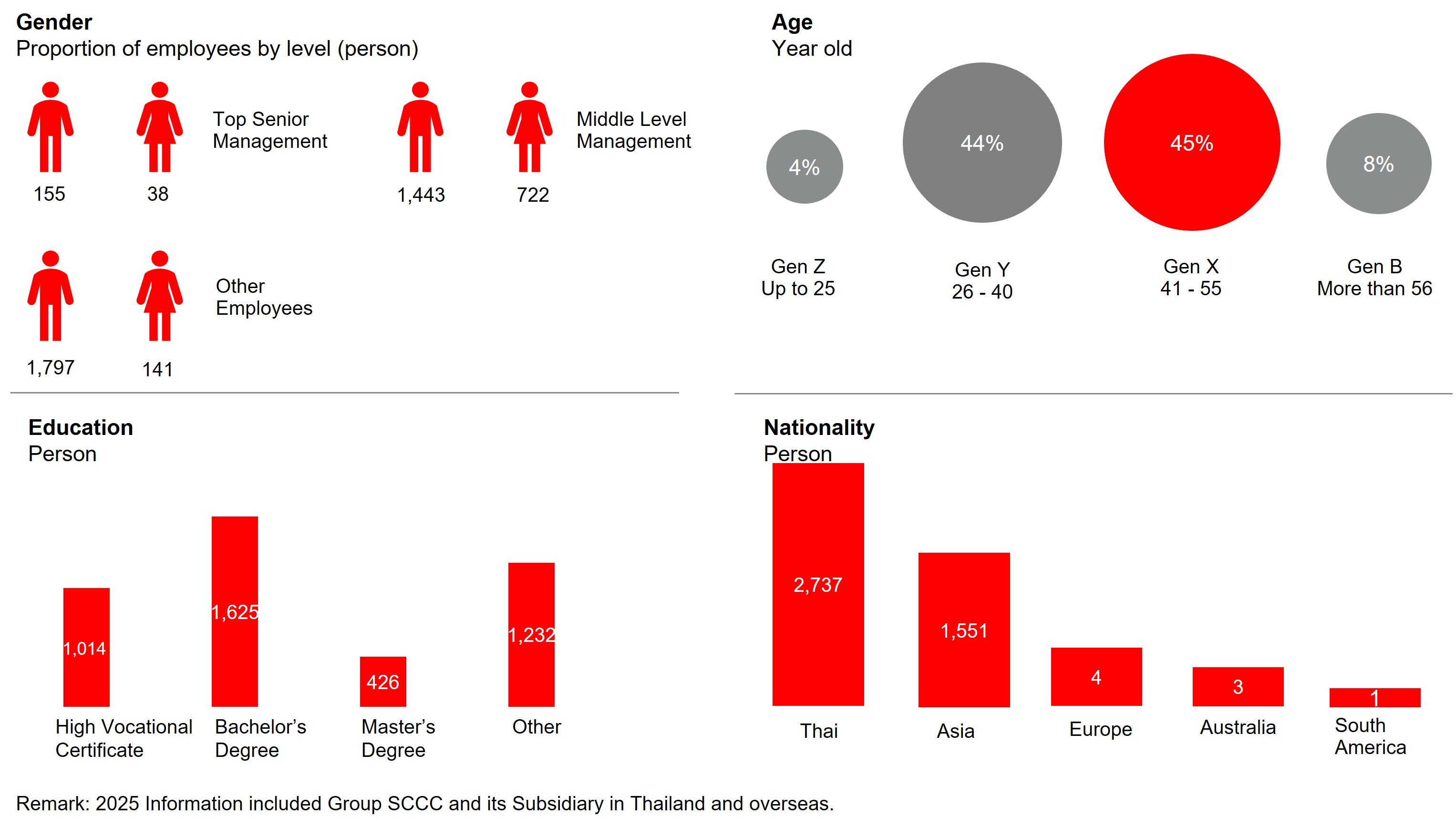
Workforce Data
| Metric | Current Year | Previous Year | Two Years Ago | Remark |
|---|---|---|---|---|
| Total number of employees (Persons) | 5,095 | 5,133 | 4,307 | The total number of employees of 2024-2025, including those of the subsidiaries of Lanna Resources Public Company Limited and Thai Agro Energy Public Company Limited, following the business restructuring at the end of 2024. |
| Number of male employees (Persons) | 4,050 | 4,111 | 3,420 | |
| Number of female employees (Persons) | 1,045 | 1,022 | 887 | |
| Total employment of disabled persons (people) | 28 | 28 | 30 | The employment of persons with disabilities in 2025 includes data from Lanna Resources Public Company Limited and Thai Agro Energy Public Company Limited. |
| Total disabled employees (people) | 6 | 4 | 4 | |
| Total male disabled employees (people) | 4 | 3 | 3 | |
| Total female disabled employees (people) | 2 | 1 | 1 | |
| Total disabled workers who are non-employee (people) | 22 | 24 | 26 | |
| Contributions to the fund for promoting and improving the quality of life for disabled persons | 1 | 1 | 1 | |
| Total number of male employees in operational level (Persons) | 2,406 | 2,480 | 1,847 | |
| Total number of male employees in management level (Persons) | 1,476 | 1,461 | 1,405 | |
| Total number of male employees in executive level (Persons) | 168 | 170 | 168 | |
| Total number of female employees in operational level (Persons) | 261 | 263 | 141 | |
| Total number of female employees in management level (Persons) | 739 | 713 | 702 | |
| Total number of female employees in executive level (Persons) | 45 | 46 | 44 |
Employees — Remuneration & Provident Fund
Remuneration & Provident Fund
| Metric | Current Year | Previous Year | Two Years Ago | Remark |
|---|---|---|---|---|
| Total disabled employees (people) | 4,821,141,362.16 | 4,508,692,828.15 | 5,181,138,935 | Total employee compensation in 2024 and 2025 includes employee compensation of the subsidiaries of Lanna Resources Public Company Limited and Thai Agro Energy Public Company Limited, following the business restructuring at the end of 2024. |
| Total male employee remuneration (Baht) | 3,809,180,953.78 | 3,629,846,896.54 | 4,114,342,428.28 | |
| Total female employee remuneration (Baht) | 1,011,960,408.38 | 878,845,931.61 | 1,066,796,506.72 | |
| Number of employees eligible to participate in PVD (persons) | 3,778 | 3,832 | 3,513 | |
| Total number of employees joining employee provident fund (Persons) | 3,334 | 3,189 | 2,261 | The number of employees participating in the provident fund in 2024 and 2025, including employees of Lanna Resources Public Company Limited and Thai Agro Energy Public Company Limited, following the business restructuring at the end of 2024. |
| Percentage of total number of employees joining employee provident fund to total number of employees (%) | 65.44 | 62.13 | 52.5 | |
| Number of PVD members / Total eligible employees (%) | 88.25 | 83.22 | 64.36 | |
| Total amount of provident fund contributed by the Company (Baht) | 162,742,405.2 | 153,844,915.76 | 117,852,248.52 | The total amount contributed by the Company to the provident fund for the employees of Lanna Resources Public Company Limited and Thai Agro Energy Public Company Limited during the fourth quarter of 2024 and 2025, following the business restructuring at the end of 2024. |
| Total amount of provident fund contributed by employee (baht) |
Employees — Training & Development
Training Data
| Metric | Current Year | Previous Year | Two Years Ago | Remark |
|---|---|---|---|---|
| Average employee training hours (Hours / Person / Year) | 28.45 | 28.99 | 26.44 | |
| Employee development and training expenses (baht) | 211,440,481.19 | 34,864,960.42 | 46,622,048.11 | The information on the average training hours per employee per year and the employee training and development expenses for 2025 including data of Lanna Resources Public Company Limited and Thai Agro Energy Public Company Limited. |
Employees — Occupational Health & Safety
Occupational Health & Safety Data
| Metric | Current Year | Previous Year | Two Years Ago |
|---|---|---|---|
| Total number of lost time injury incidents by employees (Cases) | 5 | 2 | 1 |
Employees — Labour Relations
Labour Relations Data
| Metric | Current Year | Previous Year | Two Years Ago | Remark |
|---|---|---|---|---|
| Total voluntary resignations (Persons) | 255 | 364 | 377 | The total number of voluntary employee resignations in 2025 includes data from Lanna Resources Public Company Limited and Thai Agro Energy Public Company Limited. |
| Male employees who voluntary resigned (Persons) | 183 | 245 | 258 | |
| Female employees who voluntary resigned (Persons) | 72 | 119 | 119 | |
| Percentage of employee turnover leaving the Company voluntarily (%) | 5 | 7.09 | 8.75 | |
| Evaluation result of employee engagement | 1 | 1 | 1 |
Employees — Employee Representation
Introduction
Respect for Labor Rights and Employee Participation
Siam City Cement Public Company Limited is committed to respecting and supporting employees’ rights to freedom of association and collective bargaining, in strict accordance with labor relations laws and relevant local regulations.
The company considers respect for employees’ expression and participation as a fundamental principle of good governance and sustainable business operations.
The company recognizes the right of employees to form associations or labor unions. Currently, there are two established groups: the Employee Funeral Welfare Association and the Siam City Cement Labor Union.
The company constructively supports the operations of both groups. When demands for changes in employment conditions are submitted, the company appoints negotiation representatives and engages in open and constructive dialogue with union representatives. These efforts have led to successful bilateral agreements, reflecting the company’s commitment to promoting transparent and inclusive collective bargaining. Additionally, the company holds quarterly meetings with the Employee Committee to collaboratively address issues and improve the working environment.
Promotion of Employee Welfare and Well-being
The company has established a Workplace Welfare Committee, comprising representatives from both management and employees. This committee is responsible for discussing, recommending, and developing welfare initiatives that enhance employees’ quality of life, such as health benefits, work-life balance, and fair working conditions.
In terms of safety, the company encourages employee participation through the Safety, Occupational Health, and Working Environment Committee (OHSEC). Joint meetings between management, employee representatives, and the labor union are held to exchange ideas and develop safety measures tailored to each department’s operational needs.
The company also promotes health and wellness activities, such as the “Zero Accident” campaign and mental and physical health programs, to foster a culture of safety and mutual care within the organization.
These initiatives reflect the company’s ongoing commitment to creating a workplace that respects labor rights, encourages participation, and continuously improves employee well-being—laying a strong foundation for long-term organizational sustainability.
Employees Are Represented Collectively
Yes
Forms of Representation
| Form |
|---|
| Welfare committee |
| Labor relations committee |
| Employee committee |
| Labor union |
Employees — Targets
Has Set Employee Targets
Yes
Targets
| Indicator | Target Areas | Base Year | Target Year | Target Year — Description |
|---|---|---|---|---|
| 1. Employees are compensated at least the minimum wage as mandated by law. 2. The company has implemented activities and programs that support employee self-development, with a target set for employee engagement scores in the dimension of learning and development. 3. Employee Engagement Score. 4. The use of migrant labor and foreign labor is zero, as well as human rights violations. 5. The use of child labor is zero, as well as human rights violations. 6. Lost time injury frequency rate (employees and contractors per million man-hours). 7. Human rights violations. | 2983 · Description: Fair employee compensation · 2984 · Description: Employee training and development · 2985 · Description: Promoting employee relations and participation · 2986 · Description: Migrant/foreign labor · 2987 · Description: Child labor · 2988 · Description: Safety and occupational health at work · 2989 · Description: Non-discrimination | 2,024 | 2,025 | 1. Employees are compensated at least the minimum wage as mandated by law.
2. Score of the employee engagement scores in the dimension of learning and development is not less than 80 percent.
3. Employee Engagement Score at 80 percent.
4. The use of migrant labor and foreign labor is zero, as well as human rights violations.
5. The use of child labor is zero, as well as human rights violations.
6. Zero Harm (in 2030 target).
7. Zero case of human rights violations. |
Employees — Performance & Outcomes
Has Performance Results
Yes
Performance Description
At SCCC Group, we maintain a strict adherence of zero tolerance towards any form of discrimination or harassment. Human Rights Practices at SCCC Group cover the Protection of Employee Rights, Recruitment and Screening, Learning and Development, Fair Compensation, Performance Assessment, Termination and Separation, and Culture of Diversity and Inclusion.
The SCCC Group’s approach to hiring is equal-opportunity and non-discriminatory. The Group also sees the importance of facilitating the disabled or their guardians’ capacity for partaking in professional activities. The Group has also provided support to a vocational group for the disabled, the Group in the form of monetary aid per Article 35 of the Empowerment of People with Disabilities Act B.E. 2550, in full compliance with the legally prescribed timeframe and requirements. The Group understands the significance of providing support to people with disabilities in a way that such people may obtain/maintain necessary skills that will allow them to perform professional tasks and earn sustainable incomes based on their knowledge and expertise. The Group has undertaken this since 2017, reflecting its commitment to the betterment of society.
SCCC Group has been conducting INSEE Employee Engagement Survey continuously since 2021 to listen to direct feedback and comments from employees within the group. Additionally, impact plans have been developed, focusing on areas that need improvement to directly foster employee engagement in the organization, both at the Company and Functional levels. In 2025, our Group Employee Engagement score stands at 83 percent (against target of 80 percent), and the results of the overall engagement survey with the factors affecting the score will be analyzed and used to develop Engagement Impact Plans. The aim is to elevate employee engagement and demonstrate
a collaborative effort to create an organization in which all employees are engaged and work together to truly drive
the organization's success.
SCCC Group prioritizes employee well-being by ensuring a safe work environment and promoting health and wellness. To foster a positive workplace, the Company organizes various activities aimed at enhancing employee happiness, including:
Physical Health: Support employees’ physical well-being by promoting participation in exercise activities through various sports clubs, along with providing benefits that allow employees to access different exercise facilities and equipment. The company also arranges annual health check-ups to help monitor and safeguard employees’ health.
Mental Health: Supporting mental well-being by fostering positive relationships within the organization, organizing promoting meditation practices and engaging employees in collaborative events.
Financial Health: Enhancing financial wellbeing by offering education on financial planning and investment through provident funds and self-investment programs. Additionally, employees receive guidance on debt management through the Debt Clinic initiative.
These initiatives are designed to enhance employee well-being and create a supportive and positive workplace.
In 2025, the Company also organized activities with the aim of promoting INSEE engaging workplace, building collaborative teamwork among employees and further fostering their commitment to the organization, such as
the INSEE Games 2025. The Company believes that employees are the driving force behind the organization. We are committed to supporting, developing, and caring for our people in all aspects to foster a positive work environment where everyone can thrive, grow, and succeed together sustainably.
Customers — Plan & Guidelines
Has a Customer Management Plan
Yes
Plan Description
The Siam City Cement Group conducts its business with a steadfast commitment to creating sustainable shared value with customers. The Group places emphasis on responsible, transparent, and equitable production and service delivery, ensuring the provision of high-quality products and services that comprehensively meet customer needs across all dimensions. The Group has established a systematic customer management plan encompassing all stages of the service delivery process. Furthermore, the Group endeavors to integrate sustainability principles into its operational processes to foster customer satisfaction, trust, and long-term relationships through ethical business conduct and genuine consumer responsibility.
Responsible Production and Service Delivery for Customers
The Company places the utmost importance on responsible production and service delivery, adhering to quality control principles throughout all stages of the cement manufacturing process to comply with both domestic and international industry standards. Additionally, the Company efficiently manages resources to continuously minimize environmental impact and health effects on product users.
Furthermore, the Company focuses on developing environmentally friendly production technologies and promoting
the use of alternative raw materials, as well as designing products and services that sustainably meet customer needs. This ensures that the Company's products and services are not only of high quality, safe, and reliable, but also contribute to creating long-term shared value for society and the environment.
Communication of Product and Service Impacts to Customers/Consumers
The Company communicates product information regarding features, usage guidelines, and user impacts in an accurate and transparent manner, ensuring customers have comprehensive information for decision-making and can use products safely and effectively. Additionally, the Company has established a systematic consumer complaint and feedback mechanism to enable prompt, fair, and verifiable investigation and resolution of issues. Multiple communication channels have been provided, including:
Customer Service Center Tel. 1732
Email: wecare@siamcitycement.com
Line Official Account: @INSEEGroup
Facebook Page: INSEE Group
Development of Customer Satisfaction and Relationship
The Company continuously develops plans to enhance customer satisfaction and strengthen customer relationships in order to build brand awareness, foster engagement and positive relationships with customers, and promote customer participation, which leads to long-term loyalty and sustainable business growth.
These plans play a crucial role in creating positive and memorable customer experiences, which help build trust, retain existing customers, and generate positive word-of-mouth. Additionally, the Company prioritizes listening to customer opinions and suggestions through various channels, including conducting annual relationship management surveys to collect feedback and recommendations for analysis and utilization in improving work processes, elevating customer experience, and continuously developing the overall brand image.
Consumer Data Privacy and Protection
The Company strictly complies with the Personal Data Protection Act by implementing comprehensive Data Privacy Management guidelines and security measures for customer data, covering the responsible collection, use, and disclosure of personal information. All uses of personal data require explicit consent from data subjects. The Company has established access control measures and conducts ongoing training for relevant personnel to enhance awareness of personal data protection practices, thereby fostering long-term customer confidence and trust. During the past year,
the Company received no complaints concerning customers’ personal data. The Company nevertheless remains committed to continuously reviewing and enhancing its personal data protection measures.
Plan Document Link
https://www.siamcitycement.com/thailand/en/services/customer-service-center
Plan Areas
| Plan Area |
|---|
| Responsible production and services for customers |
| Communication of product and service impacts to customers/consumers |
| Development of customer satisfaction and customer relationship |
| Protection of customer personal information |
Customers — Satisfaction Results
Customer Satisfaction Results
| Metric | Current Year | Previous Year | Two Years Ago |
|---|---|---|---|
| Evaluation results of customer satisfaction | 1 | 1 | 1 |
Customers — Targets
Has Set Customer Targets
Yes
Targets
| Indicator | Target Areas | Base Year | Base Year — Description | Target Year | Target Year — Description |
|---|---|---|---|---|---|
| The customer satisfaction score | 3009 · Description: Development of customer satisfaction and customer relationship | 2,024 | The customer satisfaction score was set at 90 percent | 2,025 | The customer satisfaction score was set at 90 percent |
Customers — Performance & Outcomes
Has Performance Results
Yes
Performance Description
The INSEE Group consistently organizes diverse activities on an annual basis to strengthen sustainable business relationships with partners. These strategic interactions not only focus on elevating current satisfaction levels but also establish a solid foundation for building sustainable long-term strategic collaboration in the future.
During 2025, the Company did not identify any complaints related to customer personal data privacy.
The Company has established clear quantitative customer satisfaction targets and conducts periodic monitoring to evaluate operational effectiveness through annual customer relationship management surveys. Should assessment results in certain areas fall below established targets, the Company will develop improvement plans to rectify and elevate service standards, while continuously incorporating customer feedback to enhance work processes.
Regarding customer satisfaction assessment, our Thailand operations achieved 95.70 percent against the target of
90 percent, reflecting our continued commitment to enhancing service quality and delivering exceptional customer experiences. This outcome validates the effectiveness of our customer relationship management approach and our operational capability to tangibly meet customer expectations.
This year, Siam City Cement Public Company Limited organized its Annual Business Development Seminar and Partner Appreciation Event under the theme "INSEE Business Forum 2025" from September 4-6, 2025, at the Nikko Hotel Amata City, Chonburi. The event was honored by the participation of over 133 business partners. The forum featured seminars covering topics relevant to the construction industry's direction, AI innovation for business development, carbon footprint management, and perspectives on future environmental regulations. This initiative reflects the Company's commitment to strengthening partnerships, promoting knowledge exchange, and collectively driving the sustainable growth of Thailand's construction industry.
INSEE Vietnam hosted the INSEE Customers Convention 2025 from February 26-27, 2025, at the InterContinental Grand Ho Tram in Vung Tau, Vietnam. This prestigious annual event was designed to strengthen relationships, exchange perspectives, and celebrate valued partnerships with over 300 customers across all business segments.
Under the theme "Transforming to Dominate the Game" the convention reflected customers' transformation into a new era while reinforcing INSEE's commitment to being a trusted business partner, operating under the "Build for Life" mission. Customer engagement was central to the event, with the Company meticulously designing activities and customer touchpoints to cultivate deeper understanding of evolving customer needs. These strategic interactions
not only enhance current satisfaction levels but also establish a solid foundation for future long-term collaboration.
Meanwhile, INSEE Sri Lanka organized the INSEE Cement’s prestigious Business Partner Awards 2025 to recognize business partners with outstanding performance who have significantly contributed to the Company's growth and market leadership at Cinnamon Life, City of Dreams Residency. Under the theme "Rising Beyond Limits; Inspiring New Horizons," the event emphasized the Company's vision of "building strong partnerships to jointly drive growth and innovation." The "Beyond Boundaries" concept underscored the critical importance of business partners to
the Company's success, playing a vital role in maintaining INSEE's market leadership in Sri Lanka's cement industry.
The partnership focuses on building trust, fostering growth, and shaping the future of Sri Lanka's construction industry.
Channels through which the company receives complaints from customers/consumers
Tel: 1732 or 02-797-7777
Fax: -
Email: wecare@siamcitycement.com
Facebook: INSEE Group
Line: @INSEEGroup
Company’s Website: https://siamcitycement.com/th/home
INSEE SPEAK UP: https://secure.ethicspoint.eu/domain/media/enuk/gui/107032/index.html
Adress: Siam City Cement Public Company Limited (Head office)
Column Tower, 3rd, 10th, 12th Fl.,199 Ratchadapisek Rd., Klongtoey, Bangkok 10110
Community & Social — Overview
Introduction
The Company conducts its business in accordance with sustainable development principles, alongside good corporate governance, business ethics, and responsibility toward stakeholders throughout the value chain—from raw material sourcing, production, logistics, and distribution to after-sales services. It places strong emphasis on respect for human rights, occupational health and safety, and community development in areas surrounding its operations.
1. Respect for Human Rights and Fair Labor Practices
The Company has established a Human Rights Policy aligned with international standards, which applies to employees, suppliers, and contractors. The policy covers key principles, including:
1.1 Prohibition of child labor and forced labor
1.2 Non-discrimination and promotion of equality
1.3 Fair remuneration in compliance with applicable laws
1.4 Ensuring occupational health and safety in the workplace
Performance and Outcomes
Implementation of an occupational health and safety management system, with continuous targets to reduce workplace accidents.
Provision of training programs for employees and contractors on safety, human rights, and the Company’s
Code of Conduct.
Establishment of transparent and confidential grievance channels, with fair investigation and remediation processes.
2. Product and Customer Responsibility
The Company is committed to developing high-quality, standards-compliant, and environmentally friendly products, while ensuring that customers receive accurate and comprehensive information.
Performance and Outcomes
Products certified in accordance with relevant standards.
Customer complaint management systems in place, with corrective actions implemented within defined timeframes.
Continuous development of products and solutions that reduce environmental impacts and enhance construction efficiency.
3. Responsible Supply Chain Management
The Company has established a Supplier Code of Conduct covering human rights, labor practices, safety, environmental management, and business ethics.
Performance and Outcomes
Supplier evaluation and selection based on ESG criteria.
Training and communication initiatives to promote sustainability practices among suppliers.
Regular monitoring and assessment of social risks throughout the supply chain.
4. Social and Community Development Engagement
The Company implements initiatives to enhance the quality of life in communities surrounding its plants and operational areas, including:
Educational support and scholarship programs.
Promotion of local employment and community capacity building.
Support for public benefit activities and local infrastructure development.
Performance and Outcomes
Strengthened relationships between the Company and local communities.
Reduction in complaints and conflicts within operational areas.
Increased income generation and self-reliance capacity within communities.
Social Sustainability Action Plan
To further enhance the effectiveness of social sustainability management, the Company has established action plans including:
Developing proactive human rights risk assessment systems covering the entire value chain.
Elevating safety standards toward a zero-accident target.
Expanding structured community engagement and stakeholder consultation processes.
Enhancing supplier capabilities in alignment with ESG standards.
Ensuring transparent disclosure through sustainability reports and public communication channels.
Investigations and Allegations Management
In cases where the Company or its subsidiaries are subject to regulatory investigations or allegations related to legal or social issues, the Company adopts the following practices:
Transparent clarification of facts.
Reporting progress to regulatory authorities and stakeholders.
Root cause analysis and assessment of potential impacts on business operations, reputation, and stakeholders.
Implementation of corrective and preventive measures to avoid recurrence.
Review and strengthening of internal processes and controls.
Siam City Cement Public Company Limited remains committed to conducting business responsibly while upholding social responsibility and respect for human rights in a tangible and systematic manner. Through structured management systems, active stakeholder engagement, and continuous improvement, the Company aims to create sustainable value for both the organization and society at large.
The Company has adopted a “Sustainable Community and Social Development” policy as part of its ESG framework and its commitment to creating Shared Value with stakeholders. Its CSR policies and initiatives encompass multiple dimensions, including community care, educational support, infrastructure development, natural resource conservation, and continuous community collaboration both prior to and after project implementation (CSR-in-process and CSR-after-process)
Community & Social — Plan & Guidelines
Has a Community & Social Plan
Yes
Plan Description
Community and Social Management Plan
1. Employment and Skills Development
The Company prioritizes the recruitment of local residents for employment as permanent staff and contractors.
In addition, it supports vocational skills development for community members by allocating budgets through
village development funds. These funds are utilized as capital and for enhancing occupational skills among
housewives’ groups and vulnerable groups within the community.
2. Education
The Company provides educational support to schools within the communities in Saraburi province as follows:
Financial support totaling THB 400,000 for 13 schools, covering kindergarten to lower secondary levels.
Scholarships for 20 vocational diploma (High Vocational Certificate) students, totaling THB 200,000.
Scholarships for communities surrounding the Red Clay Mine in Khok Salung subdistrict and Klang Dong subdistrict, totaling THB 70,000.
3. Religion and Culture
The Company supports religious activities by contributing to Kathin (annual robe-offering ceremony) events at
temples in Thap Kwang subdistrict, Tha Khlo subdistrict, Ban Pa subdistrict (Kaeng Khoi district, Saraburi province),
Khok Salung subdistrict (Lopburi province), Muak Lek subdistrict and Mittraphap subdistrict (Muak Lek district,
Saraburi province), as well as Klang Dong subdistrict and Nong Nam Daeng subdistrict (Pak Chong district,
Nakhon Ratchasima province).
In terms of cultural preservation, the Company supports local traditional events, including the Fire Raft Festival
in Tha Khlo subdistrict, the “Kaeng Khoi World War Remembrance Festival” in Kaeng Khoi district, Saraburi province,
the Tak Bat Devo (Buddhist merit-making ceremony) in Klang Dong subdistrict, and Songkran Festival and community merit-making ceremonies in all communities within Thap Kwang subdistrict, Kaeng Khoi district, Saraburi province.
4. Forestry and Natural Resources
The Company conducts tree-planting initiatives to increase green spaces within communities in Saraburi province, including:
Tree planting along Soi Tessaban 5 in observance of World Environment Day.
Tree planting around Thap Kwang Municipal Sports Stadium.
Tree planting at Khao Noi.
Landscape improvement tree planting in collaboration with Tha Khlo Subdistrict Administrative Organization.
Reforestation activities in mining areas of Siam City Cement Public Company Limited.
5. Occupational Health, Safety, Health and Quality of Life
The Company has organized five mobile medical unit activities providing healthcare services to residents
in Thap Kwang subdistrict, covering all villages and communities in Saraburi province. It also conducted chest X-ray
and health screening activities twice in areas surrounding the Red Clay Mine in Klang Dong subdistrict and
once in Khok Salung subdistrict.
Additionally, the Company provides budgetary support for hiring public health personnel for local community
health promotion hospitals. Other initiatives include elderly health promotion activities, support for adult diapers
for the elderly, and sponsorship of Elderly Day events and community sports activities in Thap Kwang, Tha Khlo,
and Simamongkhon subdistricts.
6. Underprivileged and Vulnerable Groups
The Company supports adult diapers for elderly persons and persons with disabilities in Thap Kwang subdistrict.
It also promotes livelihood groups that produce community products to generate income for the elderly,
housewives, and persons with disabilities in Thap Kwang subdistrict. Furthermore, the Company has constructed
houses for underprivileged families in Cham Phak Phaeo subdistrict and Takut subdistrict in Kaeng Khoi district
and Mueang Saraburi district, Saraburi province.
7. Water Management and Sanitation
The Company provides drinking and utility water to communities during the dry season. It also organizes volunteer activities to repair and improve drinking water and utility water systems at Wat Khok Salung School and
Nikhom Thap Kwang Songkhro 2 School, Saraburi province.
Community and Social Development Participation Policy
1. Key Policy Principles
1.1 Responsible Business Operations
The Company is committed to preventing and mitigating potential impacts on surrounding communities arising from its production processes, transportation activities, and related operations, including dust, noise, traffic, and safety concerns. Relevant information is disclosed transparently to ensure accountability and stakeholder trust.
1.2 Stakeholder Engagement
The Company establishes structured public consultation platforms and grievance mechanisms to systematically gather community feedback and ensure that concerns are addressed promptly, fairly, and transparently.
1.3 Strengthening Community Capacity and Self-Reliance
The Company promotes local career development, workforce skills enhancement, and the growth of local entrepreneurs by integrating them into the Company’s supply chain, thereby increasing long-term income generation and economic resilience within communities.
1.4 Measurable and Sustainable Development
Clear key performance indicators (KPIs) are established to assess both quantitative outcomes and qualitative impacts
in order to evaluate the effectiveness of community development initiatives.
2. Scope of Policy Implementation
This policy covers areas surrounding the Saraburi Plant, raw material quarries, and major transportation routes,
including relevant contractors and business partners (both local and external).
Priority issues include:
Environmental impact management affecting community quality of life.
Local employment creation and workforce support.
Development of local entrepreneurs into qualified suppliers.
Educational and skills development aligned with industry needs.
3. Governance Structure
The Board of Directors oversees sustainability policies.
The Community Relations Working Committee is responsible for implementation at the operational level.
Performance outcomes are regularly reported to senior management.
4. Strategic Commitment
The Company is committed to building strong relationships and trust between the organization and surrounding communities under the principle of “Growing Together”. This is achieved by minimizing negative impacts while maximizing positive contributions from business operations, ensuring sustainable development for both the organization and society.
Strategies and Action Plans for Long-Term Community Self-Reliance
The Company integrates community development into its core business processes, emphasizing long-term capacity building rather than short-term support.
Strategic Framework
Strategy 1: Strengthening the Local Economy
Key Actions:
Promote procurement and hiring from local businesses and contractors.
Enhance local entrepreneurs’ capabilities to meet supply chain standards, including training on new technologies adopted by the Company.
Support community enterprises through structured partnerships with district development agencies, including training programs and financial support.
Expected Outcomes:
Increased economic circulation within communities.
Reduced dependence on external income sources.
Sustainable local employment generation.
Strategy 2: Skills Development for Community Members and Students
Key Actions:
Provide vocational training aligned with cement and construction industry demands (e.g., masonry, plastering).
Collaborate with local educational institutions to provide hands-on technical training.
Offer internships and paid training opportunities for local youth.
Expected Outcomes:
Increased local employment opportunities.
Reduced migration for employment.
Development of a skilled workforce aligned with operational needs.
Strategy 3: Impact Management and Trust Building
Key Actions:
Conduct Environmental and Social Impact Assessments (EIA) for major projects or plant expansions.
Install air and noise monitoring systems with public disclosure of data.
Establish accessible grievance mechanisms (e.g., suggestion boxes, hotline channels, community communication platforms).
Expected Outcomes:
Reduced number of community complaints.
Increased stakeholder satisfaction and trust.
Lower operational risk exposure.
Strategy 4: Expanding Impact to Broader Society
Beyond immediate operational areas, the Company leverages its expertise in construction materials and engineering to:
Support the development of safe and durable infrastructure.
Promote environmentally friendly construction standards.
Share sustainable construction knowledge and best practices.
These initiatives contribute to broader social development and reinforce the Company’s reputation as a responsible industry leader.
Implementation Timeline
Short Term (1 Year)
Conduct community needs assessments and prioritize collaborative projects.
Provide targeted vocational training linked directly to Company procurement (e.g., production of operational supplies for Company use).
Medium Term (2–3 Years)
Develop local entrepreneurs to meet Company quality standards.
Strengthen partnerships with government agencies and educational institutions.
Achieve a significant reduction in community complaints.
Long Term (3–5 Years and Beyond)
Establish a stable local economic ecosystem integrated into the supply chain.
Improve average household income and quality of life.
Build long-term trust and stable community relationships.
Monitoring and Evaluation
The Company establishes clear KPIs, including:
Percentage of local procurement and hiring.
Number of local employment opportunities created.
Annual community satisfaction survey results.
Number of complaints and resolution rate.
Average income growth of participating occupational groups.
Performance results are regularly reported to senior management and disclosed in the Company’s annual Sustainability Report.
Strategic Summary
Siam City Cement Public Company Limited integrates community development into its core business operations by combining impact mitigation with economic opportunity creation and human capital development. This approach enables communities surrounding operational sites, as well as broader society, to achieve long-term resilience and
self-reliance while fostering sustainable growth for both the Company and society as a whole.
Plan Areas
| Plan Area |
|---|
| Employment and professional skill development |
| Education |
| Religion and culture |
| Forests and natural resources |
| Occupational health, safety, health, and quality of life |
| Disadvantaged and vulnerable groups |
| Water and sanitation management |
Community & Social — Targets
Has Set Community & Social Targets
Yes
Targets
| Indicator | Target Areas | Base Year | Base Year — Description | Target Year | Target Year — Description |
|---|---|---|---|---|---|
| - Number of employees and contractors of the company who are domiciled in the area where the factory is located and are employed by the company. - Number of occupational groups established in the area where the factory is located. | 3036 · Description: Employment and professional skill development | 2,026 | - The number of employees and contractors who reside in communities surrounding the Plant and are employed by the company shall be no less than 5 percent of the total number of job seekers.
- There shall be at least three local vocational groups in the communities surrounding the Plant.
| 2,027 | - At least 10 percent of job seekers in the communities surrounding the Plant are employed by the company as staff members or contractors.
- There are at least six occupational groups in the communities surrounding the Plant.
|
| - Number of students receiving educational support. - Number of activities conducted in collaboration with educational institutions | 3037 · Description: Education | 2,026 | - There are no fewer than 200 students receiving educational subsidies.
- There are at least 5 activities organized in collaboration with educational institutions.
| 2,027 | - There are at least 300 students receiving educational support.
- At least 7 activities related to educational institutions are organized.
|
| - There are activities conducted in collaboration with the community related to religion. - There are activities conducted in collaboration with the community related to culture and traditions. | 3038 · Description: Religion and culture | 2,026 | - Conduct at least 20 community engagement activities related to religion.
- Conduct at least 3 community engagement activities related to culture and traditions.
| 2,027 | - At least 30 community engagement activities related to religion were conducted.
- At least 6 community engagement activities related to culture and traditions were conducted.
|
| - There are activities organized related to forestry or environmental issues involving trees. - There are educational or conservation activities organized for the protection of natural resources. | 3039 · Description: Forests and natural resources | 2,026 | - At least three activities related to forestry or environmental initiatives involving trees are conducted.
- At least three activities focused on education or conservation of natural resources are organized.
| 2,027 | - Conducted at least 5 activities related to forestry or environmental initiatives involving trees.
- Organized at least 5 educational or natural resource conservation activities.
|
| - There are activities organized or supported related to occupational health, safety, and health promotion. - There are activities organized or supported related to quality of life development. | 3041 · Description: Occupational health, safety, health, and quality of life | 2,026 | - At least three activities related to occupational health, safety, and well-being are organized or supported.
- At least three activities related to quality of life development are organized or supported.
| 2,027 | - Organize or support activities related to occupational health, safety, and well-being at least 6 times.
- Organize or support activities related to quality of life development at least 6 times.
|
| There are activities organized or supported that are related to underprivileged and vulnerable groups in Saraburi province. | 3042 · Description: Disadvantaged and vulnerable groups | 2,026 | At least three activities related to supporting disadvantaged and vulnerable groups in Saraburi province are organized or supported. | 2,027 | At least 6 activities are organized or supported in Saraburi province for underprivileged and vulnerable groups. |
| - There are activities organized or support provided related to water resource management. - There are activities organized or support provided for initiatives related to sanitation. | 3043 · Description: Water and sanitation management | 2,026 |
- At least three activities related to water management are organized or supported.
- At least three activities related to sanitation are organized or supported.
| 2,027 | - At least 5 activities related to water management are organized or supported.
- At least 5 activities related to sanitation are organized or supported.
|
Community & Social — Performance & Outcomes
Has Performance Results
Yes
Performance Description
Community and Social Management Plan Implemented During the Year
1. Employment and Skills Development
Throughout its cement manufacturing operations, the Company has placed strong emphasis on employment creation, prioritizing the hiring of local residents as its first priority. This approach aims to ensure that people living in communities surrounding the plant have access to stable employment opportunities, enabling them to sustain their livelihoods and achieve economic self-reliance. Ultimately, this contributes to building strong and sustainable communities.
The Company prioritizes employment opportunities for local contractors, transportation service providers, residents living in nearby communities, as well as local vendors and small businesses operating within the surrounding areas.
As a result of this local employment policy, the positive impacts have become clearly evident. Community members have experienced improved living standards, while families and communities have become stronger and more stable. This is reflected in the development of healthcare systems, public utilities, and residential infrastructure such as housing projects in areas surrounding the plant. In addition, local markets have emerged within the communities, contributing to increased economic circulation and more diverse livelihood opportunities.
In terms of skills development, the Company has implemented policies aimed at reducing inequality and improving
the well-being of residents living around the plant. These initiatives also extend to vulnerable groups, including persons with disabilities and disadvantaged individuals who may not be employed in the industrial sector.
To support this goal, the Company established a community development fund to promote income-generating activities for local households through both theoretical and practical training programs. Examples include training in
tie-dye fabric production, artificial funeral flower making, plastic basket weaving, wreath making, and food-related products such as chili paste, curry paste, fried chili, traditional Thai desserts, and herbal snack production.
In addition, the Company promotes vocational skills development among students and youth. Examples include tile installation training provided to Grade 9 students at Anuban Thap Kwang School, and collaboration with Muak Lek Technical College, where construction students receive both theoretical knowledge and hands-on training in construction work using cement products. Practical activities include building concrete roads for Chet Khot–Pong Konsao National Park and Ming Mongkol Garden, as well as installing Conwood flooring at Wat Phra That Charoen Tham and the Thap Kwang Homeless Center. These programs are conducted with close supervision from instructors from Muak Lek Technical College and professional trainers from the Saraburi provincial Skill Development Office.
2. Education
The Company recognizes the importance of supporting education for children and youth living in surrounding communities to ensure equal access to quality education comparable to schools in urban areas.
Support includes landscape improvements to create conducive learning environments, renovation of school buildings and facilities, and the provision of modern teaching materials and equipment for schools located around
the Company’s plant. The Company also continuously provides scholarships to local students to enable them to pursue their education and reduce financial burdens on their families.
2.1 Scholarship Programs
The Company allocates an annual budget of THB 600,000 from the Mining Community Development Fund to support 13 schools under the Phasedet Educational Network located near the plant. The scholarships are divided into:
THB 400,000 for students from kindergarten to lower secondary level
THB 200,000 for vocational diploma students (Higher Vocational Certificate – Year 1–2)
Students who complete their higher vocational studies with these scholarships are given internship opportunities with the Company and may later be recruited as employees.
2.2 Educational Capacity Building
The Company provides financial support through the Mining Community Development Fund for schools to implement projects aimed at strengthening the capabilities of students and teachers. Examples include hiring additional teachers
in shortage areas such as science, mathematics, and English, as well as improving utilities and renovating school facilities.
2.3 School Activity Support
The Company supports various school activities that contribute to the development of teachers and students.
These include National Children’s Day activities, sports competitions for students and teachers, school fundraising events such as merit-making ceremonies, anniversary celebrations of educational institutions, and retirement ceremonies for teachers.
In addition, through the INSEE Volunteer Program, the Company mobilizes employees and contractors to participate
in community service activities at schools. These activities include repairing water and electrical systems, installing fans and lighting, and improving school landscapes. Other initiatives include painting classrooms and creating Brain-Based Learning (BBL) learning environments.
3. Religion and Culture
The Company recognizes the importance of religion, culture, and local traditions and actively participates in related activities within communities surrounding the plant on a continuous basis.
3.1 Religious Activities
The Company supports and participates in community religious activities such as Tak Bat Devo ceremonies, novice ordination programs, Kathin ceremonies, and Buddhist religious days including Makha Bucha Day, Visakha Bucha Day, Asalha Bucha Day, and Buddhist Lent Day.
3.2 Cultural and Traditional Activities
The Company provides financial and manpower support for local cultural traditions and community festivals, including the Kaeng Khoi World War Remembrance Festival, the Thai Yo Floating Fire Raft Festival, the Community Merit-Making Ceremony, and the Songkran water-pouring ceremony for elders. The Company also supports national cultural events organized by communities or government agencies such as Songkran Festival, New Year celebrations, National Children’s Day, Teachers’ Day, Father’s Day, Mother’s Day, Chulalongkorn Day, and Loy Krathong Festival.
4. Forest and Natural Resources
The Company has implemented policies to protect natural resources and the environment across multiple dimensions, including resource management, technology, waste and pollution management, and human engagement. Key initiatives include reforestation activities at Chet Khot–Pong Konsao National Park, tree planting in communities and mining areas on World Environment Day, and community greening projects conducted in collaboration with local communities, government agencies, and local administrative organizations.
The Company also promotes community and youth participation in learning about native plant species and producing seedlings. Through the establishment of plant nurseries, communities and schools grow seedlings that are later purchased by the Company for use in mine rehabilitation and ecological restoration projects.
5. Sports and Recreation
The Company recognizes the importance of physical and mental well-being by supporting sports and recreational activities organized within surrounding communities.
Examples include youth football tournaments such as the Khao Khwang Youth Cup, Thap Kwang subdistrict Youth Football Tournament, community sports competitions in Tha Khlo subdistrict, sports events for teachers within
the Phasedet Educational Network, marathon events organized by Simamongkol Municipality, and anti-drug sports competitions.
The Company also supports study visits for community health volunteers (Village Health Volunteers – VHVs), elderly groups, and community leaders organized by Thap Kwang Municipality, enabling them to learn from best practices and apply new knowledge to community development.
6. Occupational Health, Safety, and Quality of Life
The Company prioritizes public health, safety, and quality of life for residents living near the plant through several initiatives.
6.1 Mobile Medical Unit Program – “Healthy Living with INSEE”
This program provides basic health screening and medication services to residents living near the plant and clay mine areas. Professional physicians and healthcare personnel from public hospitals conduct health check-ups to detect potential diseases and health risks at an early stage. Additional services include free haircuts and the distribution of reading glasses for elderly residents. The program covers 10 villages and 36 communities, benefiting approximately 2,000 participants.
6.2 Annual Lung X-ray Program
As required under the Environmental Impact Assessment (EIA), mobile lung X-ray units from hospitals are deployed to conduct respiratory health screenings for community residents. Individuals with abnormal results are referred for further medical treatment. The program covers communities in Thap Kwang, Ban Pa, Tha Khlo, Klang Dong, and Khok Salung subdistricts.
The Company also supports local health promotion hospitals by providing medical equipment, blood pressure monitors, and funding for elderly healthcare programs.
Additionally, the Company supports community safety by funding CCTV installations in Thap Kwang, Ban Pa, and
Tha Khlo subdistricts and provides food and beverages for government agencies operating road safety checkpoints during the Songkran and New Year holidays.
7. Support for Vulnerable and Disadvantaged Groups
The Company places importance on improving the quality of life for vulnerable groups in surrounding communities. Through the Mining Community Development Fund, the Company collaborates with local government agencies such as district offices, municipalities, and subdistrict administrative organizations to support disadvantaged individuals, persons with disabilities, and low-income households.
Support includes vocational training, knowledge development, and the provision of construction materials such as Cement and CONWOOD products for housing repairs. To date, more than 100 houses have been repaired or rebuilt for disadvantaged families.
The Company also promotes income-generating activities such as food production and souvenir manufacturing.
These products are often purchased by the Company to support community livelihoods. In addition, relief packages are regularly distributed to elderly individuals, persons with disabilities, and disadvantaged households to help reduce their cost of living.
Benefits Gained from Social Development Projects
Monetary Benefits
The company measures the monetary benefits derived from the implementation of social development projects: Yes
Implemented Project (Evaluation: SROI – Social Return on Investment) | 2023 | 2024 | 2025 |
The BBL Painting Project to Foster Creativity among Students of Ban Sub Bon School for Holistic Development. | - | - | An investment of one unit in the project is expected to generate a social return of 0.69 units per unit invested. |
BBL Painting Project to Foster Creativity and Promote Strong Health Among Students at Wat Khok Salung School. | - | - | An investment of one unit in the project is expected to generate a social return of 0.03 units per unit invested. |
Factory 2 Project: Collaborative Initiative to Improve the Water Supply System at Nikhom Thap Kwang Songkhro 2 School. | - | - | An investment of one unit in the project is expected to generate a social return of 0.01 units per unit invested. |
Kindergarten Building Painting Project at Nikhom Thap Kwang Songkhro 2 to Foster Bright Development and Improve the Learning Environment. | - | - | An investment of one unit in the project is expected to generate a social return of 0.92 units per unit invested. |
Non-monetary Benefits
The company measures the monetary benefits derived from the implementation of social development projects: Yes
2023 | 2024 | 2025 | |
Number of trees in community forest areas. (trees) | 4,500 Trees | 2,000 Trees | 3,080 Trees |
Educational institutions receiving access/opportunity. (places) | 13 Schools | 16 Schools | 16 Schools |
Vocational skill development. (times) | 2 Times | 2 Times | 3 Times |
Communities benefiting from the company’s community development projects. (places) | 34 Villages | 38 Villages | 40 Villages |
Expenditures Incurred from Social and Environmental Initiatives
2023 | 2024 | 2025 | |
Expenditures incurred from social and environmental initiatives. (million baht) | 25 | 27 | 30 |
Other Social Management
Plan & Outcomes — Introduction
Engagement with government agencies or the public sector
SCCC Group is committed to strictly adhering to legal frameworks, fostering transparent and long-term partnerships with government agencies, and actively collaborating on projects that yield sustainable benefits for society and the nation.
Key Engagement Pillars
Regulatory Compliance & Governance: We maintain continuous dialogue with authorities to ensure strict legal compliance across all operations, while actively supporting and participating in government-organized exhibitions, seminars, and national projects.
Policy Advocacy & Circular Economy: We collaborate with government bodies to advance national circular economy goals. This includes sharing knowledge on the environmental benefits of co-processing waste in cement kilns and partnering with agencies for the safe, sustainable destruction of confiscated counterfeit goods.
Biodiversity & Climate Action: We align our environmental strategies with public targets, such as securing approval for our Net Positive Impact (NPI) 2030 Roadmap from national steering committees. We partner with environmental ministries across our operating countries to drive ecosystem restoration, including mangrove and wetland preservation.
Education & Community Resilience: We work alongside educational and labor ministries to sponsor youth vocational training (such as the VEC Competition) and upskill local masons through the INSEE Construction 4.0 program. During regional crises, we coordinate with local government agencies to ensure the rapid and effective distribution of relief aid.
Plan & Outcomes — Description
Supplier Management and Green Procurement
The Company understands that supply chain management plays an important role in maintaining our operation,
from procurement of raw materials to production and distribution of products. The Company also understands that good supply chain management tremendously reduces the risks from business partners and helps improve
the efficiency of product and service delivery to our partners. To ensure the demands are met and that the clients and stakeholders’ trust is preserved, the Company has established a Group-wide, sustainable (ESG) procurement framework, which is used by all companies under the Group.
The Company’s procurement policy aims for sustainability, fairness, and the best value for money. The Company
in particular looks for reasonable pricing in comparison to products or services received from vendors, and price auctioning and vendor selection are regularly done to find the most efficient, ethical vendors per the Supplier Code of Conduct who share our values about the environment, society, and good governance (ESG.) Priority is given to five topics including occupational hygiene and safety, business ethics, human rights, environmental management, and business sustainability. The procurement processes pay special attention to the efficiency and cost while being environmentally conscious and socially responsible. Alternative fuel sources are also used by the Company, as are alternative raw materials and power sources such as power from waste heat. Machines used in our operation are also those that consume less resource for their operation. Note that this commitment to ESG-driven development is not confined to the products and services supplied by our partners but extends to the Group’s operations in their entirety. Reflecting this, the Company’s Saraburi plant was given the green industry award by the Department of Industrial Works from the Ministry of Industry. Our determination is to influence our business partners in such a way that they shall grow alongside us in the most efficient, sustainable manner.
The Company pays great attention to the financial conditions and fair treatment of partners, with efficient financial management in place to solidify the trust in the Companies by all parties. In normal circumstance, the Company dictates payment to trade partners within 60 days of good/services being delivered. However, in specific cases this payment term can be negotiated, in the interest of fostering good relationship with trade partners. In 2024, the average payment term was 70 days, which is still in compliance with agreements made with respective trade partners.
The Company also offers various support to partners such as the Supplier Financing Program which grants trade partners access to low-interest capital. The Company also has a tight financial management system, which ensures
all payments are made in accordance with the respective agreements, mitigating liquidity risks and increasing confidence among partners, which in turn fosters sustainable business cooperation.
Selection of business partners that share their vision and business direction with the Company, and ones that subscribe to the Company’s Supplier Code of Conduct, is also paramount. Potential and even already established business partners are regularly asked to undergo an evaluation process that now includes evaluation on their ESG performance and their cost-effectiveness, as well as potential risks the partners may bring with them.
Business Partner Selection Criteria
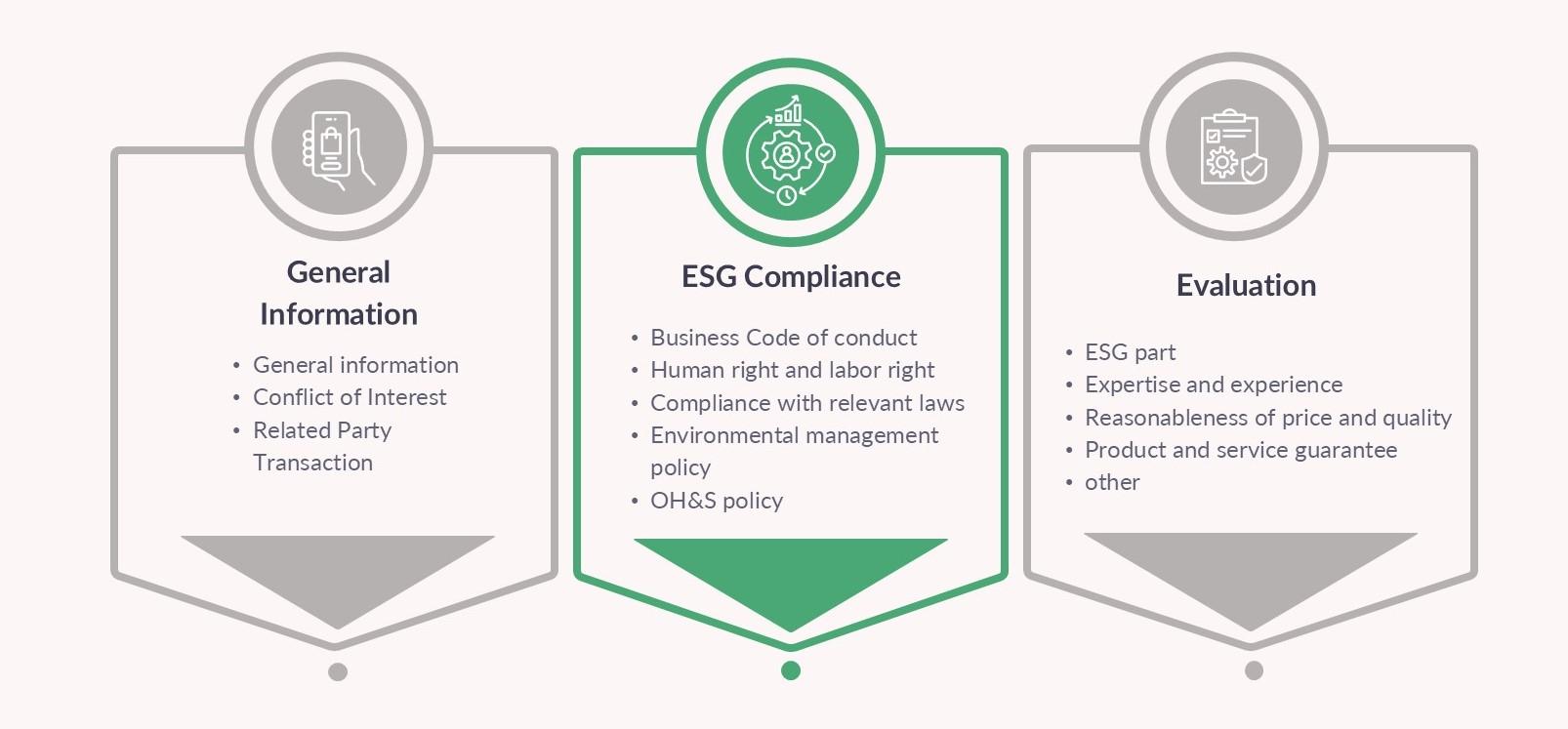
The Group places great importance on selecting qualified suppliers who possess a clear vision and business practices aligned with the Group’s values. The Supplier Code of Conduct serves as a fundamental principle for conducting business together, ensuring that both new and existing suppliers are prepared to operate responsibly.
To this end, the Group has established a Pre-Qualification process comprising three key components:
General Information
Includes basic supplier details, disclosure of conflicts of interest, and disclosure of related party transactions between the Group and its suppliers.ESG Compliance
Covers adherence to business ethics (including business integrity, regulatory compliance, and anti-bribery and corruption), respect for human rights and labor rights, compliance with relevant laws and regulations, and
the establishment of environmental policies and Occupational Health & Safety (OH&S) policies.
Evaluation
Involves assessment of environmental, social, and governance (ESG) factors, supplier expertise and experience, reasonableness of product/service pricing and quality, warranty provisions, and other factors related to operational risks and capabilities.
Management of Procurement Risks
The management of procurement risks of the Company involves many different processes, such as economic risk assessment for risks from business partners. In the past year, the Company has conducted risk assessment to determine risk factors from business partners and has established two dimensions of risks criteria which include the impact (financial, reputational) dimension and the likelihood dimension. The results are as follows:
Significant Procurement Risks | Risk Mitigation Measures |
Material and fuel shortage and volatile material and fuel price |
|
Reliance on few business partners |
|
Substandard quality products or services |
|
Another risk management strategy the Company has taken to is identification of Critical Suppliers.
Supplier Management and Criticality Assessment
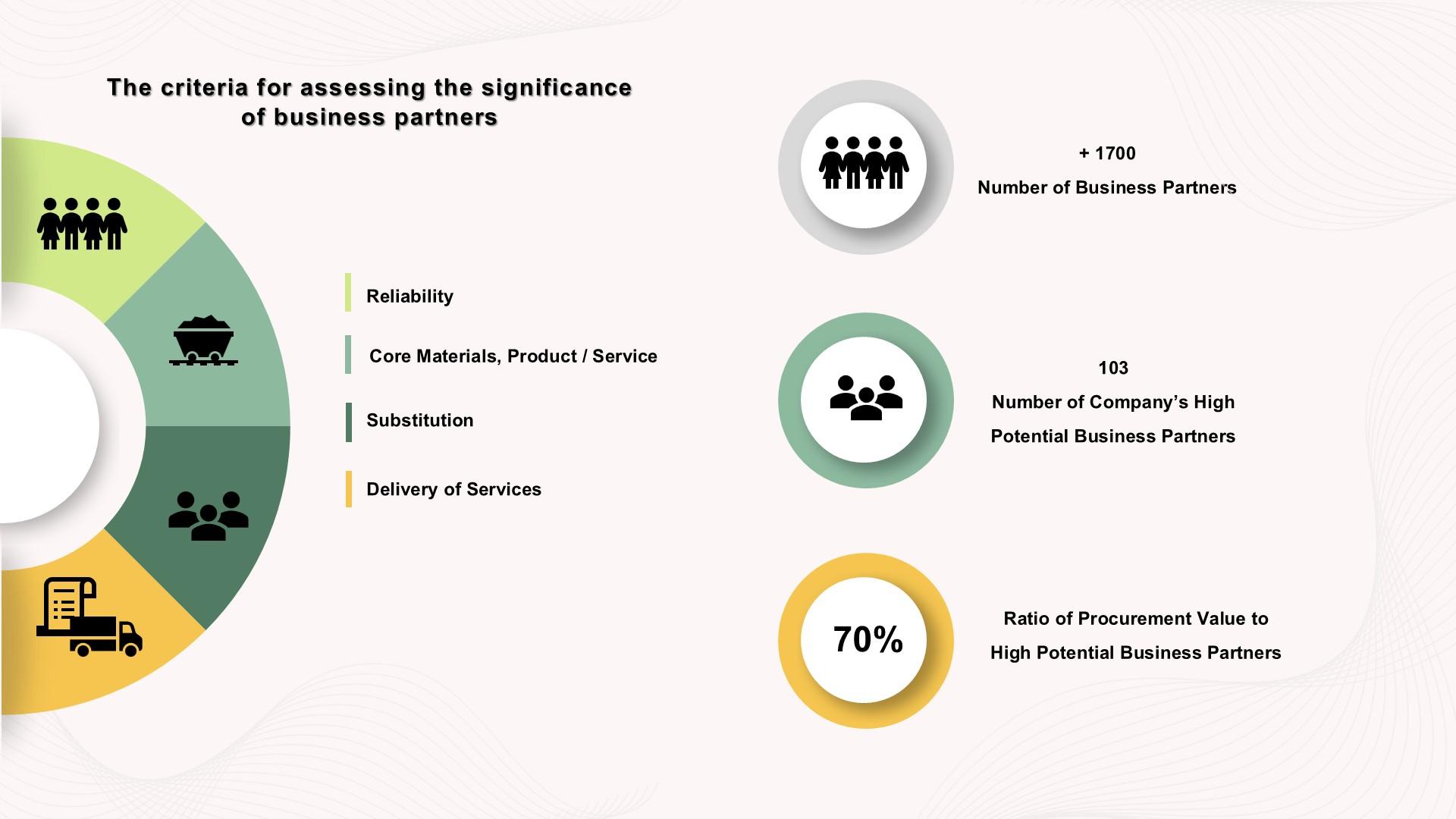
The Group engages with over 1,700 business partners, both domestically and internationally. Among these,
103 are identified as critical suppliers, accounting for approximately 70 percent of the Group’s total procurement value.
To effectively manage supplier relationships and mitigate supply chain risks, the Group conducts a supplier criticality assessment based on the following key criteria:
Suppliers with high procurement value, representing the top 70 percent of total purchasing volume
Suppliers providing essential raw materials, products, or services that are integral to production or operations
Suppliers offering goods or services that are irreplaceable or available from a limited number of sources in the market
This assessment enables the Group to plan procurement activities more efficiently, strengthen supply chain resilience, and foster long-term, sustainable partnerships with suppliers.
Sustainability Risk Management in the Supply Chain
The Group places strong emphasis on managing sustainability risks throughout the procurement process—from
supplier selection to ongoing performance monitoring. The objective is to ensure that suppliers operate in alignment with the principles of Environmental, Social, and Governance (ESG).
For suppliers identified as having potential negative ESG impacts, the Group requires participation in an additional Sustainability Self-Assessment. This assessment covers key areas including environmental management, social and community responsibility, respect for human rights, and good corporate governance.
In 2025, a total of 20 critical suppliers participated in the sustainability self-assessment. Of these, 17 suppliers
met the Group’s evaluation criteria. For suppliers who did not meet the required standards, the Group conducted
ESG Supplier On-site Audits to enable close monitoring, verification, and collaborative improvement of operational
practices.
These on-site audits focus on core ESG topics such as governance practices, environmental management, social responsibility, and workplace safety. The scope of the audit is tailored to the nature and type of raw materials or services provided by each supplier.
Monitoring and Corrective Actions for Supplier Assessments
In cases where deficiencies or non-conformities are identified during on-site supplier assessments, the Group
requires suppliers to prepare and submit a Corrective Action Plan within a specified timeframe. This demonstrates
the supplier’s commitment to improving operations in alignment with the standards set by the Company.
The Group implements ongoing follow-up measures to ensure that corrective actions are fully completed.
In addition, appropriate support and guidance are provided to suppliers to help enhance their capabilities and improve overall performance.
This approach reflects the Group’s dedication to building a responsible, transparent, and sustainable supply chain.
In 2025, three suppliers underwent on-site ESG assessments, all of whom successfully completed their corrective
action plans in accordance with the Group’s requirements.
Sustainability Self-Assessment
The Company places strong emphasis on sustainable business practices and has developed a comprehensive Sustainability Self-Assessment framework covering three core dimensions: Environmental, Social, and Governance (ESG). This initiative reflects the Company’s commitment to responsible development and accountability to all stakeholders. The assessment includes:
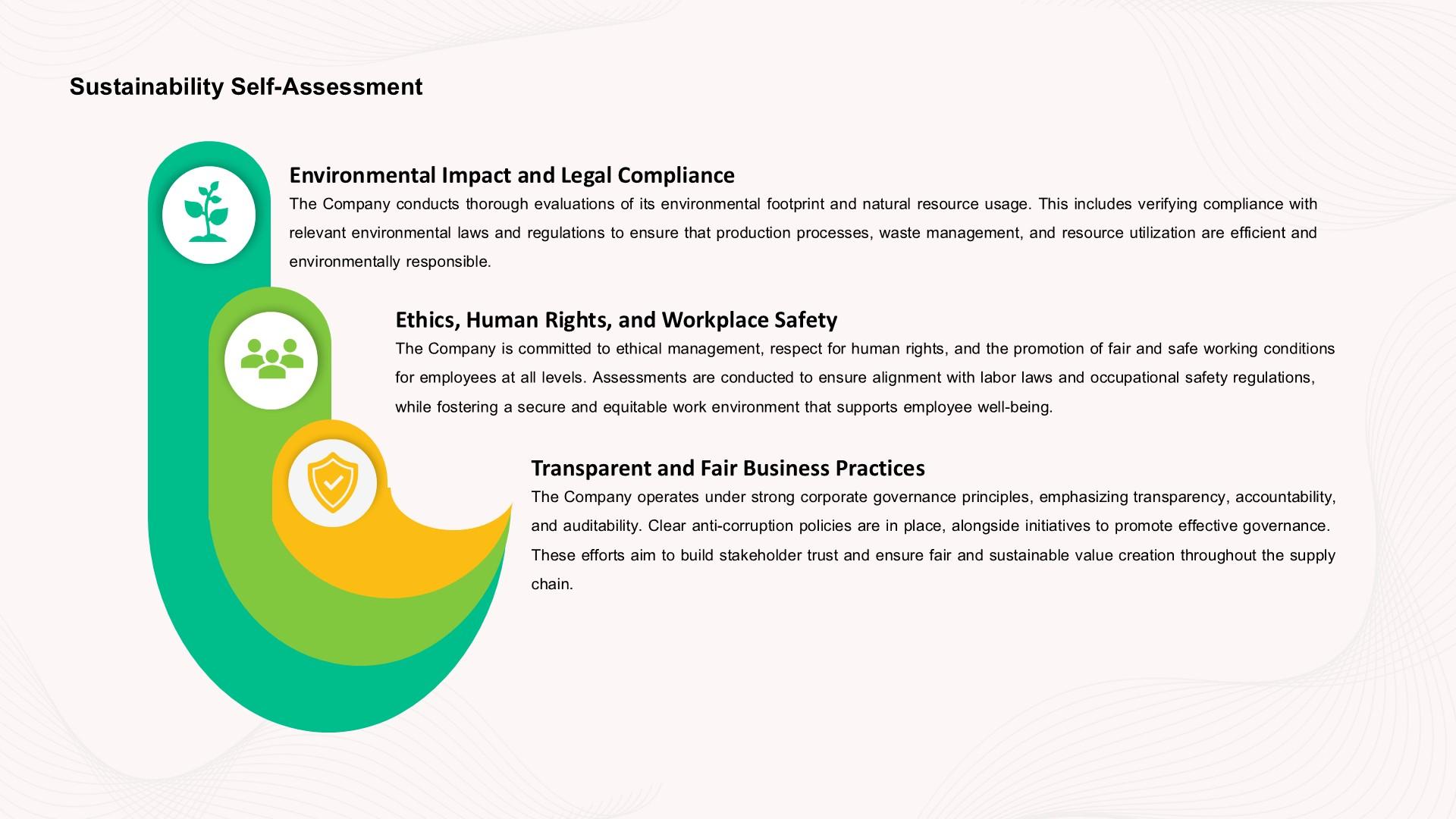
1. Environmental Impact and Legal Compliance
The Company conducts thorough evaluations of its environmental footprint and natural resource usage. This includes verifying compliance with relevant environmental laws and regulations to ensure that production processes, waste management, and resource utilization are efficient and environmentally responsible.
2. Ethics, Human Rights, and Workplace Safety
The Company is committed to ethical management, respect for human rights, and the promotion of fair and safe working conditions for employees at all levels. Assessments are conducted to ensure alignment with labor laws and occupational safety regulations, while fostering a secure and equitable work environment that supports employee
well-being.
3. Transparent and Fair Business Practices
The Company operates under strong corporate governance principles, emphasizing transparency, accountability, and auditability. Clear anti-corruption policies are in place, alongside initiatives to promote effective governance.
These efforts aim to build stakeholder trust and ensure fair and sustainable value creation throughout the supply chain.
Promotion and Enhancement of Partner Capability
The Group is committed to promoting and enhancing the capabilities of its suppliers to foster efficient and
sustainable growth together. This is achieved through the implementation of the Sustainable Procurement Program, which forms part of the Group’s broader sustainability objectives.
The Company prioritizes partnerships with suppliers who demonstrate environmental awareness and responsibility.
It actively supports the use of environmentally friendly products and services, with a focus on sourcing materials
and products certified with the Green Label by the Thai Environment Institute (TEI). In addition, the Group encourages the use of alternative fuels, such as biomass, industrial waste, and by-products from manufacturing processes,
to reduce reliance on fossil fuels and minimize environmental impact.
Furthermore, the Group continuously promotes supplier participation in the Green Industry Program, particularly encouraging suppliers to maintain at least Level 2 Green Industry certification. The Company plays an active role
in providing guidance and collaborating closely on development planning.
Since 2019, more than 37 suppliers, representing a total of 45 manufacturing facilities, have joined the Green Industry Program. This reflects the Group’s strong commitment to elevating environmental standards and advancing long-term sustainability throughout the supply chain.
Contractor Safety Management System Audit (INSEE CSM Audit) by Internal Auditors
In 2025, Siam City Cement Public Company Limited remains committed to continuously improving contractor safety and occupational health standards through internal audits of the INSEE CSM. These audits evaluate the adequacy of safety processes in high-risk activities and ensure that risks are appropriately identified, assessed, and controlled.
The audits cover key units and subsidiaries in Thailand from March to May 2025 through site visits and stakeholder interviews, reflecting the Company’s responsibility toward society and stakeholders. Currently, contractors account
for more than 54 percent of the total workforce in 2024–2025, highlighting their crucial role in driving the business.
The audit results demonstrate progress in building a “Zero Harm” culture through systematic safety training and measures, along with improvements in data integration, unified governance, and standardized work practices across
the organization. The Company has defined three main development directions: (1) Strengthening governance and accountability, (2) Utilizing digital systems for transparent management, and (3) Establishing unified safety standards across all units. Enhancing the CSM system to be more comprehensive and modern not only reduces accident risks but also builds confidence among partners and stakeholders, while supporting sustainable growth for both the organization and society.
Law Violation Incidents
Law Violation Incidents
| Metric | Current Year | Previous Year | Two Years Ago |
|---|---|---|---|
| The total number of cases or incidents of significant violations of laws or regulations regarding social and human rights (Cases) | 0 | 0 | 0 |
| The total number of cases or incidents that cause significant labor disputes (Cases) | 0 | 0 | 0 |
| The total number of cases or complaints related to consumer rights violations (Cases) | 0 | 0 | 0 |
| The total number of cases or complaints related to partner rights violations (Cases) | 0 | 0 | 0 |
| The total number of cases or incidents that cause disputes with the community/society (Cases) | 0 | 0 | 0 |
| The total number of cases or incidents related to cyber security or customer data breaches (Cases) | 0 | 0 | 0 |
| The total number of cases or incidents related to safety and occupational health at work (Cases) | 0 | 0 | 0 |